Early American Indian Languages
The Dene-Yeniseian Hypothesis – Evidence from Morphology, Phonology, Lexicon, and Genetics

The Dene-Yeniseian Hypothesis – Evidence from Morphology, Phonology, Lexicon, and Genetics
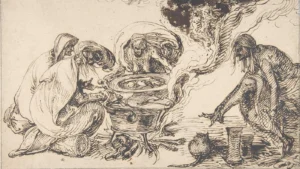
Goetics—from the Greek goēteia, meaning sorcery or deceptive magic—refers to low, coercive witchcraft involving spirit-summoning and illusion. In Renaissance literature, it contrasts with higher theurgia or natural magic.

Phantastes: A Faerie Romance for Men and Women, published in 1858, marks a pivotal moment in literary history as one of the first adult fantasy novels, blending dream-vision, medieval romance, and psychological allegory.
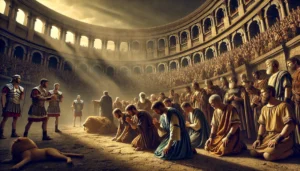
The most widely cited estimates of Christian martyrdom come from the Center for the Study of Global Christianity at Gordon-Conwell Theological Seminary. They calculate a cumulative total of approximately seventy million Christian martyrs from the first century to the present day. Strikingly, more than half of that total — over thirty-five million — occurred in the twentieth century alone (we have not finished per capita the 21st century), largely driven by state-sponsored violence under communist and fascist regimes.

The primary fallacies of dispensationalism in light of the Hebrew and Greek New Testament.

The primary fallacies of dispensationalism in light of the Hebrew and Greek New Testament.

Shadow and Redeemer in Lilith sit at the heart of MacDonald’s theology. Lilith is not merely evil; she is the primal rebel whose refusal to submit mirrors the human soul’s pride. Yet MacDonald redeems her. In Chapter 29 she finally drinks the water of life and is restored, becoming the vehicle through which Adam’s first wife is brought back into the family of God. The Shadow that pursues Vane is the dark double of self-will, but it too is ultimately dissolved in the same waters. Redemption is universal because the numinous pull of divine beauty finally overcomes every shadow.

Doctoral-level presentation: Fatal exegetical and theological flaws in Ellen G. White’s core doctrines when examined against the Hebrew and Greek texts of Scripture.
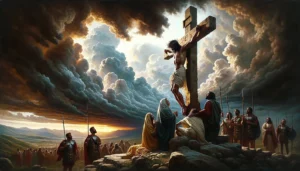
The narrative arc of Christ’s incarnation, passion, and triumph emerges not merely as a singular historical event but as a profound convergence of ancient archetypes, refracted through cosmic, mythic, and symbolic lenses—yet it stands apart in its linear trajectory, from Alpha to Omega, against the endless loops of cyclical myth.

In the framework of analytical psychology, Carl Gustav Jung conceptualized the shadow as the repressed, unconscious aspects of the personality—encompassing instinctual drives, moral failings, and unacknowledged aggression that must be confronted and integrated to achieve individuation which is the process toward psychic wholeness. The crucifixion, in Jungian exegesis, functions symbolically as a voluntary ego-dissolution, i.e, a confrontation with the collective shadow, culminating in the Self’s emergence through mythic rebirth.

Consider the recent YouTube Jungian analysis, “Jesus was the first man to achieve individuation” -ca. 18 min long- , which posited Jesus Christ as the inaugural figure to achieve full individuation. The presenter frames baptism as ego-dissolution, Gethsemane as shadow-confrontation, crucifixion as voluntary psychic death, resurrection as Self-realization. It’s elegant: Christ becomes the archetype who set forth a map for inner wholeness.
Ellen G. White’s doctrines, central to Seventh-day Adventist (SDA) theology and prominently featured in works like The Great Controversy, have faced substantial criticism from evangelical Christians, biblical scholars, and former Adventists. Critics argue that while White affirmed core Christian beliefs (e.g., salvation by grace through faith in Christ and the authority of Scripture), her writings introduce errors, inconsistencies, and extra-biblical requirements that distort the gospel. Here are the primary doctrinal issues raised: