
Articles

Prophetical Current Events

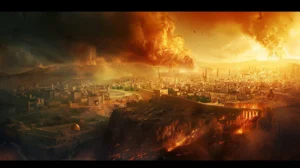
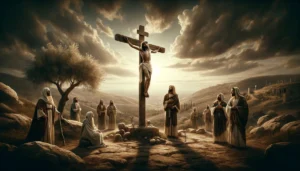
My core argument rests on a teleological historical-linguistic theme: from Yeshua’s death and resurrection dated by most scholars to spring AD 30 (e.g., Nisan 14, Passover; see consensus in Midwestern Baptist Theological Seminary studies and Edinburgh research)—until the onset of major Russia-Iran pressure on Israel around now, roughly two thousand years have elapsed.
Read More »

Acts 2/23 God Killed Jesus in Love

Acts 2:23—the Greek text: τοῦτον τῇ ὡρισμένῃ βουλῇ καὶ προγνώσει τοῦ θεοῦ ἔκδοτον διὰ χειρὸς ἀνόμων προσπήξαντες ἀνείλατε. This verse declares that Jesus was delivered

Read More »

John’s Apocalypse

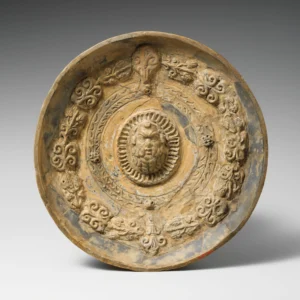
The libation bowl, known in Greek as phiale (φιάλη), emerges in the archaeological recordaround 2500–2200 BC during the late Neolithic/early Bronze Age in the Aegean. The earliest examples—clay, stone, and occasionally metal—come from Minoan Crete and the Cyclades islands. These were shallow, wide-mouthed vessels, often featuring a central omphalos (a raised boss) for thumb-grip during pouring.

Read More »

The Prophetic View 5 “Gog and Magog”

Ezekiel 38

1 And the word of the LORD came unto me, saying, 2 Son of man, set thy face against Gog, the land of Magog, the chief prince of Meshech and Tubal, and prophesy against him, 3 And say, Thus saith the Lord GOD; Behold, I am against thee, O Gog, the chief prince of Meshech and Tubal: 4 and I will turn thee back, and put hooks into thy jaws, and I will bring thee forth, and all thine army, horses and horsemen, all of them clothed with all sorts of armour, even a great company with bucklers and shields, all of them handling swords: 5 Persia, Ethiopia, and Libya with them; all of them with shield and helmet: 6 Gomer, and all his bands; the house of Togarmah of the north quarters, and all his bands: and many people with thee.

Read More »

The Prophetic View 4

This will be our fourth Prophetic View lecture having left off with a brief stint of Ezekiel’s “Meshech” or “Meskhi” name. Both “Meshech” and “Tubal” are found in Ezekiel 38:2 as the province-cities by which their “Chief” (or “Rosh1”) prince2 named Gog to be found amongst the Colchian tribes of the Caucasus between the Euxine (Black) and Caspian Sea.

Read More »

The Prophetic View 3

We left off last time with Ezekiel’s prophecy of Israel’s return as One Kingdom no longer being divided into two . In Ezekiel 37:26 an “everlasting” covenant will be made with God as the Tabernacle in the midst of His people for evermore.

Read More »

 THE PROPHETIC VIEW (backed with historical evidence)

In Revelation 13:8 the Bible makes a proclamation that Jesus was “the Lamb slain before the foundation of the world.” What does that mean for all of the events that would have had to have taken place at creation and throughout its history until the very location, time, situation, reason, etc., for Jesus’ crucifixion (and resurrection)?

Read More »

What is sin (Hebrew: “Qat”)

Forms, shapes, movements, measurements It was understood by the ancient Israelite that the idiom, “nasa chatta’th”, was a feminine force by which the “shape” or “form of” guilt, shame, and/ or sin was carried away (vide TDOT, Botterwick & Ringgren; Jeff Benner, Ancient Hebrew Lexicon, pg. 121)

Read More »
Logo of Fullness of Meaning Christian Ministries with a bow and arrow symbol

Forward to Book ‘Does Grace Have a Ceiling’

This work is a “sifter” of sorts using what I call “The 5 Noble Truths”. Some people might wince when the word “truth” is used, however, I use the mother meaning of the word “truth” found couched in classical Greek, Hittite, Sanskrit, and the early reconstructed Proto-Indo-European language.

Read More »

The Hebrew Arrow Part 2 “A Deeper Look”

I mostly dove into the Biblical and classical Greek to find the materials that supported my proposed theory on “the archer of intent” and “his/her” linguistic anatomy. Only later in my search for truths did I find my archery maxim to be fully substantiated in the Tanach (Hebrew Old Testament).

Read More »