
A Piece in Support of Our Statement of Faith
We believe that God, in His sovereign will, has already saved every human being through the finished work of Jesus Christ.

We believe that God, in His sovereign will, has already saved every human being through the finished work of Jesus Christ.
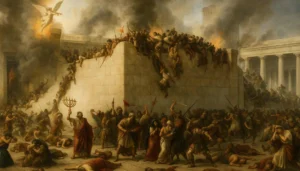
Today we examine the convergence of biblical eschatology and contemporary geopolitics through a rigorous hermeneutical and empirical lens.

Today we examine C.S. Lewis’s profound appreciation of Edmund Spenser’s The Faerie Queene in his Clarendon Press volume, Poetry and Prose in the Sixteenth Century.

The primary fallacies of dispensationalism come into sharp focus when examined through the Hebrew and Greek New Testament. Dispensationalism rests on three main pillars: segmented dispensations tied to οἰκονομία (oikonomia – from οἶκος “house” + νόμος “law,” literally “house-law” or “administration”; from Proto-Indo-European *weyḱ- “clan, household” and *nem- “to assign, allot”), the term αἰών (aiōn – “age, era, long but finite period”; from Proto-Indo-European *h₂eyu- “vital force, life, eternity,” the same root that gives us Latin aevum and English “ever”), a rigid Israel-church distinction, and a hyper-literal approach to prophecy that prioritizes future compartments over fulfillment in Christ. All three pillars collapse under careful lexical and contextual analysis of the original texts.

I offer an integrated view of three of C.S. Lewis’s works: 1) The Allegory of Love: A Study in Medieval Tradition (1936), 2) Studies in Words (1960), and 3) The Four Loves (1960).

Two Greek adjectives, both often rendered “eternal, ” actually differ sharply: aïdios means strictly endless or timeless; aiônios—from aiôn, “age” or “epoch” —means pertaining to an age, long-lasting, or belonging to the world to come. Scripture and most early Fathers reserve aïdios for divine life and bliss, never for punishment or fire. That lexical choice is deliberate and carries massive theological weight.

Let’s bring in the thousand-year reign to show how it actually strengthens the post-tribulation view and further exposes the incoherence of pre-trib dispensationalism.

Post-tribulation alone aligns the full redemptive arc of Scripture from promise to parousia.

Let’s expand on our critique of the pre-tribulation rapture and dispensationalism with fifty key verses from both Testaments, in original languages where possible.
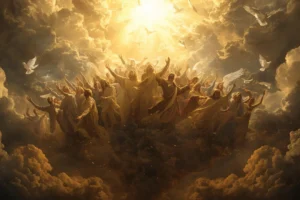
The pre-tribulation rapture isn’t mentioned anywhere. The term itself is absent from Scripture. George Eldon Ladd argued in The Blessed Hope that the New Testament presents one unified hope—the visible parousia of Christ, not a secret escape.

Romans 11:17-24 uses the Greek term kallielaios for the cultivated olive tree and agrielaion for the wild olive grafted in: “If some of the branches were broken off, and you, being a wild olive shoot, were grafted in among them and now share in the nourishing root of the olive tree, do not be arrogant toward the branches.”
Here’s a solid outline of C.S. Lewis’s The Allegory of Love based on its chapters and main points. It’s a study in medieval tradition, tracing how courtly love and the allegorical method fused in literature from the 11th century onward.