
The Misunderstood Meanings of Happy & Sad
Happy*: Proto Indo European: “Kob” = ‘met to the desire of one’s wants to make *happy*’; ‘to suit, fit, succeed’; Old Norse: ‘chance, good luck (allotment)’/ Middle English: ‘chance, fortune’
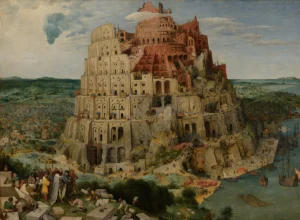
Genesis 11:1: “The whole earth had (yahiy: had; become; be; becoming) one ‘language’—and there were very few WORDS (Dabhar)1 in those days”.
In Genesis 8:2 we begin the process of the waters abating. A full chapter is given up to the existence in the ark until the first contact made to soil in Genesis 9.
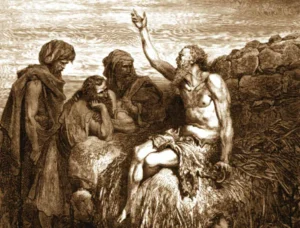
In this article, I try to extract and amplify what is already set in the Hebrew text of Job. Job’s story might very well reach back beyond 4 millenia to make it the oldest book in the Bible. Therefore, the time tested story of Job exceeds in antiquity that of the Mosaic Torah.
There was a man in the land of Uz, whose name was Job; and that man was perfect and upright, and one that feared God, and eschewed evil.
Before I address Job chapter 3, I need to recap the seemingly quirky nature of Job 1 and 2 as a ‘necessary evil’. Both chapters were ‘set up’ to distill key elemental players into their proper places within the story or narration of Job.
The story of Job was initially a pre-Biblical-Mesopotamian story. The account of Job, or “Ayub”/ “Iyob”/ stood the test of time before landing into the canon of the Old Testament. The same message we find in the book of Job is found all throughout Mesopotamia.
The narration of Job was either (a) a Mesopotamian unparalleled human endeavor which ordered key characters to express a consistent/non-contradicting Theology (probably devised by Sumerian or Babylonian Scribes using a historical reference ) (b) a historical character with both divine and mortal participants (c ) ‘divinely inspired’-i.e., A God which governed all the actions of the above mentioned (d ) all the above guided by a singular acting metaphysical Author which extended Itself into *the Story* (both Proto-Biblical for ALL of humankind to learn true Sovereignty and a facet of a coming Messiah/ the TRUE relationship between God and ‘the Satan’/ Devil)
“Demons”–dao/midz- literally mean, “dispensing riches/fortunes”. Later, in Greek society, a ‘sympatico’ spirit, demon, common spirit, etc,” inhabiting you or travelling with you would be called a ‘sympathetic spirit’, or simply “Demon”. This, “Demon”, had a different cultural reference and the language shows.
The key meaning of evil is that ‘something that doesn’t *fit* into an expected boundary line and/ or a specific arena’. That is, evil can be defined as a violation within a specific field where rules apply and violations warrant penalties. Penalty boxes, prisons, slums, vagrancies, outcasts, wanderings, ….whatever is ‘outside’ the ‘legal box’ of comfiture is ‘evil’ by definition–especially, in the sense of derogation from which they are called ‘places of penalty’.
I didn’t realize what entitled meant until i took a look into my prior actions as a kid. Let me try to explain: I vandalized.