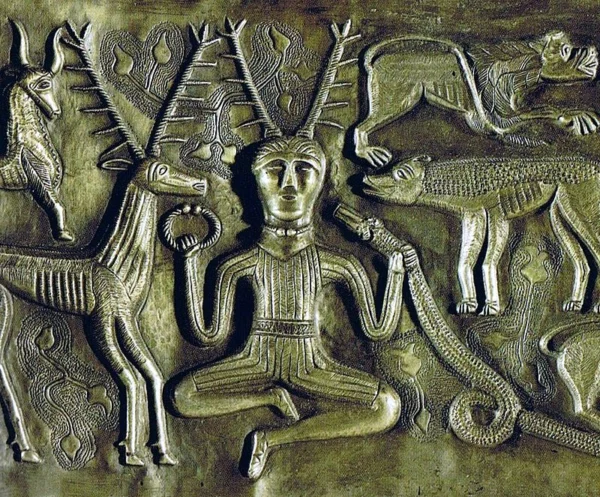
There are countless Messianic allusions in the pagan world. Why? We might answer the Why by the What for right now.

The pagan world has done its job to promote the coming of a Messianic figure. This paper will concern the themes of human thought that beckons for a Christ figure through examples of poems, literature, philology, plays, etc.
All of the world bemoans such a Savior regardless of their religion

Example One:

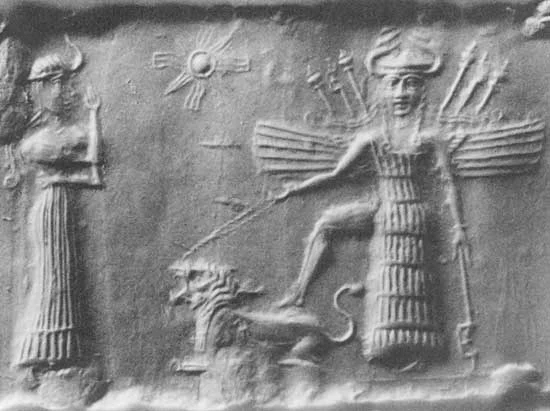
A reference to the Stars from the eyes of a Babylonian poet/ stargazer A BABYLONIAN PRAYER TO THE BRIGHT ONES OF THE NIGHT

They are lying down, that is, the Great Ones of renown in the sky – the heroes that seek conquest and name

The bars have fallen, the bolts are shot
The crowds and all the people cease their tumult – no rumbling to be had The open gates are locked

The gods of the land, the goddesses, Shamash, Sin, Adam, Ishtar, Sun moon, turmoil, love, action to action, reaction to reaction, etc. .. All of this settles down, the gods sleep in heaven

Now, at peace, there is no judgement seat to be filled, for the moment there is no accusations to be had, no penalties to be given…for no god or heavenly magistrate is at their work

Night has drawn down the curtain
The temples that do their bargaining for sacrifices for the masses are are silent
The sanctuaries are all dark, no eyes to scan, no watchers to try those unsuspecting

Now, at last, the commoner gets to call on their God
Complaint and Defense, Defense and Complaint in the judgement halls of man…all silenced in deep sleep

Even the Judge of all has gone to His chamber, for His office holds no rest when He is awake

Oh Great Ones that Still Shine in the Glory of Truth, Join me now,
Gibil, Irra, Bow-Star, Orion, Pleiades, Dragon, Wild Bull, the Goat, and the Great Bear!

In your eternal messages that tell us HIS Story, night after night Stand by me in this Divining

By this LAMB that I am offering, MAY TRUTH APPEAR!!!

A Babylonian poem beckons for the Christ 3,500 years ago

For fluidity, I will take licensure only in that I should repeat on occasion or emphasize what is already said in this prayer.

For text and translation information please refer to F. J. Stephens in his “Ancient Near Eastern Texts Relating to the Old Testament, edited by J. B. Pritchard, 1955, p. 390

Cf. Penguin Classics, “Poems of Heaven and Hell From Ancient Mesopotamia” page 175

Example two:

Cf. “Feast/ Sacrifice of Amroo” – April 14 sacrifice of the Lamb/ April 17 resurrection of the Lamb as God Eternal”. This was held 2,000 years before Christ.Yet, these are the dates that Christ was sacrificed and resurrected on”. The resurrected “Lamb” was both Osiris in Ancient Egypt, Dionysus in Ancient Greece and Christ in the First Century A.D. Again, both sacrifice and resurrection of all 3 were on the same dates millennia to hundreds of years apart!

Let’s look at Osiris’ and Dionysus’ characters:

  • 1)  Osiris and Dionysus were considered the Saviors of Mankind
  • 2)  Both gods born of a virgin
  • 3)  Both were born on December 25th as their recognized “god-child” status (arguments for
    Jesus’ Birth might put us somewhere between March and April of 6 B.C., but, His recognition was on December 25 from pagan Magi who followed the traditional hope of the Sun God’s Birth at the Winter Solstice)
  • 4)  Birth prophesied of a Star
  • 5)  Both were baptized by the same named “water man” — same name as in the meaning of
    John, the Baptizer
  • 6)  Both have 12 disciples
  • 7)  Both ride into their hometown on a donkey while crowds wave branches (a symbol of
    God and His surefooted nature – and the recognition of that)
  • 8)  They are equated with Bread and Wine
  • 9)  Both held a stylized “Lord’s Supper” likened to the Biblical one
  • 10)  Both were crucified as Saviors of the world on a tree
  • 11)  Both were crucified
  • 12)  Both corpses were wrapped in linen and anointed with myrrh
  • 13)  Both resurrected leaving an empty tomb which their women followers visited first

Verlyn Flieger (born 1933) is an author, editor, and Professor Emerita in the Department of English at the University of Maryland at College Park, where she taught courses in comparative mythology, medieval literature, and the works of J. R. R. Tolkien. She is well known as a Tolkien scholar, especially for her books Splintered Light and A Question of Time. She has won the Mythopoeic Scholarship Award four times for her work on Tolkien’s Middle-earth writings.

0:00
0:00
skip_previous
play_arrow
pause
skip_next
replay_10
volume_up
volume_down
volume_off
description
view_headline
Nothing found!
close

Here’s my attempted “Intentful”  mindset:


To me:

Be careful not to live by or be identified by a *narrative* of the past-whether or not your narrative is true, partially true or a lie. Your life’s narrative is a past thing  up to this second which is now past. We are all going forward.  We are not stuck in the past, physically or time wise. I am not in anyway dismissing our memories nor am I taking away the Holy, i.e., our childhood remembrances, first kiss, graduation, etc… I am only stating that your memories are snapshots from which a ‘meaning’ is formed. Dangerously, this meaning can take shape in the form of a relativistic narrative. This narrative can be altered, persuaded, used and abused depending upon your present abilities to reason out what you have set before you—-that is, your ‘life’ as you are trying to define it and the barrage of ‘advice’ and persuasion that is constantly being tossed at you. You are constantly reminded that your  life needs ‘to fit’ somehow. It needs to make something more of itself than a dissonance amongst chaos. As Rush states, “Be cool or be cast out— subdivisions”

Be brave and use your history to see “WHERE” you were and are in order to calibrate your intended bullseye. Therefore, don’t blame the tools that shaped you, only be thankful for them. Isn’t this a mindset of a good Intender? Isn’t this a hopeful, meaningful, intentful mindset?

Forgive the world. Forgive yourself. Don’t hold anyone to your charge, lest you be charged.

Next is my flippancy towards today’s modern Relativism, a.k.a. NON-SENSE :

“Alright, Kyle Jones, now go address your PTSD, BPS axis 1 with EMDR, Psychiatrists, and endless addressment to the tools of time that shaped my ‘ugliness’ to that which  is ‘uniform’ and ‘healthy’ by today’s standard. Just go ‘work out’ your past—-because it was ‘tampered with’ and not intended. Eliminate the “god factor”, God nor god would do that…if there is one. Do not most Christians believe that God only wants ‘what’s best’ for you…therefore, doesn’t that mean ‘health and wealth’? Kyle, this is your supervening ‘doctor’ speaking, there is no INTENT but your ‘free will’. You can will freely. Right? You’re ‘rogue’ in this sense. But we won’t address that as a problem of semantics, let’s just gloss over that term, “free” and “will” as a cocktail to mean whatever you think. Words are really utilized for a higher pragmatism now. You shouldn’t think about words so much. Words need to be forgotten to their historical meaning and applied to the new Orwellian dictionary for utilitarianism. Forget where words came from and where they are going. Just be ‘beautiful’ to the practical world of today, y’know, the “US AND THEM world that fits the ‘cosmos’ of pragmatism. Your retraining of your ‘damaged’ mind requires only reaction vs. response retraining. Responding, well, it’s ‘relative’. Just don’t react to the relativism. To  its own end -though-it refers. A circle upon a circle—-a loop, a ‘ring’. Kyle Jones, don’t you get it? Can’t you just be in the know? —-I mean…i don’t really know what that is but I know it can’t be Grace, belief in Meaning from an Intender. Get what you want out of life. But don’t react, respond. There is no real meaning. So,——whatever you obtain in this life what does it mean or matter? Just look at the world! Aren’t we doing our free will? Aren’t we striving for justice? What’s relativistically ‘right’, aren’t differentiations between races and spectrums of genders what we call for?—-yet, don’t we hate it when we say ‘you’re different’? We raise flesh up against flesh when we say, “you’re them and we are us”.  When we make ‘alliance’ with any “them” and take *pride* in “us”.  i mean any ‘us/ them’ group has critiqued, judged, made the line. They have distinguished and differentiated. Yes…that’s right, our world is doing just fine!”


My view:

This world sucks if I am to refer by, to, of , from it. A world of Aleatoric clauses, i.e., reactions causing more reactions—-hence, the world we see NOW.  Contrawise, a worldview of meaning through Grace in the darkness of hateful reactions, do prove its reality. Not only does Grace prove its reality, it proves that IT is the only way.

To me if there is any grudge, resentment, hatred, blame, etc. from you to others—- then, you will always require human receptacle(s) that will, if acting on the natural impulse, grow weary of being cast in the mould of a god that they can’t fulfill. You will drain everyone and everything around you in the end.  The very things you blame will become you unbeknownst to you.

Not forgiving, living by your traumas,  and making others live by your  traumas—-hence, a world demanded to live on eggshells is cruelty and bullying  There is no achievement in this other than a demand for understanding that which cannot be properly thought out. I have no judgement against these poor people. I could absolutely claim full rights to the same ‘plight’ if I were to live out a narrative in the past and act out “eye for an eye”. I agree, acquiesce, sympathize and empathisize with their problems but this is not to be demanded.

Conclusion for now for me:

Love is a solo endeavor. The ‘world’ of reactions do not, cannot ‘perceive/ discern’ a ‘no-charge-forgiving-gracious belief/ lifestyle.


To me, an instruction:

Do not react with the reactions.  Be a grown up, give grace. Grace is the opposite of this warring world that DEMANDS its damnation upon others. If you have any hatred in your mind that envisions the elimination of someone, adultery, desire to have what others have that you don’t——you are guilty of those things in the primary world.////IDEAS have consequences and our world, our nation is a result of our IDEAS.  Is GRACE in your imagination, inner thoughts, every thought? If it is not, then you, me, all of us are in danger of Judging.

Our world is reflecting where we are going in our hearts.

P.S. —-Knowing the ‘result’ of our evolution, we have so many illnesses, whether mental and/ or physical. Take your meds that ail the organs….do due diligence (to love your fellow humans) to keep your body healthy…but to what end?—-To healthily serve others with GRACE, no self based faulty judgements that are desirous to apportion condemnation while not addressing your multitude of errors worthy of worse damnations <—-i.e., ‘critiques, punishments, analysis, dismissals, etc. We are not ‘stative’ creatures. We are being pressed forward by time. Don’t waste time. Think on these things and private message me my errors and/or your inspiration. Please don’t post vitriolic statements on my page. This is your legal right but it is my right to block hateful and ignorant judgements.  With that said, ask God to be as HIS SON is: an infinite receptacle for other’s pain.  Hold , coddle, listen to those who coo and cry— for we do the same.  My intention is to agape others.

Lastly, forgive the ‘roughness’ of this post, grammar, halts, brokenness, etc….I’m only typing my heart out. Love to you all.  PS.—— are these words in error from the Gospel of Jesus?  If they are then I am wrong where my word derivative from HIS Kingdom’s pathway. There is nothing new under the sun so why are we repeating our errors? It’s because we must learn what Grace is.

I present to you an idea that has given us a reality that is undeniable.

In this that I present to you, I ‘sutured’ the “extra Christian/ pure heathen” Theology that Tolkien understood through his immense studies to a Biblical-exegetical platform. In this paper, I will sometimes use Biblical and Tolkenian terms interchangeably to show the ‘trueness’ of Tolkien’s philological exercise within his writings. As a linguist and a Theologian, I find Tolkien’s writings to be more “orthodox” than most “orthodoxies” I have studied. Mainly, Tolkien was a believer in LOGOS, as Christ, the Narrative, the history of the words by which support the Narrative and return to their semiotic relation to LOGOS. There was, is, will always be only ONE TRUE STORY.

Though Tolkien did not do allegory or make political notions in his writings, he was adamant about the danger of slovenly approaches to philology. For sure, communism, fascism, bad socialism necessitated an Orwellian “speech” that allowed for the disenfranchisement of mind to word to social effect and the reconditioning to ‘function’ without semiotics of self expression, one to another. Therefore, it is obvious to me that utilitarianism begs for philological indifference. This is not a new system, but an old one. Such key – code relationships of language that give power to the Monarch did just this very thing. Such a story alludes to Babel, “Let us make us a Shem (one language for “order”) *lest we be ‘scattered abroad’ “. Unification through a type of speech which has not naturally ‘come to be’ begs the question, “who is attempting to make the “new logos”? This is where “nature, Ea, cosmos, Logos” shows themselves to be our guiding friends.

As “The Ring” circles back on itself, it refers only to itself. It’s purposes might be needed but only to serve. When one is bound in ‘circular-self referring logic’ …one can only do what one is limited to do. The Buddhist “Nirvana” gives us that idea that “we are that”—-i.e., we are our own gods, we reference ourselves, etc. Isn’t this a hell to think that ‘you are it’? That this is all there is to the answer of life and meaning? As to the ‘ONE RING BINDS THEM ALL’ —-we have the total sum of Dark Shadow logic laid out by Sauron, a type of Melkor/ Satan. That is, whoever can ‘bind all’ with a self referenced/ relativistic/ circular motioning cycle wins all. In theory, the fight is over. If “all” *speak* the new language by which utilitarianism to the highest order and know only their ‘limitations as free will’ then, they can act ONLY on their repetitions which give only the same reason. There would be no other theme to take them ‘out’ of such a conundrum. This is what Tolkien inevitably was guided by WORD and Narration to write. IT addressed the world as to the imminent dangers of philological disenfranchisement and the sequential dispositions to fall into a pragmatic function to the bigger brother, will of another, …..Shadow Logic.

In contrast to utilitarianism via ‘pragmatic approach’ to the Primary World, the opposite case concerning the freedom to be ONE and express uniquely is solely a God to humankind condition. We see the freedom as did the Ainur to subcreate from the authority of the infinite strings of their Creator God. As I will state later, the Ainur, as well as us with God, are “Free” to act the more we are bound on the infinite strings of God. The less we are of our limitations and repetitive unfounded natures that have their termination, the more we can “act” on infinity with the Infinite God who created ALL POSSIBILITIES.

ANOTHER BIBLICAL PARALLEL

Theological question: If you sin in the secondary world, what would the consequences be to the written character and the author who holds the pen? Who sinned? What err was there? What does erasure, dismissal, and ‘hatred’ mean? Is judgement therefore abolished and the character written anew in the Image of the Author?

My interpretation and quoting of Mark 10:27: Jesus had just established the limitations/ the impossibilities of man to enter into heaven due to his sin, not just in the physical act, but maybe more importantly, the mind – i.e.,Tolkien’s Secondary World. The apostles then asked Jesus, “Then, who can be saved —-if man, the written character in the play by the Author, cannot make the effort to strive into heaven by his illusory ‘free will’ ?” Jesus said, “With men’s illusory will it is impossible but with GOD all things are possible.

Illuvatar told Melkor (the Prince Satan) that he, Melkor, would fulfill a more beautiful design for Illuvatar even if Melkor thought he was doing his will against Illuvatar. That Melkor would THEN become more heightened to ‘his will’ not being existent. This is “hell” for the rebellious creature. Hell is only found in the predestinated ‘striving’ of their will against the Prime Maker. Is this not a Theological point that surpasses the rigid and judgemental-non-gracious “predeterminism” of Calvinism?! There is still love found in Illuvatar’s voice while HIS instructions are True and HIS Theocracy stated firmly. This is also the opposite of “judgement” against those who do not the will of Illuvatar (GOD). Rather, “the Design” is expressed is Illuvatar’s statement: “THAT ALL MAY KNOW WHO ILLUVATAR IS”. This is where I believe George MacDonald’s “Christ centered death for ALL” comes into play: *Only malice shall go to hell, not the one for whom malice lived it’s life out upon until Illuvatar’s (GOD’s) WILL was DONE* EA!!! = “Let it Be” = Yah.

WAS TOLKIEN’S WORK AN EXTRA CHRISTIAN THEOLOGICAL TREATISE OR A WASTE OF TIME?

 The questions might arise, “why would I waste my time on ‘fiction’? I’m too busy with the ‘real’ world, so, how could I possibly have the time to embark on a child’s occupation? What is key here is the question: ‘what kind of Fantasy’, or, ‘how do you define Tolkien’s Fantasy world?’

The answer lies in the root or cause by which true Fantasy can be upheld.

Tolkien knew that the classical sense for “word (logos)”, —as ‘classifier’, ‘categorizer’, ‘organizer’ and the suffixial “—ology”— , which could be technically be identified as LOGOS, VERBUM or WORD. All 3 of these terms carried with them a corresponding and consequential Narrative. WORD, by Tolkien’s meaning, must be taken in the infinitive, more or less, due to its ‘out of tempo’ and ‘non-spatiality’ sense. Contradistinctive to WORD, the NARRATIVE expresses the ‘reeling out’ of the WORD (which was already ‘done’) into limited tempo and limited space for “the Story” and its meaningful end. The “NARRATIVE” IS the WORD in time and space—-meaning, the NARRATIVE IS HOLY AND WITHOUT CONTRADICTION.

It is this TYPE of LOGOS that rectified the Reasons for the Biblical Old Testament, the Reprise from the letter of the law, the ensample by which we must follow unto death-though we are incapable of fulfilling Christ’s title, and the “SENSE” that Europe received from the Gospels, ordering out even the pagan’s hope of an *a-moral* Pagan God that has now come. SO, not JUST to the JEWS, but to the minds of the heathen (the Ethnos), did Jesus Christ make “SENSE” to them and by the SENSE could there be hope here and after this life.

Tolkien, as some writers have said, was a ‘true pagan’ Pagan, by root definition means, “page”—-“on another page; over there; past the *peg* by which you should take heed before crossing into”. He was a Christian, a Roman Catholic, and, without insult and only praise—a true pagan. Tolkien observed the Heathen and their archetypes for meaning. Tolkien knew how to thread the Christian Hope, the Christian Reality with the Heathen’s Hope and their Realities. Tolkien saw ALL things as ONE big Gospel that could only be held in a presentable substance called “EA”. Otherwise, all such *ideas* are left up to endless debates. EA allowed for the walls to come down and to see with clarity the unfolding and unfolded NATURE of Illuvatar (GOD). A true amalgam, all which pointed to the Christ idea, had been codified and delivered post Mortem thanks to J.R.R.’s son, Christopher, who finalized the Silmarillion for his father using his father’s notes, histories, and a little savvy that Christopher had acquired from knowing his ingenious father.

CONCLUSION: WITHOUT ‘EA’, WE COULD NOT HAVE A PRESENTABLE THEOLOGY WITHOUT WALLS. TOLKIEN’S THEOLOGY WITHIN THE SECONDARY WORLD WAS ‘CHRISTIAN’ BEFORE ‘CHRISTIANITY’ WAS A RELIGION

In Colossians 1:17 it states, “He (Jesus Christ) is before all things, and in Him ALL (Greek: “panta” – literally, ‘everything’) things hold together”. It is ‘soft algebra’ to replace Jesus Christ with WORD here (as did John the Beloved when he tells us in John 1:1-ff “that the WORD *became* flesh and dwelt amongst us” What was the WORD before *it became*? It is not a question but an Archimedean Greek ‘heureka’ moment (“I have found it!”) to see the pattern by which Tolkien was forced to follow—- the formula from which the WORD (All/ Done/ IS/ Yah) became (engeneto) the actuation-Jesus, then to CHRIST (fulfiller and complete) to WORD to Christ again, ….all being in ‘agreement’ a-tempo, tempo, spatial, or non-spatial. For no literary mechanism can alter the consistency and force of WORD or LOGOS (being the same). Therefore, is Jesus not the NARRATION and is not the WORD actually Jesus in HIS Pre-incarnate existence in eternity? Shall HE not return again as HE said HE would? I believe that Tolkien’s entire works proved the force of LOGOS. I believe Tolkien’s works were an ‘extra Christian’ theological treatise. I feel that Tolkien drew from nearly limitless sources in order to show that there is no order but LOGOS. I believe that Tolkien’s Narrative, in full, FORCES us to reckon our sights on a Christ figure, types, shadows, that emerge through the distilling process of pure philology. Such was his work, I believe.

“We find in the comparative Narratives of the Bible and of J.R.R. Tolkien parallels between an Objective Theology and a Subjective Theology. Whether or not Tolkien’s Oxford lectures were concerning the primary or secondary world, he made it clear that LOGOS would take hold of either world. The Silmarillion, the Hobbit and the Lord of the Rings were and are Tolkien’s “Extra Christian” world. A world of joy, sorrow and Salvation to the reader” 

0:00
0:00
skip_previous
play_arrow
pause
skip_next
replay_10
volume_up
volume_down
volume_off
description
view_headline
Nothing found!
close

There is no doubt in my mind that Tolkien felt the bankruptcy for the meaning of words in his time. Tolkien knew that words and WORD (the substantive reference by which all things refer to for meaning), via “Narration”/ “Story”, were the cure for giving those who cared about meaning a hope. Such a hope was the consistency of ‘signals’ and ‘semiotics’.  A “world” without double entendre, doublespeak, ‘dark sentences’, ‘shadow logic’, etc. was a ‘world’ of pure expression, pure thought without cloudiness. A world that disallowed ‘those’ who would rule by ‘witty-word play’ and carelessness for meaning, only the power to make those around them fear potential shame for not being in the illusory ‘in the know’.

Tolkien knew that a linguistic vaccination could be carried out by a Philological treatment under the beautiful cloak of The Myth/ The Fantasy that England never had, namely, The Lord of the Rings.

Wales had Arthur, Scotland had hobgoblins and Fairie as did Ireland. Ireland had the Dun Cow as a staple of myth, but England only had fancy writings which referenced other’s myths.

The sickness of social and verbal (one and the same to Tolkien {and to me}) relativism had obviously taken hold of the world through the blind war of rejecting Theology all together. This darkness had covered the world prior to Tolkien’s day. Relativism, as a social shadow logic, called certain men to arms such as Owen Barfield, C.S. Lewis, Charles Williams and J.R.R. Tolkien to arms.

To repeat, the works of the Silmarillion, Hobbit, Lord of the Rings and his many other correlative and supplemental  histories surrounding ( especially, the Lord of the Rings), were of a Philological nature. And, the IMPORT of this Philological treatment incurred THE NARRATION.

This is where Tolkien’s Theological understanding bypassed his blind Sacraments. A new and yet very ancient *faith* in the meaning of words within Fantasy’s exercise of the True LOGOS could replace the blind acts of objectivism in stale motions ever unending.

Tolkien had an ‘extra-Christian’ approach.Tolkien understood that the MECHANISM by which ALL THINGS COME FROM, GO TO, EXIST BY (one might refer to Colossians 1:14-ff)  could be expressed within The NARRATION regardless if the narrative with Fantasy or Objective-Real-World.

The pure-inner-consistent NARRATION is the eternal-a-tempo *WORD* which unfolds in TIME and SPACE). Therefore, “IT IS DONE” means both NARRATION and WORD——this is the truest sense of coherent and consistent meaning. Another way to say this, Eternity unfolded is true Narration because ‘eternity’ cannot contradict itself as being self contained outside of time and space. This also gives hint to what Abaddon is. A thing placed into eternity with never ending reduction, non sustainable, contradictive.

The hint of objectivity, externality and eternal nature find themselves allowed to function in conjunction inside of Fantasy. That is, Fantasy allows both NARRATION and WORD  (a seemingly contradictory, yet, coherent *idea-figuration*) to exist in it’s world as the same thing – i.e., some kind of predeterminism is sensed due to Author to that which is written relationship, or. “Idea” to “pen” to “words” to “narration”.  In the mind of Illuvatar and in the mind of Tolkien were all themes created and nothing was before. So, where’s the ‘free’ and the ‘will’? Tolkien’s Silmarillion makes it clear that his Ainur or Holy Ones were given the freedom to subcreate upon the themes of Illuvatar and Illuvatar was glad to see this. But, nothing was made that wasn’t made of Illuvatar and HIS “EA” which is, “Let it Be” and the WORD.

Theologically speaking, this is the “REASON” by which we must *believe* in the Lamb that was slain from the foundation of the world (Rev. 13:8) —-i.e., we ‘hold two seemingly contradictory ideas at the same time to see REASON. He both talked to His disciples in the tempo of this world, created the world, ends the world, loved us before the world began, predetermined us to believe before the foundation of the world, knew us before the foundation of the world—that is: had a living relationship with us before anything was made  (Romans 8:28-31/ Ephesians 1:4, 13/ Ecclesiastes 1:15, 3:15, Isaiah 45:7-ff. ), . This means that part of Christ’s existence is outside tempo and space, the other, He works, dwells, dies, resurrects, etc. in time….and then, goes back to a place of non-tempo only to see us again…and, if you will, MUST be here and there at the same time – ‘time’ as we say, and the language of eternity are hinted in philology for us to see His eternal mechanics.

Yet, only the type of “sense” acquired for the magnitude of a GOD who could truly do all that HE claimed, requires a participation of belief. Such a concept was defined by Tolkien in his Monsters and Critics lectures presented at Oxford to mean, “a suspension of belief in the primary world”. This is applied to Fantasy, though,—-or is it?

Fantasy allows proportionate “inverses, obliques, corollaries, etc” to the primary or objective-cold-metrics world by which ONLY Fantasy writing can do—that is, time can go back and forth with a Christ figure of the Fantastic whereas it cannot with the Christ in this world. Fantasy can allow for a Christ figure to break the primary world’s rules, that is, show HIS epiphanic Nature before the cross event, or many other virtues of LOGOS before the Objective Gospels show HIS unfolding. In Fantasy, the Christ figure could show Himself as a Shaman, but, as a Christ figure, never could HE defame HIS virtue if HE is a figuration in the Fantastic Narrative *as* a Christ figure.

But, as these ‘changes’ or ‘delineations’ occur which separate Primary (objective) vs. Secondary (fantasy) worlds, these ‘changes’ MUST come with rules to support the same valuation of the Christ, if HE is to be of equal value *in Story* that the Christ holds in actuation or objective reality.   

It is most important to understand that Tolkien believed that Fantasy would not bring blasphemy to the Biblical Text as ‘another Gospel’.  This is WHOLLY what Tolkien would NOT WANT. Again, his works were ‘extra-Christian’.

It is in the FANTASTIC writing of all of Tolkien’s works that we can see LOGOS actually work through a different medium other than time as we know, light as we know, purity as we understand and the fleshly limitations that we bear in this primary world. On the other hand, bread, mushrooms, carrots, stew, fire, pipes, tobacco, and coziness exists much to our liking in this primary world.

Lastly, for the PURE ARTIST, i.e., Tolkien, he was driven to write the pure narrative. Through this purity striven to achieve, it was enough to convey an alien beauty not seen in its like before. There is an ‘arrest’ of the senses and a draw to this other world where, I, personally, could find myself happily lost.

If there is a contradictive *NATURE* to the poem, myth, story, fairy tale, …then, there was a disobedience to the WORD or LOGOS by the Narrator. These holy rules are real for Tolkien’s fantastic writing and therefore, IT is REAL. Only when there is agreement with Narrator, Logos, Narration, do we have PURE art, fantasy, meaning, significance, semiotics, TRUTH.

To ‘empathize’ and/or form an ‘alliance’ with the ‘other’ gender, especially if you’re a 12 year old, is indicative of the poison already set in by the trending leaders.

“Sexual preference” is objectification-identification. It is not a subjective desire for meaning. This is an “us and them” partition.  

“Alliance” with objective sexualities, genders, ——is the MOST dangerous practice because it denies objective truth. Gender/ Sex preference alliance supervenes logic, reason, ‘truth’.  What do I mean? When you talk to a person, and really want to know them, want to even use them to get to understanding about them, the world, life, etc.,… you don’t look at them as an objective sexual preference but, rather, you look for their ‘flow of reason’, ‘flow of meaning’.

“LGBTQ ALLIANCE” assumes a stance without reason if you (1) haven’t been any or all of these ‘categories’ (2) assumes that anything else *is* an objective obstruction from their alliance. (3) an objective ‘stance’ assumes that you stand with ‘rightness’ and it is fixed (4) such a ‘fixed’ nature prejudges the ‘others’ as ‘them’.

The new-pagan-cancel-culture- enforces their “Puritan” ideas, as Ben Shapiro says (not always in his camp), that *nothing other than those things which cancel out historical Family ideals which do not accept pornography and sexual license are accepted. Mock sex acts on stage with profane lyrics on the stage at the Grammys is the new Puritanism.  Licentiousness is the new Puritanism and hypocritically cancels, pre-judges, aborts anything but its own world view (feel free to watch the ‘highlights’ of the Grammys of 2021 and discern for yourself).

Again, the danger: the ‘blind faith’ of ‘alliance of a movement of objectification of gender (and of race) creates division.

Jesus NEVER objectified the sexual nature, preference, disposition, prejudices, differences of ‘self based fixed world myopic world views’. Jesus ‘subjective’ ALL under HIS grace.

We are coming to be into the likeness of Christ. The hardest part, as a believer, is to not ‘react’ to God’s Will (let alone our error) in ordaining these fleshly ‘dilemmas’ when HIS Grace is the ONLY THING that is proven right through all of this societal cacophony.

“Cancel Culture” is a new thing to me, yet, an old thing. To eliminate history is to eliminate the foundations of reason.  History has direction. History goes forth on paths *from* some fixed point in time. To eliminate these paths is to eliminate ‘truth’.

“Truth” means, ‘root, stem and branches’. To eliminate the linked system of history is to eliminate all of suffering, suffering unto death, suffering unto *REASON*.

It is a ‘trending’ thing now, as witnessing my own children who were raised in a gracious and loving home, to assimilate such judgemental and hateful positions.

My wife and I have never taught anything but unmerited love and universal salvation through Christ who showed us all that we must suffer many things to save our brothers and sisters.

Finally, just getting off the phone with one of my best friends (while typing via inspiration of our conversation/ multitasking-psycho-me), Matthew told me that after 6 years I should take a flight from Florida to Nashville. I said, great….nonetheless, it is enough that we are given the gift to share reason, humility through grace, meaning, linguistics, theology, societal issues, teaching at colleges issues, etc. Face to face is great, but what is greater (as C.S. Lewis said) is ‘cheek to cheek’ and side by side going on the same path, in the same direction, to the bullseye.  To “cancel” our confirmed experiences over our long history of friendship would be equivalent to ‘cancel’ culture, past bigotries, past false judgements, past angers, past arguments, past error….ALL of which, being on the path of Reason, has led us to being best friends. I thank ‘history’ in all of its trauma/ drama that purged me. I’ll never forget and I’ll never let my progeny forget my history and I’ll never let ‘meaning’ be forgotten.

Technically, Plato would deem “cancel culture” *diabolical*. ——Such a statement would be without ‘moral’ significance. I say, because Reason and Order are fought for, anything that tries to destroy that is immorally Satanic/ Diabolical. Reason IS morality, technically

The writings at the ending of the 11th all the way into the 13th century exemplify “amour courtois {amur- kurtwa}. This amour courtois or, “Courtly Love” was a medieval European conception emphasizing nobility and chivalry.

Amour Courtois showed Knights going on errands for their “ladies” which showed their courage and their ‘love’ for them — in this particular fashion.

This kind of “Love” was originally a literary fiction created for entertaining the nobility.

Later, “Courtly Love”, as a full bodied idea, took hold as the codex by which Knightly conduct would fashion itself from fiction to fact.

THE SUFFERANCE OF COURTLY LOVE

“Loving Nobly” or “noble love” was considered to be an enriching and improving practice by which the subject was imposed upon. At the same time, this Noble court love in all of its “courtesies (“court—-esy”)” could garner suffering and heartbreak in the medieval allegorical writings.

The allegorical poems of Amour outside amour courtois proved to be deadly. Such is the case for Tristan which  means  “sad”. Tristian, from the Welsh, “Drystan”; French, triste—‘sad’ and the German, Tristan.

Tristam’s “Paramour”, Iseult, meaning, ‘one who is to be gazed upon’ or ‘fair lady’ has a slightly less interesting title. Iseult was Tristan’s paramour. Paramour meant ‘secret or illicit lover’. In the Latin based French we have, “par = “through” + amour = ‘love’. In this formula, it means, “through the lover…as in the physical sense, not abiding by societal standards. It is this sense of the word that we have “Eros”. In Eros’ original form, the very archaic Greek spelled Eros as Eisrous.  “Eis = to go into + Rous = flow as a river to its destruction—-as in, “rui—-for RUIN. The paramours, therefore, through the entrance of their eyes saw what they desired and took their destruction floated out to sea. (One might confer to Platos’ Cratylus for this exact treatment on “Eros”). Nonetheless, they fulfill their roles in their ‘names’ as Paramours.

THE STORY/ THE ALLEGORICAL NAMES/ AMOUR/ DRAMA

In brief, both took a love potion and fell madly in love with each other. Prior to taking the love potion, Tristan was overwhelmed with Iseult and thought it would be good if his beloved uncle, King Mark of Cornwall would marry her. Was they imbibed upon the potion they were inseparable. Iseult, ended up having to marry Mark while Tristan and Iseult were having secret liaisons. The two got caught and much drama ensued.

The errors of courtly love were brought to view in the convoluted sense of two different types of love.  Eros and Agape. BOTH of these types of “love” were/are  impersonal.

By the end of the 11th century, both erotic love and agape love were to be fused together. Eros was an ‘organ-based’ love while ‘agape’ was a ‘do good to others’ love at your own cost, demeanment, loss, etc.’ love.

LESSON TO BE LEARNED FOR CLASSICISTS, THEOLOGIANS, US —-VIA MEDIEVAL AMOUR COURTOIS

In both cases, “Gamos”, —-an entirely ‘other’ love was overlooked. Gamos, or “marriage”, meant ‘joined’ or ‘union’. In this sense, “Gamos”, was a ‘connecting’ love that entangled not only impersonal sex and impersonal selflessness—but took them and made them personal. Gamos ‘fulfilled’ them to their potential. Gamos made not only a ‘friend (REALLY THE ONLY OTHER ‘LOVE’ NOT ENTIRELY LOOKED AT{philos})’ as well, but a *Comrade* or a ‘fellow measured’ lover. This might be a term that is missed even by today’s standards for the ultimate form of “love” here on earth. Sadly, even my beloved C.S. Lewis didn’t place “Gamos” amongst the ranks of the main forms of “love”.

*Concerning the experience of Gamos we might have an unspoken set of words, or unquantifiable words, now, through ALLEGORY, were spoken in poetical form or sung.  Such experience was given to the Medieval by the Troubadour.

The Machinery of allegory used by the Troubadour’s song or poem may always be regarded as a system of conduit pipes which tap the deep and unfailing sources of poetry in the minds of the common folk and noble. Such machinations of ALLEGORY provided and do provide refreshment to those via the Troubadour.

THE UNSPOKEN-SPOKEN WORD—‘MUO’

As a side note, the Proto Indo European language group denotes such a mystical union of ‘sense’, ‘signal’, ‘sign’ to the heart and minds of the commoner and noble via the mimicry or miming of the sense of the unspoken reality. It is in miming that we have a type of this ‘myth’ or ‘mystae’ represented. It is interesting that “mouth, myth, mime, mimicry, mystea and mystery do come from the same ancient Parent. In this understanding, “allegory” is just that sense of “muo”. It is the unquantifiable —which is in the quantifiable language of “allegory”.

Such origins of ALLEGORY began in ancient paganism, not the Middle Ages.

But, it was in the fiction’s entertainment that was later put to real world practice. In this, allegory had been aligned to the real Knight’s errands. Though a Dragon wasn’t what the Knight fought, the Dragon was the world of despair for the Knight that he had to fight through….therefore, “dragon” could allegorically be called “dragon” though understood as the essence of depression.

Inevitable cruelties would come when this fictional world —-with all of its traumas/dramas returned its victories and losses. The harshness of the allegory of the knight’s errand was the ultimate price for Valor. The once fictive allegory would now also take hold onto a new reality that, in turn, had copied that which was fiction. Thus, the title of the HERO must be attempted—— though this all together, another Segway on the “Hero’s journey, a monomyth of epic proportions — it should be known here that “the Name” only exists as ‘that which can fulfill its meaning’.  Anyone can carry an appellate, but few can Donne the “authority, name, Hebrew-Shem, or Greek Nomos. Such is the Son of Man and Son of God — in His ‘coming to be’ that NAME.

THE DISTANCE FELT

The main thing that catches me in ALLEGORY  is the need to reach from your position on earth to and for a higher language in order that one can ‘signify’ that which cannot be quantified in ordinary speech. The distance is felt—-that is—— the allegorical speech has tethering lines from the ground upwards. (In contrast, not necessarily does “Fantasy” offer this distance between two realities that can both exist in the primary world of real-cold-metrics).

IS THE BIBLE ALSO AN ALLEGORY?

In some ways, I see that in the Bible. That is, many of the “NAMES” had the meaning of their function, therefore, they were the ‘virtues’ of their appellate—-at least for the narrative that they were found in. What isn’t answered is: were they always like their “name”?—-such is the case for King Saul. “Saul” means “blindness, darkness, separation from light, “SHEOL” = “SAUL” = “HELL”.  Was King Saul always ‘blind’, ‘in the dark’, ‘in a kind of hell’? —-probably not. But, as I stated, for the narratives read in the Biblical passages, many to most of the time, the names were fulfilled by the action of the characters in the Biblical stories.

An example of ‘name giving’ in the Bible: In 1 Corinthians 11:23-24, Paul the Apostle does not mention Judas by his “appellate” but by his “name”—-paradidomi = “to hand over”.  More than anything, this “name” would fulfill the allegorical “name” of Judas by his ‘role’ in the narration. Jesus’ name means, “salvation”, “Peter”, “Paul”, “Matthew”, “devil”, “Satan”, “church”, “eyes of the Lord”, “Seven golden candlesticks”, etc. all either have ‘tethered’ meanings to a bigger sense that just the physical or they fulfill the “name” of their bigger function to its completion in the Biblical narrative.

Is one to call the Bible an Allegorical Historical Theology?—-I don’t know…but I do know that the characters in the Bible who fulfill these virtues are surely fulfilling an allegorical essential.

CONTRAST

*If we remember that FANTASY started in a different or secondary reality and continued its suspension of primary reality without ‘tethering’ to the Primary world,  THEN —-I might say, a new reference language is employed to entertain the numinous or hierarchical senses.  

This to me is just another way of humankind reaching out to a higher idea, sense, and I say, God.  C.S. Lewis was in this camp. The Troubadours were too.

On the other side, I can see J.R.R. Tolkien’s affinity for sub creating—-i.e. participating as a Child of God in his Father in Heaven’s image—-the Creator. This, in one sense, is a very serious role, though Fantasy, the art of writing pure Fantasy would be the effort to be purely honest. I think that Tolkien took his writings to a heightened sense of Christianity——- a place of Freedom in the Rules of the Grace of God. One could call him a Roman Catholic, a Christian and, I believe, an extra-Christian. Tolkien was one who who trusted their Faith to exercise it in the unreal and watch the same creative laws exist. —>For this, I love J.R.R. Tolkien.

For me, both Allegory and Fantasy can be used as an exercise in numinous aesthetics. To touch the Holy, to reach out to the LOGOS and feel HIS Order, His command, His being; to be totally arrested by the nearness of Christ in His purity of any form of art. To see the inner and outer consistencies of reality and unreality.

ADDED HISTORY

As an added history: it was the Provincial troubadour Girhault de Borneilh, who flourished in the middle to the end of the 12th century and epitomized the troubadour ideal.

Borneilh synthesized the 2 traditions of the understanding of Love in the following way:

Borneilh proclaimed that “Love is born of the eyes and the heart. The eyes are the scouts of the heart. They are looking for an appropriate object of beauty; that is to say, they are selective.  This is discriminative, this is elite, this is a personal choice, and having found their image, the eyes recommend that image to the heart—-not to just any heart but to the noble heart, the gentle heart,  the heart capable of love; this is not a case of sheer lust. When these three meet: that is,  the two eyes and the one heart are in accord, LOVE IS BORN. Love is born of the eyes and the heart; it is an individual experience. The eyes quest in the outer world for the object of inspiration, and the heart receives the image, and this image then becomes the idol of individual devotion”.

MY THESIS ON BORNEILH

Borneilh fails to include the conclusive “love”, Gamos, and ends his theme with objectification of one’s interest as ‘the idol of individual devotion’. The eyes are never satisfied, the idol is by Greek terms, ‘the eye which fixes and serves without thought’—hence the word, ‘idiot’, and finally, serving that which one doesn’t or couldn’t possibly know in an objective relationship might be more deadly that just following a court appointed marriage…like in the good old days. Lol

We are honored to have one of the world’s greatest linguists on our site. Dr. Anna Meskhi is a Professor at Caucasus University and holds a PhD in Germanic Languages and the Theory of Linguistics. She is an established scholar of the English language and of teaching methods for foreign languages. She has conducted extensive research on Kartvelian and Old English language material for many years, and subsequently expanded into comparative analyses of the Sumerian, Egyptian and Basque languages and cultures. Dr. Meskhi’s books, research articles and presentations cover a wide range of subjects, including paleography, religions, mythology, foreign language teaching methodology and comparative linguistic studies.

The various solutions Dr. Meskhi offers to “chronic” problems in the mentioned areas include those to Sumerian and Egyptian phonology, Sumerian lexicographic notation, the decipherment of numerous lexical items and symbols, genetic relations between languages, issues of language origin and culturological factors of dead and living civilizations. One of the outstanding features of Dr. Meskhi’s research is the application of the Kartvelian languages and culture to all items across a wide range of humanities fields, covering an enormous chronological distance of at least 5,000 years and embracing the Near East, the whole of Europe and North Africa.

Although Dr. Meskhi discusses issues of great significance her language is easy to follow and understand and her solutions very logical and most trustworthy. Dr. Meskhi’s research generates highly thought provoking interests and offers its readers different perspectives on the problems she tackles.

0:00
0:00
skip_previous
play_arrow
pause
skip_next
replay_10
volume_up
volume_down
volume_off
description
view_headline
Nothing found!
close

We are honored to have one of the world’s greatest linguists on our site. Dr. Anna Meskhi is a Professor at Caucasus University and holds a PhD in Germanic Languages and the Theory of Linguistics. She is an established scholar of the English language and of teaching methods for foreign languages. She has conducted extensive research on Kartvelian and Old English language material for many years, and subsequently expanded into comparative analyses of the Sumerian, Egyptian and Basque languages and cultures. Dr. Meskhi’s books, research articles and presentations cover a wide range of subjects, including paleography, religions, mythology, foreign language teaching methodology and comparative linguistic studies.

The various solutions Dr. Meskhi offers to “chronic” problems in the mentioned areas include those to Sumerian and Egyptian phonology, Sumerian lexicographic notation, the decipherment of numerous lexical items and symbols, genetic relations between languages, issues of language origin and culturological factors of dead and living civilizations. One of the outstanding features of Dr. Meskhi’s research is the application of the Kartvelian languages and culture to all items across a wide range of humanities fields, covering an enormous chronological distance of at least 5,000 years and embracing the Near East, the whole of Europe and North Africa.

Although Dr. Meskhi discusses issues of great significance her language is easy to follow and understand and her solutions very logical and most trustworthy. Dr. Meskhi’s research generates highly thought provoking interests and offers its readers different perspectives on the problems she tackles.

0:00
0:00
skip_previous
play_arrow
pause
skip_next
replay_10
volume_up
volume_down
volume_off
description
view_headline
Nothing found!
close