
Loeb Classics; Plato; Cratylus; pg 121; vs. 418

SET ONE OF ‘MOTIONS’

Dei’on – “obligation” (Root: ‘to go through’)

*de’o—-* (root of Dei’on) – “to bind” as a prisoner or animal—-Mt. 18:18

(Cf. “Deismos” as cognate)

Blaberon (cognate)

—————————————-

SET TWO OF ‘MOTIONS’

(Plato says that these particular names signify the principle of *arrangement* and *motion*

Owe-fee’-lee-mohn – “useful”

Lusitelon – “profitable”

Kerda.lay’on – “gainful”

Agathon – “good”

Ksoom-fe’ron – “advantageous”

Euphoron – “prosperous”

—————————————-

SET THREE OF MOTIONS

Zay.mee.OH’.dayce “that which binds motion” – in a good way (halting from trouble)

(Other spelling: daymiOH’dayce = good”)

—————————————-

SET FOUR OF MOTIONS

Hay.doe.nay (from, “hedonism”) – “pleasure”

Lupay – “pain”

Epithumea – “desire”

…………………………………

SET FIVE OF MOTIONS

‘Haydonay’ – ‘the action that tends towards advantage

(Root of haydonay: “eonay” – PN – TO BREATHE

LUPAY – “dissolution of the body which takes place through the process of pain”

Ania – “sorrow – that which hinders motion”

(Root to ‘ania’: “algaynos” – “distress” – “having a hard time”

—————————————-

SET SIX OF MOTIONS

Odu’nay – “grief; putting on the pain;

Aksthaydon – “vexation” – as in weight

Aksthos – “burden” – “as vexation of weight puts upon motion”

Loeb Classics; Plato; Cratylus; pg 125; 420, B, .5

SET SEVEN OF MOTIONS

Doxa (“opinion1” – i.e., ‘shooting for the goal or intention to meaning without knowledge or

certainty as of yet’).

In Plato’s dialogue, Doxa comes from the pursuit {‘dioxis’} which the soul carries on as it

pursues the knowledge of the nature of things, or, most likely, from the *SHOOTING OF THE

BOW (toxon2)*; i.e., though we can’t say for sure that we have hit the mark, we are aiming with

good intention.

Oi’.ay.sis – “belief” —- “the sense of the MOTION of the soul towards the essential nature of

every individual thing (i.e., *trajectory*; *intention*; *goal towards someTHING; from the

universal to the particulars {from the Heavenly to the Earthly—Kyle})

Just as “oi.ay.sis” acts in its motion, so does “Boulay”.

Boulay – “intention” – denotes “shooting (Bolay)”

Boulesthai – “wish”

Bouleu’esthai – “plan” = denoting “aiming at something”

———————————————————-

SET EIGHT OF MOTIONS

Kara – “joy”

Diakoosis – “of the flow of the soul”

Terpsis – “delight”

Terpnon – “creeping of the soul” – “delightful”

{page: 123; vs. 419}

2 Cf Roger Ascham’s, “Toxophilus – The School of Shooting” and “Toxophilus”

1 P.I.E. *op – “to choose”; cf “option”; option: Latin: “to desire, to pray for, choose”; Proto Italic: *opeje- “to

choose, to grab, from P.I.E. *hopeie-“to choose, grab, etc., Hittite: epp/app – “to take, grab”; Avestan: ‘has

reached, reached for’

(Root of “terpnon” – *-pnoay [pne-] = “breath”)

Eufrosu’ne – “mirth” = {“harmony with all things/ universe}

{eu – well; good + sunay – “all things ‘summed’/ ‘joined’ (together)”

EpithuMEE.ah – “desire”; thumos = thusis = “boiling over; boiling of”

*’Ee.oo.sa* = “goes into thumos” – cf. below with above

——————————————————-

SET NINE OF MOTIONS

Hay’.me.roos – “longing”; “the day”;

(Root: “hay’.mee” + “rous”

** Hay.mee.ros** = emera + roos = longing for the flow; the flow that goes away; takes away; the

“rush away as a stream from the soul”; “yearning”

(Cf hay.meh.nos)

Pothos- “yearning”

“Allothi pou” – “that which is elsewhere”

“Hay.me.roos” “present (object)” – “The Day that Has Come Upon””

“Pothos” – “absent”

*Eros – “flows in from out”

(Cf. Root Eros —> root: “esrei” = ‘eis’ = ‘into’ + “roos” = ‘river’ = ‘flows INTO as a river [ from an

outside source].

SET TEN OF MOTIONS

Aboulia – “evil”; “without intention”, “ill-advised” (cf. to notes below)

(“A” = alpha privative = Greek prefix for making negative, negating the meaning)

So, Boulay + alpha privative = “Aboulay” – “evil”; “ill advised; without intention, plan, goal, desire,

wish, trajectory; *therefore, a *failure to hit* = cf. “sin” = Greek: “harmateia” = sin, senex, sine,

missing the mark (even if planned to hit the mark)

Anankay – (‘anagkay’ = ana’g {“g” takes the nasal/liquid-“n”}kay) – “compulsion”

Hekou’sion – “voluntary” —( Hekou’sion means ‘voluntary’ because ‘hekou’sion’ comes *in line*

with the ‘events’ of motion to the *YIELDING* (Greek:eikon = English: ‘icon’) and not in

opposition.

Anankay is the converse of of “hekou’sion” and is ‘compulsory’ and ‘resistant’, which is contrary

to the will and is associated with error and ignorance. Anankay is likened to *walking through

ravines (‘ankay’ {cf. “angst”}), because they are hard to traverse, rough, and rugged, and

*RITARD MOTION*.

SET ELEVEN OF MOTIONS

CONVERSE OF NOBLEST AND THEIR HINDRANCE TERMS OF

MOTION

Aletheia (‘to wander with’ + ‘god (goddess)’ = “To wander with the God”); “Divine Motion”;

Divine Motion of the Universe

Pseudos – “the opposite of Motion”; ‘held back and kept silent – hence, associated with

‘slumberers’ – heu’dousi {the addition of “ps” {or “psi”}, says Plato through Socrates’ daemon

{deity mind}, simply conceals the ‘slumber’ word, “heu’dousi”.

Onoma – signifying “this is *a being about* which our search is”.

Summation

So, Aletheia means ‘motion forward’, Pseudos is known by being the opposite of “truth” or

“aletheia” —-the slumber from Divine motion, and onoma

*signifies* what the divine wandering is about.

This summation gives us hints to our New Testament Theology within the Greek. “Nomos” is the

Name is “onoma” is “authority”. Jesus is the “Name” of God represented on earth. His “motion”

was THE *Sign* or “Onoma” of God the Father’s Will or “boulay”. The Disciples *followed* or

*wandered* with the Name of God, the Onoma of God-Father, aka, Jesus. Their ‘motion’ driven

by the God on earth followed in line with the Narration of the Universal Divine Motion of doing

and fulfillment. Pseudos, to my view, indicates the ‘hated’ mentioned in Romans 9. “Before they

were born, God loved Jacob and hated Esau. The “slumber” is the meaning of Esau. As the

Greek gives us “miseo” for “hate” in this passage of Romans 9, it does NOT say, “I, the Lord,

despise you”, rather, it means “dismiss”, “not include for the narration of motion of Divine

Wandering, hence, the Jews to Jesus to the Disciples to us. The “Sign (onoma)” of God is in US

now. This does NOT mean that Esau, as the Middle Eastern race, shall be damned. Rather, for

now, Islam is not the indicative “Onoma” of Grace, forgiveness, salvation through Jesus’

atoning blood. This is simply factual and not condescending.

————————————————————————————————-

Calvert Watkins’, “How to kill a Dragon”, explains “hindrance (from the societal ideas of

“stoppage”)” as stoppage of waterways to plenish their respective cultures.

Etymology’s joke on us is that our very words that mean “grasp an idea of, mentally fit together parts of reality” — are themselves obscure or incomprehensible to us.

Understand is so plainly odd that even people who don’t think about word histories notice it. In form it is a compound of under + stand (v.), and it has been so since Old English. Likewise the sense has not shifted since King Alfred’s day: “to comprehend, grasp the idea of, receive from a word or words or from a sign the idea it is intended to convey; to view in a certain way.”

But what does “standing beneath” have to do with any of that? If that is what we are thought to do.

My guess is that the image was confusing already by Middle English. In general, the more different ways Middle English scribes spelled a word, the less sure they were of its derivation. For understand, in Middle English, we also get understont, understounde, unþurstonde, onderstonde, hunderstonde, oundyrston, wonderstande, urdenstonden, and others.

One guess about the compound is that the notion is less “standing under” and more “standing in the midst of” (truth, facts, meaning, etc.). Some who have studied it think there might have been a second preposition under surviving in the language, from a Germanic form of the ancient reconstructed Proto-Indo-European word (*enter “between, among”) that also became Greek enter and Latin inter.

Such a survival also might explain the under in undertake. The same survival in English might also provide the sense in the old expression under the (or these) circumstances.  

For sense, compare the parallel word in French, entreprendre “to undertake, take in hand” (the source of our enterprise), the first element of which is entre “between, among.” Likewise intelligence “faculty of understanding, comprehension” is a Latin compound with inter “between” (and legere “choose, pick out, read”).

But other sources allow that the Old English UNDER also had extended senses of “among, between, before, in the presence of.” “Among” seems to be the sense of it in many Old English compounds that resemble understand, such as underniman “to receive,” undersecan “examine, investigate, scrutinize” (“underseek”), underðencan “consider, change one’s mind” (“underthink”),  underginnan “to begin.”

Perhaps the ultimate sense in UNDERSTAND is “be close to;” compare Greek epistamai “I know how, I know,” literally “I stand upon.”

UNDERSTAND is recorded occasionally in Middle English in a literal sense: “to occupy space at a lower level” (late 14c.) and, figuratively, “to submit.” For “to stand under” in a physical sense, Old English had undergestandan.

Old English also had oferstandan (Middle English overstonden), literally “over-stand,” but it seem to have been used only in literal senses.

Similar formations to UNDERSTAND, and with similar senses, are found in Old Frisian (understonda) and Middle Danish (understande), while other Germanic languages use compounds meaning “stand before,” such as German verstehen, represented in Old English by forstanden “understand,” also “oppose, withstand.” The Middle English ambivalence of for-, which also could mean “action that results in failure, or produces adverse or opposite results” might have discouraged its use.

For the concept in our UNDERSTAND, most Indo-European languages are said to use figurative extensions of compounds that literally mean “put together,” or “separate” (as in intelligence or discern, literally in Latin “to separate,” thus “distinguish, perceive”), or “take, grasp,” as in comprehend.

Comprehend, another “understand” word, is a Latin compound seemingly meaning “seize or take in the mind,” but the sense of the com- in it is unclear and perhaps only means “completely.” The prehendere is “to catch hold of, seize.”

A Latin “over-standing” compound, however, gave us the enemy-word of understanding, superstition: Latin superstitio “dread of the supernatural, religious belief based on fear or ignorance and considered incompatible with truth or reason.” It is literally “a standing over,” from superstare “stand on or over.” There are many theories to explain the Latin sense development, but none has yet been generally accepted; de Vaan [“Etymological Dictionary of Latin and the other Italic Languages”] suggests the sense is “cause to remain in existence.”

Original Source

Loeb Classics

Continued work on the classic, “Cratylus” and the New Testament Greek’s *indication of motion* of the NAME of God
Loeb Classics; Plato; Cratylus; pg 125; 420, B, .5

Doxa (“opinion” – i.e., ‘shooting for the goal or intention to meaning without knowledge or certainty as of yet’).

In Plato’s dialogue, Doxa comes from the pursuit {‘dioxis’} which the soul carries on as it pursues the knowledge of the nature of things, or, most likely, from the *SHOOTING OF THE BOW (toxon)*; i.e., though we can’t say for sure that we have hit the mark, we are aiming with good intention.

Oi’.ay.sis – “belief” —- “the sense of the MOTION of the soul towards the essential nature of every individual thing (i.e., *trajectory*; *intention*; *goal towards someTHING; from the universal to the particulars {from the Heavenly to the Earthly—Kyle})

Just as “oi.ay.sis” acts in its motion, so does “Boulay”.
Boulay – “intention” – denotes “shooting (Bolay)”
Boulesthai – “wish”
Bouleu’esthai – “plan” = denoting “aiming at something”

(CONVERSUS)

Aboulia – “evil”; “without intention”, “ill-advised” (cf. to notes below)
(“A” = alpha privative = Greek prefix for making negative, negating the meaning)
So, Boulay + alpha privative = “Aboulay” – “evil”; “ill advised; without intention, plan, goal, desire, wish, trajectory; *therefore, a *failure to hit* = cf. “sin” = Greek: “harmateia” = sin, senex, sine, missing the mark (even if planned to hit the mark)

Anankay – (‘anagkay’ = ana’g {“g” takes the nasal/liquid-“n”}kay) – “compulsion”

Hekou’sion – “voluntary” —( Hekou’sion means ‘voluntary’ because ‘hekou’sion’ comes *in line* with the ‘events’ of motion to the *YIELDING* (Greek:eikon = English: ‘icon’) and not in opposition.

Anankay is the conversus of of “hekou’sion” and is ‘compulsory’ and ‘resistant’, which is contrary to the will and is associated with error and ignorance. Anankay is likened to *walking through ravines (‘ankay’ {cf. “angst”}), because they are hard to traverse, rough, and rugged, and *RITARD MOTION*.

CONVERSUS OF NOBLEST AND THEIR HINDRANCE TERMS OF MOTION

Aletheia (‘to wander with’ + ‘god (goddess)’ = “To wander with the God”); “Divine Motion”; Divine Motion of the Universe

Pseudos – “the opposite of Motion”; ‘held back and kept silent – hence, associated with ‘slumberers’ – heu’dousi {the addition of “ps” {or “psi”}, says Plato through Socrates’ daemon {deity mind}, simply conceals the ‘slumber’ word, “heu’dousi”.

Onoma – signifying “this is *a being about* which our search is”.

Summation

So, Aletheia means ‘motion forward’, Pseudos is known by being the opposite of “truth” or “aletheia” —-the slumber from Divine motion, and onoma
*signifies* what the divine wandering is about.

This summation gives us hints to a our New Testament Theology within the Greek. “Nomos” is the Name is “onoma” is “authority”. Jesus is the “Name” of God represented on earth. His “motion” was THE *Sign* or “Onoma” of God the Father’s Will or “boulay”. The Disciples *followed* or *wandered* with the Name of God, the Onoma of God-Father, aka, Jesus. Their ‘motion’ driven by the God on earth followed in line with the Narration of the Universal Divine Motion of doing and fulfillment. Pseudos, to my view, indicates the ‘hated’ mentioned in Romans 9. “Before they were born, God loved Jacob and hated Esau. The “slumber” is the meaning of Esau. As the Greek gives us “miseo” for “hate” in this passage of Romans 9, it does NOT say, “I, the Lord, despise you”, rather, it means “dismiss”, “not include for the narration of motion of Divine Wandering, hence, the Jews to Jesus to the Disciples to us. The “Sign (onoma)” of God is in US now. This does NOT mean that Esau, as the Middle Eastern race, shall be damned. Rather, for now, Islam is not the indicative “Onoma” of Grace, forgiveness, salvation through Jesus’ atoning blood. This is simply factual and not condescending.

The actors who ‘play out’ their relations between either YHWH and BAAL or the hedge of both.

The Sumerian, Indo European and Semitic world brought us meaningful natural occurring concepts that distinguish ‘categories’ and ‘territories’’ from another. From these natural occurrences, more abstract Theological, Philosophical and Mythological concepts were employed from their humble mundane beginnings. Mundane ideas such as “boundary lines”, “enclosures”, “circles”, led to more abstract theological notions as “heaven”, “earth”, “hell”, “salvation”, “damnation”, etc.

All of the Heavenly verbiage used in the Biblical text began with mundane-natural usages. From their literal-humble-bucolic and warring cultural references grew their *spiritual* language. Such spiritual language was the ‘figurative’ from their literal. Even to this day, those Semites who became Israel, carried their abstract Theological usages into a tightly knit fabric of natural to numinous.

For example: the bucolic “ox” was called “Strong One”. The letter, “ALEPH”, was and is the Semites and early Israel’s name for “God”. “Alpu”/ “Alpi” – Assyrian/ Babylonian; Hebrew: “Aleph” = “Ox” = “the strong one, the leader”. We see “ilu” in Assyrian/ Babylonian as, “High, Lofty, Heavenly”. We see, “EL” as, “God” in Hebrew. We see, once again, “heaven” in Hebrew as, “Shemayim”. This is a plural word. It can mean, ‘the waters (are up there)’, or, a deeper look into the natural usage could come from the “Semites” from whence we get the word, “Shem” – ‘authority’. Now, we have the hypothesis for the Sumerians to actually be the ‘Shem-arians’ as laid out by David Rohl. If this is true, then, the “whole world” was of ONE SPEECH prior to Nimrod’s assumption as the “Great Ox/ Aleph” which might have implied Dr. Anna Meshki’s work concerning Kartvelian and Sumerian ties. It is a complicated work, but, basically, Dr. Meskhi lays out the ‘key-code’ relationship between Kartvelian (Laz, Svan, Georgian- i.e, Caucasus language in the Steppe region near Armenia/ Ururtu/ Ararat all the way to Azerbaijan and North West Iran). This relation would have been forged by the great Nimrod/ Enmerker. The “SHEM” that Nimrod/ Marduk/ Enmerker/ Enmer/ Narmer so desired was “Speech as the Gods. Even in the Egyptian ideograph, the “ox’s tongue” {pronounced: “MR”} means – “over seer”/ “one who speaks with authority”. If the Egyptian “hypocoristicon (cropping off letters – both prefix/ suffix) due to cultural/ endonymic naming) applies to the FIRST PHAROAH of pre-dynastic Egypt, i.e., Narmer, it is possible that “MR” was his ‘nickname’ for it means all that Nimrod was in both ideogram and cultural meaning.

ONE SPEECH of ONE AUTHORITY by Nimrod. His temple (Ziggurat) would reach the “Heavens” — “The Lofty Place” of ecstasy. Prior to Nimrod, it is possible to conclude that the “black headed people”, i.e., the Sumerians/ Shemarians were the “sons and daughters of God”. If this is the case, then, “Shem, Heaven, Sumerian, Illu, Aleph, EL, etc. would have been generated from a nexus point, or tightly woven concentric idea that produced meaningfully related cognates. All from speech, elevation, strong, authority of the Aleph – the bucolic people’s idea of the ox and the superlative of that. To sum up the name game, in Dr. A.R. George’s work, “House Most High” page 72, Dr. George gives up 1,449 examples of Sumerian Ziggurats and the authority to their function. One striking ziggurat that I found in his book was called, B’ara.sur.ku = “Seat of Marduk” which meant in Sumerian: “Bara” = “Throne, Seat of Honor, Sanctuary, , Chapel, Shrine, Chamber, Dwelling, Dais, Abode” + “Sur” = “divide, demarcate, set parameter, to enclose” + “Ku” = “base/ to found”. Does this not sound like what Nimrod did when he tried to establish a SHEM for himself? Does this not sound like his division/separation from others (us and them) both means ‘division’ from his ‘country’/ ‘province’ vs. the rest of the world AND the ‘division’ that happened to his own language/ speech/ SHEM? All in ONE *name* of a Temple/ Ziggurat can we find the particulars to the Biblical Narration of Genesis 11!!

Figurations

Such natural elements as sea and sky are used to define two types of ‘never ending’.
Mountains to plateaus are used to express the journey’s end to the God on the Mountain where the Kingdom of God reigns. The ‘raqui’ or ‘firmaments’ explain the divisions of the Heavens that God made, yet, the ‘raqui’ also mean ‘steps’ in a Pyramid or ziggurat to the “Seventh Heaven” of its tower (the Top). Raqui also means, in the Semetic world, a pass through Mountains to get to the other side. The study of such a rich word employed by the Biblical Genesis Author knew the linguistic ‘gold’ to this word and its rich cultural heritage by which a contemporary of that day would have understood the limitations of raqui’s interpretation. We do not have that.

In heathen terms (I approach this from an ‘a-moral’ perspective), the ‘divisions’ of the sub-natural, natural and supernatural can be demarcated by natural objects that ‘signal’ the other world. To note, the old Hebrew stories in Genesis (pre-Mosaic) tell us of a very similar idea to ‘those of the story of meaning’ and those who are not (the ‘heathen’). From the old heathen idea, it is the same. Where the coven of witches live is much the same as the tribes of ancient Israel before they were called, “Israel”. Such similarities I see between the two ideological cults are those of “encampment”. That of the Tribal Hebrew God, YHWH and that of Hecate. The Hebrew God gave us / the ancient Semites “Genius” or “joining” of actions, to obedience, to thought, to language as ONE and the SAME. Such a Hebrew Word was called “DABAR” which can be interchangeable with the Greek, “LOGOS”. The “Witch”, by which her name is called, means, “the Wit”—“the one with sight {Videre, Video, Eido, Vitea, Bhaital, Video} —- “the Seer”, the “Fortune Teller”. The “Wits” were and still are, among some covens, central to the ‘force’ behind supernatural guidance as the Norns, Graces, Fortunata were to the Norse, Greek and Roman cultures. At first glance, these two systems of belief seem to be likened to the ancient Semites’ relationship with YHWH.

Defining terms of delineation by natural objects

“To Hedge” – ( Nordic/ Germanic: “hege” ) both exemplifies the “Witch/ *Hag* who is associated in the encampment. The witch of the Woods that is encamped by a hedge and hedged from the “heath” or “uncultivated” lands of barrenness and heather. So, the “Hag” is the Witch in the encampment. Now, she is also known as the “Hedge Runner” or the “one who runs on the boundary line. I find it interesting that Leviathon to the Jews thought that the Sea Serpent that travelled the ‘boundary lines’ of the land that meets the sea (meeting place of Olam or eternity) would be that evil thing which one should fear. Such example by be found in the Witch and her son, Grendel in Beowulf were called, {Anglo Saxon} “micel mearc-stapan moras” (ca. ‘great border-walkers of the moors’). The “ridge runners” were considered the witches of the old world. Neither in the camp or out—-possibly alluding to ‘other worldly’ and/ or the place of chaos/ drunkenness/ ‘lukewarm’/ ambiguous-without direction. This ‘without direction’ has the connotation of the “Satan” in Job that goes ‘to a fro’ without ‘sense’. As the Raven ‘roves’ – ‘the witches eyes do scan to judge’.

Such English words might bring up mundane terminologies such as those determining property lines, gardening, and boundering something in a geographical location. But, it is in the ultimate mundane sense that abstract notions can take their supernatural flights. Again, though Job’s in his weariness tossed his Sovereign beliefs, he declined to his understanding of “Satan” bringing *disaster (‘evil – star’/ ‘fatalistic destruction without meaning’)*. This “Satan” roved under the limitation of YHVH. “Do all that you will except that of taking Job’s life” – God to the Rover/ Satan. This is a ‘limitation’/ ‘enclosure’ of judgement.

Look at an enclosure outside judgement (outside/ away from the ‘heath’, ‘bramble’ , ‘thorns’, ‘uncultivated place’,’place of toil’, etc). “Paradise” is a Greek and Persian word for enclosed garden. The mundane sense is that it is a ‘garden’ but the Biblical sense gives us the notion for both heaven and Eden prior to the Fall of humankind; i.e., outside of judgement and in the gate of God. The “Meidan Valley” was the former name for the “Adji Chai” region in Tabriz, Iran. “Meidan” means “Enclosed-Court/ “Walled Garden”. Is this not the definition for “Garden of Eden”?

Another example is “Olam” in the Hebrew which means, “eternity”. But, it’s mundane sense was ‘that which is unseen’. Not a measurement with infinite mathematical expression, rather, a ‘view of the land as far as the eye could see the horizon then no more’. So, in this sense, “Olam” means ‘unbounded time’, because there are no boundaries to demarcate it.

Take the Hebrew word, “ ‘iyyim’ as “world”. “Iyyim” translates as ‘a circle of coasts’ designating the whole world (cf. Isaiah 40:15). In Isaiah 41:5 we have ‘qetsoth ha’ erotz’ —which means, “the ends of the earth”. We have, “Gebhul” to mean, ‘border’ , though it is the word for mountain. Hence, mountains are used to denote ‘borders’. These were all limited natural occurrences used later as limitless concepts as abstract thinking was necessitated through revealed theological ideas. Remember, the ‘bordered’ natural scapes that were used to imply the boundless, were conventions of the time and not cold metrics. We shall discuss at a later time the genius of “contradictio in adjecto” such as “boundless quantity” ; “boundless-time”; boundless-space (universe); and further abstractions.

Logos as Semetic and Heathen boundaries

We see yet another example of boundaries, hedge, enclosure, etc. in the Hebrew word, “Shem”. Shem conveys the idea of: “boundary-line-lip-mouth-speech-law-culture-rule-legal encampment for existing, gated area for sheep to graze on ‘legal food’, the equivalent of the Greek: “Logos” conveys legal/ lexical/ categorical limitations, etc. When the leader of Babel (more than likely, Nimrod {Enmerker}) said, “Let us make us a NAME (Shem) for ourselves lest we be scattered abroad” he meant that they were to create a Nation-State with ONE language, disallow a polyglot and secure the walls so that ORDER could be enforced with immigration and emigration. We all read the story of what happened next.

These were the accounts of both Biblicist’s views and Heathen views concerning ‘circles’, ‘authority’, ‘enclosure’, ‘paradise’. Let’s continue with the idea of these ‘enclosures’ but from a sociological factor expressed in Biblical language.

Prior to the “Tower of Babel” dissolution of the “One Speech” humans were already making tribes with their own speech called, “Lashon”. These tribal linguistic divisions were already in force 2 chapters prior to Genesis 11.

Until these past few months, I never understood Lashon in its entirety. Number one: these separate colonies with their little ‘shems’ were broken microcosms which Nimrod did not want to happen. The centricity behind Genesis’ 11’s account, I believe, is that Nimrod was a fascist and needed an “us and them” condition to create a nexus of power. Nonetheless, the word speaks for its natural self. Lashon meant ‘hate speech’, ‘slang’, ‘idiolect’, ‘hate’, ‘language’, ‘tongue’. This is to say, Lashon meant, ‘the enemy of you is the enemy of me’-social click mentality. Power came by tribalism (social cannibalism) which consumed *those* that did not conform.

“Depicting” the concepts of ‘enclosure’, ‘circles’, ‘shem {good or bad}’ through the literal pictograph

As a student of ancient Hebrew, I have come to learn some of the history of pictographic cultures and the origins not just of the Chinese, Egyptian, Sumerian languages, but that of the Ivri, Ebla and/ or ancient Hebrew language. The old cliche’, “a picture is worth a thousand words” might apply here.

Not leaving the concept of “enclosure”, let me give you *how* Hebrew thought worked so as to understand the concept of “circle”, “enclosure”.

The scholar, Jeff Benner, has done a marvelous job to expose the ancient origins of the pictographic Hebrew language in its proto-Mosaic form. When one says angel, —Hebrew: “Seraphim”, we can receive many images to fulfill this pictographic form now only encrypted in the Hebrew phonetic language (with all of its losses) to mean: “Fiery, venomous, six winged, angel, hover, holy”. You can’t *just* say, “Seraphim” or “Angel” without missing so much linguistic and Theological history.

Likewise, in the Hebrew Pictograph for “Tree”, we have the word, “ETS”. Pictographically, ETS it is a picture of an Eye with the usage of the pictographic letter-picture, “AYIN”,—- such as could be the “eye of a god” and the “TS” or “Tsade” in pictographic form of a human form laying on its side. Whichever “tree” Eve approached, this “Ets” was what Eve approached for delicious fruit. Was this “Ets” *just* a mundane “tree” or was it a devil, shaman, trickster, witch, guardian, etc that overlooked the Paradeisan or enclosed Garden of God? The pictograph in Hebrew gives us large hints but we MUST go to Heathen sources to fill in the gaps.

Many tales from nearly every culture in the world give us a witch offering the innocent golden apples or something that would appeal to a child or innocent. These stories are coming from some parent-formula myth by which I am trying to approach the ultimate formula (even down to the instantiation or actual events of the original story).

With the same root as the “Seer-gazer- Dragon/ Serpent”, a.k.a. Gorgon at the Tree of Hesperides with its golden apples we find that the protector of the Golden apples is the Dragon or DRK (cf. Calvert Watkin’s, “How to Kill a Dragon”/ “The Shadow Walkers”, page 228; edited by Tom Shippey. Perseus, the Messianic figure, slays the “Derker” or “DRK”.

The Greeks called the Gorgon, “the Monster who Watches”. But watches what? We see in Pindar, “Pythian Ode 10 (498 B.C.E.) Perseus slaying the Gorgon, whose lethal sight and ‘snake hair’ give particular allusions to the Serpent in the Garden story. Moreover, in Pindar’s Pythian Ode 4 and in Apollonius of Rhodes (Argonautica 4.127-166) and in Hesiod’s, “Theogony”, the Python (cf. possible relation to “b-d” as in “Abyss” and “basin”, i.e., “Sea Monster”) guards the oracle at Delphi while Ladon (the serpent like dragon that twined and twisted itself around the Tree of Hesperides and who guarded the golden apples of Hesperides. Hercules kills Ladon with a bow and arrow. So, ‘treasure’, ‘wit’, ‘wisdom’ are all ‘hoarded’ by the Serpent of different images. Enki was the most impressive and expressive to me while the Satan in the Genesis account was most cryptic and deeply layered, a truly joyous effort to dig into.
We see the Nithog (Norse: “Nidhug”), the serpent of Norse mythology, gnawing with the worms at the TreeYggdrasil. By the etymology of the “Abyss, Pit, Basilisk, Basin, {Proto Indo European: “Dhub” = “tub”), bottom, etc.” we get the gist of Grimm’s Labial + dental {or, an even more archaic zero grade P.I.E in the root, “dhub”. Either way, the Python is the ‘thing’ that works within the bottom of the waters. From the Python’s nature, we can surmise the abstract notions that follow it in the mythological and theological representative sense; ‘theriomorphic’ and/ vs. ‘anthropomorphic’. This serpent is seen under the roots of the Yggdrasil (c.f. “Horse” and travelling to the underworld for, “Yggdrasil”) “Tree”.

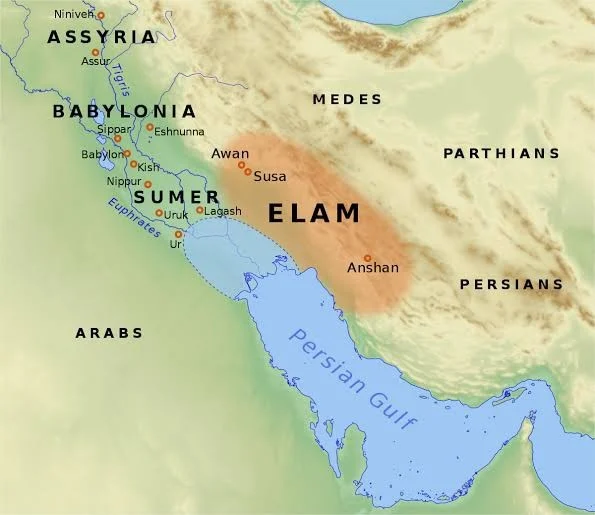
In studying sacred groves, sacred trees and sacred discs as they appear in cylinder seals, stele, and clay tablets we can see the motif of tree, winged disc above the tree surrounded by Griffons (Chorobai/ Cherubs) in Neo-Assyrian (seal of Musezib-Ninurta – 825 BCE), Middle Assyrian (seal of Eriba-Adad l, 1,392-1,396 BCE), Mittanian (seal of Tarmi-xxx {-xxx = loss of last letters} 1,370 BCE), seal of Saushtatar, King of Mittani (1,425 BCE), Teleilat el Ghassul (Jordanian House Fresco -5th millennium BCE!!! —a star surrounded by entropic and iconic phenomena {all outer, medial and inner stars have eight points. The Aryan Svasti has the same. At this juncture, we would need to seek the Areus figure of the Syunik culture and the Svastis of the “goddess cultures” of the Balkan and old European cultures (ca. 35,000 BCE for the source of petroglyphs coming out of the Armenian region).

I’d like to take note with the Areus figure, which in proto Syunik (old Armenian {35,000 BCE}), that the Areus is both the mother petroglyph for Sun, Lion, Ram (or sacrificial animal), Eye, God, Star, and Circle. We find the Ram within the sacred tree or sacred grove seal depiction on a Proto-Elamite seal (ca. 4th millennium BCE!!!). Could this ‘horned’ animal give us a clue into the god’s halo, corona or horns? An atonement animal (cf. theriomorphic forms of deities in “Hebrew thought compared with Greek”, by Thorlief Boman (pg. 101).

Dr. Diana Stein makes the argument that the ‘holy tree’ or ‘holy branches’ are cannabis leaves found in the Steppe Region of the Caucasus. That these regions contain evidence of cultural usage/ cult usage and the Ram was just one of the animal figures seen in this holy depiction. Could the “ETS” be the sign, in the earliest of Hebrew depictions, of the chieftain of Eden laying on their side fully intoxicated with ‘heavenly words’ to reveal? Could this be the “Satan” who ‘offered the first joint to Eve’ ? —-I’m speaking with a little tongue and cheek but grasping for the gist of this time period where Eden, especially, Gan da Eden or Paradise was located in the valleys which were encamped inside of the highlands of the North Western Iranian plateaus. This region would be within the proximity of the Steppe region. Was the herb only for the chieftain-god-angels-griffons-cherubs? Was the Rig-Veda referring to the same practice with the Angira (angels) in the coal burning brazier cult camps; that is, the metallurgic ‘cauldron keepers’ and their guild?

We have already covered the story of Inanna (mother of all living {Eve}) and Enki (the offering deity of intoxication) at length. I believe that this story IS the narrative by which Eve’s demise was probably closest depicted within the context of Sumerian story telling. It is a much older retained story as written down that the Mosaic Genesis 3 account, but the “event” is all the same….. i.e., SOMETHING happened in the likeness of the Genesis 3 account at this region and time. The commonalities are just too great within the numerous cultures who carry this same story with their cultural bint.

Sexual congress and intoxication are mentioned directly within the dialogue of Inanna and Enki. Why wouldn’t we understand this as the Genesis story? The fruit are the leaves of the cannabis plant, sexual congress occurred in the ‘groves’ or region where the head shaman or chieftain grew the heavenly plant, the knowledge was handed to Cain to carry on the art of cannabis growing and metallurgy (cf. to ‘metallurgy and Cain, the first assassin/ ‘hashish-an’).

Nimrod’s, “Let us make us a Shem (Name/ encirclement/ encampment/ legal boundary)” carries on the tradition of Eve and the Serpent; Inanna and Enki

In A.R. George’s, “House Most High”, we take a look at hundreds of ziggurats by name and function. So many ziggurats had temple prostitution on the top tier for procreation, ‘sanctity’ to the goddess of procreation, sexual pleasure, etc. Is this not the allusion to the 70 virgins for those who are obedient to Allah in Allah’s bidding. For, it is on the top tier of the many fortresses that we see in Sumeria and Babylon that absolutely carry the same idea as the “Old Man (or god) on the Mountain.

It is amazing to me to know from the renowned writer, Bernard Lewis, that in his book, “The Assassins”, the theme is always the same: *The Old Man (god/ chieftain/ Shaman) lives on a mountain, hill, fortress top with many tiers (Raquiyah: Hebrew/ Egyptian: “heavenly firmaments” from whence he dispenses his order to kill to his hashisans or assassins at his will/ bidding. When the deed is done, the hashashin/ assassin gets to go to glory by climbing the Raquiya (“Steps to Heaven”) to the top tier (usually known as the “7th Heaven”) where he can choose between the 70 young virgins for his sexual appetite. The origin of this system began in ancient Persia/Iran (prior Islam). What do we gather from this? Cain was the Bible’s ‘first murderer’. There is a very large assassin’s fortress that can be seen in Bernard Lewis’ book, “The Assassins” in the photo sections between pages 90 and 91 show the “fortress of the Assassin” called the “Assassin castle of Qa’in”. I find it astonishing to note that Cain’s name, “qain”, does indeed mean, “smithy/ metal worker”. And that his home was called “Bheid-Tibira” which meant, “Home of the metal worker”. The Bible gives us the clue to his works and his progeny that would continue his works by the Tubal-Cain clan that did remove itself as metal workers from the province of Noqti (“NOD”, East of Eden’s, “paradise” {close to Tabriz, Iran}), go up north of Tabriz into the Azerbaijani province, then the steppe regions then straight down into Eridu, which would be named after the sons of Enoch, i.e., Irad—“to descend down”. Go to google earth and type in Eridu. You will be shocked to both see the first city-state the world has known ( read its history that Google Earth gives )!

Are the Jenghiz Khan Clans named after the “Cain” that I have mentioned? I believe so. This same Steppe culture falls in line with the Steppe Region track record for the biblical accounts for Cain and his kind. Both Khan and Cain cultures were/ or became Steppe people at one time. Cain’s son, Enoch, bore Irad from which his name means, “descended”. Eridu is the first city in the world residing just north of the juncture of the Tigris and Eupharates. Eridu bears the name of “Irad”. From Eridu, do we have cultivated metallurgists continuing west into Canaan. Yes, you might put that together too, “Canaan”, I do believe retains Cain’s name. It is from Canaan that I have mentioned and will mention the great songs that were dedicated to Cush, a great grandson of Cain, who made cudgels for Baal to fight Yam, the Sea god. These metallurgists did indeed carry the herald of YHVH as their metallurgist’s god. For sure, they were a warring, nomadic, sword bearing peoples that took over wherever they went. Once again, Cain, if he is to be the first metallurgist, would have had the same identity as the first Metallurgists who carried “YAHWEH” as their ensign God and the assassin’s family creed would have carried all throughout the Middle East and into Canaan.

When I first picked up Bernard Lewis’ work, “The Assassins”, I had no idea of the ‘creed’ that they held. This was purely religious from the Assassins who did the bidding of “The Old Man of the Mountain”. The “Old Man/ Assassin of the Mountain” was first found as Head of Assassins at the province of (Romanized Ghayen) the Eastern Persian *Quayen/ Qa’in/ K’yyn. This province encircles Noqti (North and South), i.e., “NOD”. Nod, of course, is the Biblical residence for “Cain” after his exile from Eden after the murder of his brother, Abel. It is also referred to as the Southern Khorasan Province in Iran. The Fortress of Qa’in is indeed the ancient Assassin’s “castle”. The Middle Persian work called, “Shahrestaniha i Eranshar” mentions “Kyyn” or “Qa’en”, the city, and attributes its foundation to the legendary king, Kai Lohrasp. This can be found in the Shahnameh, or, “Book of Kings” by Abdul-Qesem Ferdowsi Tusi. Such mentionings of the history of the Persian Kings reaches back into myth. But, it is mentioned that Kai Lohrasp is known for the “Fire Temple” that had no previous record until then. Where myth, history, and reality meet must be met with a ‘conjunctive’ mind able to hold all 3 in order to traject to deeper truths. Nonetheless, these poetical ‘histories’ do touch Cain’s profile (smithy, coal burner, cauldron keep, metallurgist) and the Fire Priests of the Rig Vedas called the “Angira”. The closest and possibly only time I’ve found an etymological match for “angel”. The Angira: “angels/ fire-coal burners/ snake faced beings (cf. Oxford Sanskrit Dictionary pgs. 37 and 289 “Angira” were interchangeable in meaning with the Virupas = angels – those with a mark = those with snake faces/ ugly/ deformed/ keepers of holy shrine/ cauldron keepers/ coal burners/priests/fire-service/}— c.f., “ng” …Nag – ‘snake’; Angira; Annunaki – sons of heaven: “An = ‘Heaven’ {Sumerian/ Chinese/ Assyrian} + NG = “heavens serpents/ Seraphim/“— God’s “sons”, God’s “eli” – ‘little gods’).

If we are to approach the Bible as a work of Genius, then, it must match all of the sciences that would challenge its integrity. For my limitations, I can apply those Biblical meanings that hold literal, figurative, cryptic, multi-layered, geological, spiritual, metaphorical, poetical, philosophical and Theological contiguous agreement. From there, I can deduce that the *narration* of the Biblical “Qa’in (“the forger/ smithy”) was both a murderer of his Brother (singular) and his Brethren (i.e., a murderer of his fellow proto Shumerians {Sumerians – prior to Babel}. The Sumerians, originally, being a unified social group with shared language, law, belief, and theology prior to the alterations done to neo-Sumerian language with Kartvelian under the hand of Enmerker: Cf. Dr Anna Meskhi’s, “Kartvelian Linguoculturology of the Past”; pgs. 217 and ff.).

Was this a later reference to “Cush”? The founder of buildings, the father of Nimrod in the Bible or Enmerker in Sumerian? We see Cush’s name mentioned in the regions of Eden still (even within the Armenian mountain ranges do I consider the “Narration” of the Biblical Genesis to carry on its “Edenic” story). To the north of modern Tabriz, Iran, there is a mountain pass through the Azeri towns which speckle Tabriz and Ahar. The modern name for the 4,000 meter high mountain ridge which separates the valley of Tabriz (ca.- Garden of Eden) and Ahar is called, “Kusheh Dagh”, or, the “Mountain of Kush”. Much more could be said concerning Nimrod’s (son of Cush) envoys and military action back into Eden’s Garden from whence precious stones and ore were captured. The knowledge of these precious minerals is mentioned in the Biblical account of Eden and the Sumerian account, “Enmerker and the Lord of Aratta (Eden/ the “Earth {as was known to the indigenous ‘Edenites’}”)”.
If Cush was the Father of Nimrod, then, for sure, he helped his son establish the Babylonian system of “Let us make us a Shem” for it was Cush that was both a builder and a confounder. We see his images as Janus and Hephaistos- the double faced god who saw both antediluvian and postdiluvian worlds. He saw building up erections of pyramids and witnessed the confounding of such a process. He is seen as a cudgel holder and cudgel maker for Lord Baal. His name bears the meaning for “chaos” as in the days of Peleg (“breaking apart” in Hebrew) the ONE Sepah or Language was split.

It is within the ‘boundary lines’ of the Heroes that we do NOT find the Faithful. For, the Faithful have acted in obedience, humility in prayer, submission to the Will of God that a Messiah would come to save them from their plight. Grace was preached to the Old Testament Patriarchs/ Matriarchs. The Hero made a name for themself as is given in Patristic histories for the “NAME” of the Hero and Pride for HIS progeny. The NAME would be ‘filled’ by their actions as they would forge (“qain”) a ‘NAME’ for themselves. The penultimate theme for the Hero is that they “make their own fate”.


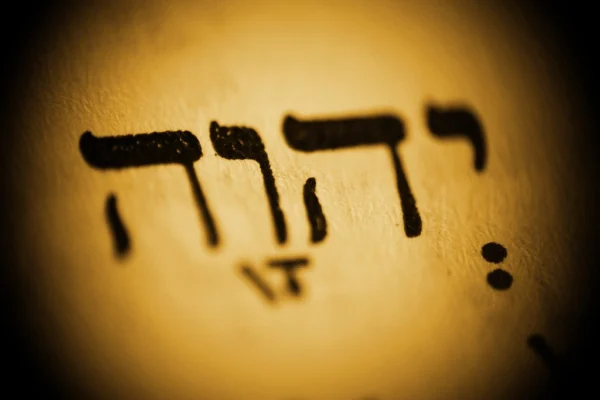
The NAME of YHWH required obedience and humility. Over the Test of Time, the Jews are back in their state, not because of their perseverance but because YHVH will show HIS power, HIS SHEM/ NAME through them, by HIM …as well as those who are humbled. I am convinced of “THE STORY” that there is a temporal theme that we must live its dramas out. That theme is Messiah vs Hero. I am convinced that we are the players which are written into the narration. I am convinced that we are moved by the hand of God to define the “boundary” lines of ‘that which is beneficial to all and that which can no longer be. I am convinced that there is no dualism or conflict of powers that be. That ALL actions of the players are preordained by the Great Artisan. “MEANING” is taught here and now through the Drama.

Footnote

I have mentioned Cain’s history found in Cush, we might look to Mircea Eliade’s book, “The Forge and the Crucible”, especially pages 97-99, where we have an historical layout of the forgers or smithies that were indeed associated with music, weapons, tools fashioned by metallurgists who travelled and founded “Canaan (Cain’s province)” and who sang songs of dedication to Koshar-wa-Hasis (literally in Ugaritic: “skilful and astute”) the god who ‘forged’ for the Main god, “Baal”, two cudgels to overcome Yam, the Lord of the Seas and underground waters (Abyss/ Enki—Lord of the Underground waters/ The “Satan” figure in Enki and Inanna).

Restating part one, addendums, extra mentions and exonerations
Technically, the term,‘belief’, never meant to act in “blindness” until our recent perversion of this term—that is, the ‘moralization’ of this term.  Initially, the term, “belief”, would have carried an observed intentional and honest act. 

Plato’s daemon, Socrates says: “Doxa (glory) is derived either from the pursuit (dioxis) which the soul carries on as it pursues the knowledge of the nature of things, or from the shooting of the bow (toxou boulay); the latter is more likely; at any rate, oi’eisis (*belief*) supports this view, for it appears to mean the motion (oisis) of the soul towards the essential nature of every individual thing, just as boulay (intention) denotes shooting (boulay) and boulesthai (intended trajectiory/ intention/ wish/ desire), as well as bouleusthai (plan), denotes aiming at something. All these words seem to follow ‘doxa’ and to express the idea of shooting, just as “a’boulia (a = negative prefix-‘alpha privative’ = “not” + boulia = council, direction, advisement), on the other hand, appears to a *failure to hit*, as if a person did not shoot or hit that which he shot at or wished or planned or desired”.

I also condemn (Latin: damnus -‘critique’’ {not send to hell}) the scientific community when they condemn the ‘believing’ communities for employing ‘faith’ or ‘belief’. Such ‘science’ such be criticized for not doing their research into their word usage. No word, no act, no energy comes out of a vacuum. There’s always a ‘string’ attached; you Quantum P-braners know what I’m talking about!
Origin of “belief (noun)” and “faith (verb)”
“Bheidh” is the Proto Indo European/ Kurgan root for “belief”. “Bheidh” carries a collage of meaning. It carries with it the meaning of “abode” or “abide”. As the Holy Spirit ‘abides’ in us; as the Holy Spirit makes His “abode” in us. It is a place of resting, trusting, etc.  King David “trusted” that he could kill the Giant. Not because he “saw” it but because he had been protecting sheep since his youth with his slingshot. David had “FAITH” in his past *accounts*. David had taken a ‘marking’ or ‘talley’ of his kills of predator animals that had the nature to kill his gentle sheep. This *kind* of faith is not to be moralized.

Such a “Faith” as David’s has been perverted by false moralists to say, “David’sthe type of faith was ‘blind’ “. It was not. Moreover, let’s turn it around: today’s moralist could use the ‘modern’ sense of ‘faith’ to say, “one must *act* in blind trust and go forth. This is unsound doctrinally and clashes with David (who was the ultimate example of “Trusting” in God as a mere human), any military action past or present, science, music, art…etc.

Another shade of error:  to act “blind” is separate from acting on the “unseen” from which we know makes sense in the Gestalt fashion. Much like the Holy Spirit is always with us but makes sense to us in the here and now. Yet, while Jesus was only here for a period of time in the flesh, His *Acts* were quantum in their meaning. HE fulfilled the Father’s written book about HIM before HE walked the earth. Therefore, each act fulfilled the next as a tightly woven poem. And, it is only through the Spirit can we “See” this Logos walked the Father’s preordained pathway.

Both the Holy Spirit and Jesus are “blind” to us now, because we don’t physically see them, but their substantial natures solidified one another in our worldviews if we are calibrated to look through these lenses. In this kind of Trust, faith, belief, Jesus, the Father, and Holy Spirit are not ‘blind things’ to us.
Many modern “christianities” have made “Faith” a ‘blind thing’ partly because it is much easier to control the ‘flock’. When there is a *command* to act on the illogical, then, power is given to the leaders. “Faith” became an implemented word for those ministers who would abuse their sheep. Never before have we seen this word, “Faith”, be so abused!  Yet it is greed, power, herding of the masses, etc. by ministers that have allowed it to be so mistranslated. Distilled down to it’s primal meaning: keeping the sheep blind equals money and power.

In the face of so many ministers is the knowledge of the original Greek and Hebrew Bible given, yet, they do nothing to aid the knowledge of this or many other terms. The ministers do not encourage the ‘flock’ to study, to know, to exegete, to exhaust the Scripture. There would be questions then! There would be a need for a Teacher of the Word who could answer and keep in check Biblical error! For God’s sakes, I need it!  There would be a counter balance to power given to the minister.
Sadly, I have been told from the highest level of my former “church” this past couple of years that I was weird for wanting to know the Greek and Hebrew. That I was ‘different’. They told me, “the study of Greek and Hebrew is ‘crazy, too much, too intense, etc.”. From this mindset, and the courses of actions, sociologically, I’m gone from this club. It took my wife, in different ways, to see the selfish side of this minister. As Covid hit in full force during December of 2020, this minister continued to push for *THE FAITHFUL* to ‘fill the pews’. That the “FAITHFUL” would not be deterred. All while, we encountered deaths by COVID in our “church”.  One way or the other, “FAITH”, “Belief”, “Trust”, etc. has been perverted by this man. He is only one of the other high percentages of ministers who do the exact same thing!

As a preface:

I never make a moral judgement in my writings. All terms used such as ‘pagan’, ‘heathen’ ‘non-christian’ are all in their respective usages. Pagan means ‘the other *page* or ‘those who camp on the outskirts of the *peg* or *pegged-off* area. “Heathen” means, ‘those who live on the uncultivated plains; ‘the heath’. Villains were villagers that shared the land of the King or Dominion. Non-christian simply means that. Agnostic simply means ‘not to claim to know’. Truth means “root, stem and branches”. I take ALL terms to their technical ranks, careful not to *moralize* them. All such words are researched by me through countless hours in Proto Indo European linguistics, Sumerian, Kartvelian, Syunik, etc. etc. In this approach we can come to clean truths as we will learn to believe, to trust, and to have faith in the natural flow of etymology and its WILL to express1 itself. The Logos will be born out of every natural condition given its time (xairos = “at the hand”/ “at the pointed to time”).

Many profess we’re in a “postmodern” or “post-truth” era. Simply put, this would mean that we are a culture without regard to ‘belief’ in truths , only ‘results’. The false assumption is this is a ‘christianized’ thing, therefore, a dulling of the senses for the ‘functional modern human’. Yet, the contradiction of judgments from the non-Christian arises when a belief in results is garnered.

This is exactly what the non Christian judges the Christian for being erroneous of. That is, both Christian and Non Christian employ a kind of faith. Simply put: ‘faith’ is something to ‘expect’ or ‘look out’ for. Faith is ‘substantial’, that is, Faith has *sub-standing* or an ‘under-root’ by which one can stand for, on, by, with. Hence, the Biblical formula: “Faith is the substance ‘upostasis [HUPO- under/ STASIS -standing] of things hoped for” (Hebrews 11:1).

1 Express: Latin: ex – ‘out’ + p.i.e. – ‘per-‘ = “to strike” {to push out}
2 Truth: P.I.E., “Daro” = (zero grade) “DR- = ‘truth’ = ‘tree’ = ‘root, stem and branches’. Cf. Tom Shippey’s, “roots, stems and branches”.

Sounds a little complicated? The second I said, “belief”3 Did I err? I did not, technically. Technically, ‘belief’ has never meant a practice in ignorance or a “blind” act. It’s something with ‘eyes wide open’ —-that is, something of expectation and its act of sober participation. “Belief”, true belief, employs a kind of ‘reason’. A reason by which ‘a particular logic’ is implemented and a Segway of events anticipated. I might say, the anatomy of the Logos acts out the Boule or Will of the Father. In these agreements of motion, so does nature follow in the same motion. There is nothing that disagrees with nature, the child of Boule.

Looking to the root meaning of “belief” we must turn to our mother languages to find the most ‘natural’ sense behind the abstracted word, “belief”. “Bheidh” is the Proto Indo European root for “belief”. “Bheidh” means a place from which something is awaited, a ‘place where consciousness operates – mentally, spiritually, physically.

“Faith” has been perverted by false moralists. “Faith” became a ‘blind thing’. “Faith” became an operative word implemented by ‘easy-believism’/ ‘theologians’ who would benefit from the sheep who continue to engage in ‘contract Christianity’. That is, ministers who would abuse their sheep by keeping them thinking that ritual without thought is salvific.

Never before have we seen this word, “Faith”, so abused, hence, the Church abused. Yet, greed, power, herding of the masses, etc. by ministers have allowed its mistranslation with all the Greek and Hebrew texts at their fingertips.

3 Proto – Indo – European root: “Bheidh” a resting place; awaiting place; abode; expect. One of the oldest senses to “bheidh” is found in the Albanian *bese* by which a family of a murdered member holds back their blood feud with the family of the murderer. The Albanian Bese or its P.I.E. zero grade equivalent, “bheidh” (bheidh-tya) is a *social contract* word for ‘a stay’ of action, ‘a halt’, ‘an observation of a law which halts retributive action’. Cf. Calvert Watkins, “The American Heritage dictionary of Indo European Roots” (pgs. 8-9). Joseph Shipley, “The Origins of English Words“ – Bheidh = “abide; abode” (pgs. 31-32).

Such a bankless meaning holds bankless doctrines. Such an abuse of power necessitates ‘shadow words’, ‘shadow logic’, ‘shadow theologies’.

Proving “Bheidh” (Faith) as substantial

The ‘flow’ of poetry, archery, meaning, music, etc. is called “rous” in Classical Greek.
We see ‘rous’ mentioned in Plato’s Cratylus as in the archer’s alignment with pure mathematics (or ‘boule’ – “the god’s council/ *volition*/ *volley*/ballistics) as we have and will state in this book. That is, the human’s ‘climb’ to the point of perfect reference or the god’s council, a.k.a., ‘The Will (boule)’.

It is the authority of the Boule of God that we *act*. The Boule is the council by which nature acts and we observe its non contradictory nature. This pagan Greek idea conjoins without turbulence to a confluence to Old and New Testament Theology. Though, the Greek language and myths are caught and echoed through Paul’s knowledge of Greek and European culture. The invisible stuff by which perfection is exuded or ‘shot’ from is God’s nature (cf. C.S. Lewis’ “A Study of Words” {chapter on: natura/ Phusis, kind}). It is this ‘stuff’, this “boule”, this “determinate council”, this “Will” that is imbued upon us to act in His likeness more and more as the imperfect verb of this action rushes to it’s ‘teleos’ or telegraphed designation. How could we perpetually resist that kind of Will? —-even Nature agrees with It, though not willingly in its futility, rather, it (nature) waits on God to free it from its directed course to destruction. It knows freedom is coming, it knows it can only choose destruction. Therefore, God created, chose and ordained this drama of trajectories for the tragic in order for Hope to come through. Romans 8:19.

In Plato’s “Cratylus”, the ‘Boule’ was what was NOT interrupted, whether in the action of an athlete or the verbal usage found in a Logical Dialogue. Likewise, the “LOGOS”, was Jesus’ other referential NAME. The human side, ‘the rous’ was coming to be as interwoven with LOGOS’. That is, the LOGOS became the Will in objective form and action. Here, we have total agreement of Verb of completion and the acts of perfection and in continuum.

This contextual flow of naturalism and the correlative word banks used to exemplify their natural contexts did commit the natural man (the uninterrupted a-moral pagan) to be driven to perfection with the god’s council on pagan (a-moral/natural) terms. How much more is this a notion to the God of the Universe in Christian verbiage?! One should see that these beautiful pagan word sources were undisturbed in their naturally used cultural flow. Furthered, these undisturbed rivers of meaning came to a completion and exemplification within our relationship between us Jesus Christ. This would indicate that the Pagan’s Saviour was Jesus in masks. I would make the argument that word exemplification met its apogee at the end of the second century A.D. when the early church thinkers dissolved and a politically charged ‘church’ took over, namely the post-nicene church (ca. 350 A.D. the christian thinkers lost their momentum due to Romanism infused ideas/Mariology/ worshipping of the saints, etc.{all of which I call true immoral paganism}).

It is within the diagrams of natural paganism (opposed to contrived immoral paganism) that I do find honesty within the movement or motion of the verbs of both Plato’s dialogues and the New Testament Text. The Anatomy of these verbs which carry the nominative signs like the plastikos (feathers, tassels, ornamentations attached to the clothing of the dancers to ‘show’ the movement of the deity) of the Elysian dances, does haunt me to the point where I am convicted by the Holy Spirit to feel God over my shoulder. One might think about this ‘kind’ of FAITH…..a substantial, tangible, non-blind FAITH (Bheidh); a FAITH that is a denial of the ‘blind faith’ that is concocted from this horrid Western Hemisphere of pseudo christian thought.

Furthered for all, this linguistic-math is found in the word for, “disciple”—“mathetikon”, or, “mathematician” of the WORDS of Christ. Such a mathetike fulfills their meaning in martyrdom or ‘maturity’ ..hence, ‘maturos’ in Greek.

TRUTH and FALSEHOOD

Socrates says, “Truth” is the word, ‘aletheia’, by which we get the definition ‘to wander with the goddess’ without interruption (without halting, stepping around, stepping over, impeded ) of the goddess’ motion upon you’. Therefore, *divine wandering* = godly motion without impedance/ resistance. In contrast, ‘falsehood’ implies ‘holding back by force’ and contrasts itself with Truth. Falsehood is reckoned with ‘slumber’, ‘conceal’, ‘hide’ “. Plato; Cratylus 420: E

I take Plato’s words and hold them to the seat of the minister. Not the minister, the seat. If the minister’s words do not hold to the title/ position of the seat, please step down. Every word must be tested in the mouths of the ministers to the Scripture from which they are upheld, adored, supported, etc. Pivotal verses, passages, exegeses, etc. are foundational for the Christian Faith. Right? Or is your Bible nothing more than just a ‘good reference’ for ‘good sayings’? I could totally understand this approach and on ONE level, go with that….on the next level: apologetics, hermeneutics, eschatology and exegesis, etc….absolutely not. It is NOT *just* a Book. 

Droves come each week to not be fooled or lied to, right? Would droves come to the church to ‘feel good’ about a “I did my obligation” and “I checked in” and “I served my contract Christianity for the week” if they were conscious about their ***belief***?! Please say you don’t. 

Would you choose to get in your hot car, fight the kids, fight the everything for an hour and a half to get to a place for an hour and a 20 minutes that is not accurate in what they say? —-worse yet, have an agenda that takes precedent over the ‘acclaimed precedent source, the Bible. 

Hold your flappy leather bound Bible in the King James, which obviously Jesus and Paul spoke in…, nay, the Esv, Niv, Asb, “I do not care version”., etc. and you’re still wrong when you do not hold to the contingency that your text is inerrant. 

If I read Mark Twain’s, “Huckleberry Finn”, I would hold that it is ‘inerrant’ to Mark Twain and the ‘narrative’ by which it holds. If I teach a class on Huckleberry Finn, I will not OMIT a sentence like it’s NOT THERE. Let alone a chapter. Continuity, contiguity, inerrancy to its OWN NARRATION. Further yet, quit my class on Mark Twain’s, Huck Finn if I tell you that Samuel Clemons was really trying out his double entendres concerning horse sales at Dicky’s. If I create the aporia by intended omission I should be fired as a teacher of Mark Twain’s, Huck Finn. 

 When one claims that the Bible is wholly inspired please act upon it. Even if it were a lie (which I don’t), at LEAST ACT ON IT if you hold the ‘seat’ of the minister which claims its inerrancy!

If a minister claims that there is a particular book that is the “Greatest book in all of the Bible”—-I’m now interested. If a minister claims that “THAT particular book and chapter are the ‘greatest’ “ in the Bible…well, you MUST have something to show me, right? Well, if there is an omission of a verse that is FOUNDATIONAL to that particular chapter and book ( since, all must be truthful) and you, the minister, have CLEARLY omitted it for the sake of a particular narrative germaine to that ‘divided’ sect of religious “beliefs”, —then I am forever nauseated with this. 

So, there’s an argument against me here: “Kyle, they’re probably going to come back to that particular *key passage verse* to suture it all up”. The problem with that is, the omission of that *key passage verse* was necessary to promulgate dualism and its corrupted form of ‘free’ and ‘will’. As only Baptists can say, “yes, you are saved by *The Grace (unmerited favor/ unearned favor) of God* before the Foundation of the World and there’s nothing that can snatch you out of God’s hands (now, in the same breath they say (“they” = Charles Stanley, Adrian Rogers, every Southern Baptist out there) ..*BUT*, you can ‘reject’ Him and go to Hell”! Lol, sigh!….I say: “isn’t your ‘rejection’ also a part of the corruption of this world that is the ‘something’ that is the ‘nothing’ in the * nothing can snatch you out of God’s hands? NO THING can snatch you….not a loop hole BASED ON THE CORRUPTED IDEA THAT FREE WILL IS RENEGADE WILL. “Free Will” has a better translation that I will give you: “You are freely bound to act within the limitations that make the bullseye. If you are bound to missing the bullseye you are ‘free from the bullseye and limited to the miss….a VERY BROAD and OPEN *FREEDOM* ”. 

“Free Will”, in the sense that you regenerate and fall constantly, which you know you do in at least your thoughts, is a ‘nonce’ thing. There is no substance nor actuality in that. If you regenerate from a body that naturally inclined the death (spiritual) then, what ‘goodness’ was in you?…God, or You? Romans 3: 1-ff….”There is no one who is righteous, ALL go their own way, there is NONE who do good”. I ask again, “Where does the Goodness come from?” Maybe more importantly, “WHO sustains the GOODNESS that up until NOW we are kept from ourselves?” 

My book covers that “belief” (“ousis” {Greek}) is actually based on those things that you can perceive as reasonable, good, salvific, contiguous with the motion of God upon you…that thing that you look out to …expect… 

If you believe in dualism —-I have no problem with you. I will give you love, grace, charity like God and kind people give me, freely. I am a positivist in this regard. Be a dualist and may God bless us all anyway. My issue is the foundation by which the contiguity of the Biblical text of Romans chapters 8 and 9 are held together by each chapter’s verbiage. 

Back to my emotion on this: I get it, I let it go, I do not judge, but I never forget. 

Dualism is the narration that we have defaulted to in Christendom. Its origins began in Persia with one of the longest practiced religions in the world, Zoroastrianism. It definitely influenced Sedond Temple Judaism, Gnosticism, Greek Philosophy, Islam and factions of Christianity (more than ever at present). Dualism is a replacement theology for the belief of Sovereignty that says, “God is Sovereign and He chooses and wills all things——not you. 

Dualism says, “God versus Satan”—- JUST like Superman versus any arch villain. *Who will win?!* Gosh! I don’t know!?! Maybe God just couldn’t save some of those poor slobs from themselves while He saved others that were BIGGER WORSE SLOBS than the ‘’’’unsaved””—— a term of TOTAL HUMANISTIC JUDGEMENT. 

At what point do we stop judging? Ephesians 2 makes it clear that we were at one time ALL a bunch of wretches—-unworthy, unregenerate. Then, Who *regenerates*? Does a dead person make a living decision?!

Dualism creates fear that ‘you better do a good work and not *let the devil get you* or you’re going to hell. Sovereignty and Grace say that you are ultimately missing the mark by your ego centric nature and inclination and that God is growing in you to become, to evolve to that more perfect being just as He is. Isn’t this ‘evolution’? Going to that more perfect place? Going against ‘a nature’ that the athlete fights daily to overcome? What a relationship in that God would predestinate {pre – horizon}, not just ‘foreknow’ {pro-ginosko}, me before the foundation of time and space to be His (Romans 8:29). Either God is Sovereign without constraint Who has PERFECT WILL and IMPLEMENTATION or not. And, NEVER buy into the Baptist argument that “God only *foreknew* …not “determined”—-again, read, Romans 8:29 “For whom God did foreknow He also did predestinate to become in the image of His Son”. 

There are 66 terms for “WILL” and 15 for “Free” that I have in my book. Which ‘cocktail’ combination of “Free Will” will this argument go to? ….sigh…. I want to speak my heart.. I don’t mean to offend…I mean to ‘save’…that is, save us all from CONFUSION…especially, myself. Forgive me if I have offended you but I can’t relent. 

It was Romans 8:29 that was *omitted* last Sunday. A full reading of Romans all the way up to that ONE VERSE…Why couldn’t that have been read?…

I got this out. Many talk about your day, your dog, cats, wars, Covid, abuse, the horrors, the pleasures of life, music, etc…. I took this time to say this because I am a real human being that feels this way right now. Your cat will not offend me, neither will your new house boat, will this offend you? 

If I’m in error, forgive me… I’m a work in progress. Please forgive the grammar and spelling…all the errors. I typed with emotion and left my grammar skills on the shelf. 

Here ( just now) is the response of an Elder in the Church to me after I addressed this issue: “to Kyle:

Leviathan
Levi
Snake Temple/ Snake Cult … ‘e-lea = Lilli (-th) = “Snake Goddess” Caduceus/ Nechustan Temple was the Early Israelite Temple Hezekia tore it down

Levi—-LW- “to twist”; “to coil”
French: “Lieu” : “In lieu of” —“To stand in the the seat of a greater power while that power is absent”. “Attendant” – initially meaning that, later, the name.

In Bernhardt Luther and Eduard Meyer’s work, “Die Israeliten und ihre Nachbarstamme”, 426-ff, we see that the name, LEWI is from the same root as liwyatan, concluding that, ‘among the Levites, the cult of Yahweh was originally inseparable from the serpent cult”. They also say say that, “Le’a” meant, ‘divine serpent’….therefore, conclude that “Eve, the primordial mother of all, is ultimately identical with Leah, the Mother of Simeon and Levi”. Ibid 427

There’s no problem seeing that the “Angira (Angirases)” or “Angels in the Rig Veda accomplished the same tasks that the Levitical Priests did of the early Israelites. They were referred to in the Oxford Sanskrit Dictionary as the

Page
(Nasal + Glottal)

MQ-SM – divination (page 436/ benner)
Qsm – divination; witchcraft; divine;
Nachash – pg 385 benner/ “ensnare”; snare by stealth; catch, smite.
Naga people –
Naga (O.S.D.) – “serpent, esp. as the name of fabulous serpents with human faces inhabiting the city of Bhogarati in the infernal regions…”
Nag
NG
NGH -(peage 180 Benner/ bottom of page) – “shine; enlighten; touch of warmth-light”
ANGira
Ang
Angir
Angira = angelos – pg 119 The arctic home in the Vedas/ Gangadhar Tilak = Persian – “a mounted courier
Angirasi = Angira = one who does the ‘burning of coals’ / ‘burning’/ ‘fire’{for the Temple service} Ananagi
Anunnaki
Enoch


(Metathesis {switching of consonants/ retention of same meaning})

Chanes- meaning: “Serpents” / serpent headed Mayan Priests/ head flattening ritual rite-initiation – (cf. Andrew Collin’s-“Watchers”-last page pg 422
*Ahau Can* (Can) – Mayan—“The great Lordly Serpent”
QN – Cain

Hebrew: Qanu – smith/ black smith/ forger/ metallurgist/ keeper of the secrets of alchemy/ priests of alchemy/ Wizard – of the cauldron/ “Witch” -cauldron – elixir /

(Labial + Rotex {+ Guttural})

Pirig – Lion, sun, light
Peleg- the world was confounded in Speech in his day (Genesis 11) Bharag – light/ fire/ coal/ brazen cauldron on altar
Brah—ama
Vellum
Ba’al
Pur—
Parsi
Persian
Pharaoh – Serpent Priest/ Fire/ toxic venom Priest

*Glottal, Rotex, Labial* Qalups {Greek} – metallugist/ Angira {Sanskrit}- coal burners/ Qalibi {Kartvelian} -‘ to mould {mold}/ Latin: “Chalybum” / Phoenician: “ ‘Aleph “ <- ‘ = glottal catch, rotex and labial. Also, Aleph – as god…as chief deity…as Yahweh, the Metallurgy God

*** -> ?”Cherub”; “Seraph” Kyle
Akkadian: kerubu: “to bless”—-to dispense? METOD Anglo Saxon…God-dispenser – epithet of “Bull Colossus”. Hebrew: Kerubh: plural Kerubhim.
To dispense with Metals….tools…weapons
Griffin->gryps: ‘a dragon that guards’….’head and wings of eagle and body of a a lion; believed to have lived in *&^%!!!Scythia { to guard its gold there”}
Scythia = Greek Skythia: name anciently given to the region along the north coast of the Black Sea…meaning “Shepherd”

Metallurgy, Job, YAHWEH, Mt. Seir – Ore rich, Edomites, Idumaea, Cauldron Cult, Ziggurat Theology, and the contemporaneous Biblical and extra-Biblical character, Job

Starting with the oldest book in the Bible, the Patriarch Job was identified as Jobab in Genesis 36:33-35 where we find that Job was the second listed king of Edom.

In the beginning of Job we see that Job lived in Uz (Utz-part of Edom; cf. Lamentations 4:21; Uz was a son of Dishan, an original chieftain of Seir {cf. Mt. Seir where Yahweh ‘went forth’: Judges 5:4–”LORD, WHEN THOU WENTEST OUT OF SEIR, WHEN THOU MARCHEST OUT OF THE FIELD OF EDOM, THE EARTH TREMBLED, AND THE HEAVENS DROPPED, THE CLOUDS ALSO DROPPED WATER” 1}; Seir was the land that Esau conquered and merged with (cf. Genesis 36:28-30), on the confines of Idumaea which is Edom and Arabia. https://en.wikipedia.org/wiki/Mount_Seir.

Job took an Arabian wife and bore Ennon.

Job’s Father was Zerah, who was descended from Esau, and his mother was Bosporus, so that Job was the fifth in lineage from Abraham. Genesis 36:31-35 tells us about these kings that reigned in Edom, —-where Job governed.

The original Eliphaz was an Edomite and the son of Esau. His son was named Teman (Genesis 36). This particular Teman became a General or Chieftain, of many, of Edom. This district bears his name. “Eliphaz the Temanite” was from this area, and probably was a descendant of the original Eliphaz and Teman—Endonymic-Patrilineal heritage. For this, evidence builds that Job lived after Esau and after the Edomites moved into the land of Uz. It is for this geographical reason that I believe that the Kennites (Cain-ties), as metallurgists and their secret alchemy would have affected Eliphaz’s cosmological view.

We see Bildad, the Shuhite as a descendant of Abraham through Keturah (Gn. 25:2) must have been an Edomite. Zophar, Job’s deuteragonist, would also have been an Edomite. Finally, Elihu is called a Buztie, and Buz was the son of Nahor, Brother of Uz. The town of Buz is linked with Dedan and Tema (cf. Jeremiah 25:23).

These Edomites, for sure, lived contemporaneously with the Sumerians and Babylonians. The Edomites’ cosmology would have been greatly affected by the Sumerians and the Babylonians.

The early Edomites, such as Job, must have had a cosmological reference point to the objective/literal creations the ziggurat of Marduk, as well as the Egyptians (for whom their

1 “Daleth” = “door” which leads to the next “heaven”. The entranceway into the AYIN or “EYE” of Yahweh. Mist, Water, Flow, Flood, Moisture, etc. are identified with these valent (used in combination) terms.

Structures came from Marduk of Sumeria). For sure, the Edomites were metallurgists who carried their craft thanks to their predecessors, the Kennites, or “Cain-ites”.

The *ziqqurrat apsî elite* or, “the upper ziqqurrat of the Apsû”, was E-temenanki, the Temple of Nimrod, Marduk, Enmerker, Narmer, Enmer, Menes (who was the First Pharoah), …all the same man/god but referred to by different endonyms.

Looking at the first E’.TEMEN.AN.KI = (Sumerian)

These are a few references to the Raquiya/ Plates/ Firmament.
1) McClintock and Strong’s “cyclopedia of Biblical, Theological, Ecclesiastical Literature (“Cosmology” pg. 528/ volume 2 {c-d}
2)Marija Gimbutas’ “The Language of the Goddess” page 92-94 {{{{ matriarchal Old Religion- plates show a sense to “Parthenogenesis” with life in the water/ surrounded by the Serpent Force – cf. book and it’s “Meander and Chevron”.. cf. my Lecture at “Fulness of Meaning Christian Ministries. Com” under video lectures category: “Meander and Chevron”
3)”The Mysteries (edited by Joseph Campbell) Papers from the Eranos Yearbooks” / Bollingen Series XXX . 2/ Princeton – cf. serpent bowl below.
4) A.R. George’s, “House Most High” —- Mesopotamian Civilizations
This book shows hundreds of ziggurats —‘ascensions/ erections’ to Heaven-where “divine intercourse with ‘Inanna-ean’, or “in the likeness of Inanna, could be held by ‘the god(s) of the region. The “TS-TS” is a common name for “throne” or “seat” throughout Hebrew and , I believe, etymological ties into Sumerian and Kartvelian— as a “seat of encampment”.

Cosmologically, “raquiya” was the divider of ‘atmospheres’ {for hierarchies of beings/ life/etc. —c.f. “Jacob’s Ladder” as a Sumerian/ Egyptian reference – contemporary with the Job 38:4,6, and 19 references God concerning Wooley’s “Sumeria”— pages 160-161 – going though portholes/ doors with hidden joists, hinges, and *sockets ( Sumerian: na4.-dab5–ig.na4)* which are the focus of ELOAH’s question to Job concerning, “have you seen the hidden sockets that I have placed for the foundations set for the world?” not seen by mortal man. These door sockets would have had pious inscriptions not made for anyone except deities and future builders.

But, Raquiya has been used a large stone, floor—wood spread for a floor, a deck, etc. to substantiate *each level of flooring* to a ziggurat (ziqqirat). Each ‘plate’, ‘raquiyah’ would, therefore, hold the next ‘firmament’ of the Heavenlies—that is, the flooring of each level of the ziggurat—if one holds that ascending the ziggurats were a Theology/ a Holy experience for only a select few.

In the book of Job, chapter 38: 4-ff…Elohah/ Yahweh asks Job a litany of questions as to show Job’s ignorance. The questions had to do with “house/ temple {E’} terms. Ya.se.di. Foundation/ mad.de.ha measurements/ ta.ba.u fastened/ pin.an.tah cornerstone/ e.ben stone/ d.la.ta.yim  doors/ ho.w.tam seal/ ho.mer — clay/ ….THEN, God asks about the “Treasury in vs 22”… we know that in the Babylonian Talmud there is understood to be 7 heavens (Rakiim) which the deceased must pass through to reach the THRONE OF GLORY (7th Heaven/ Ecstasy). *Each Heaven has a *DOOR (the letter “Dalet” =meaning ‘door’ in the Hebrew pictographic form) which is reached by a stairway. Each level of the 7 Heavens have physical associations such as snow, hail, dew, storm, wind, etc. These ‘passes’ can be associated with the ‘passes’ over the mountain ranges into Eden/ paradise symbolically, Theological —as represented by Enmerker’s journey into Paradise over the Mountain ranges of the Zagros into Eden (specifically, Gan.da.Adin —the Garden of Eden). The peaks mentioned in the Talmud were Michael, Gabriel, Jordanian, Ben Nez, Barakiel, Raashiel…. Representing in respective order: snow, fire, hail, storm, lightning, earthquake.

So, for me, the Babylonians, then the Persian and Median influences on the Jews in captivity were all too great to not influence the Jews with Old World understanding.

In the Temple of Marduk (Nimrod/ Menes/ Enmerker) there would have been a sexual peak at the top. Guarded by the Sheitans (Persian name for “watchers for the Sheikh) or Angels (Korabai – Guardians that were originally for Khorabhadh/ hence the word, “Cherub”). This “god of the universe” -aka, Nimrod/ Enmerker, would have lived in His “foundation of Heaven and Earth”—E’-taminanki very luxuriously as did His successors.

The “Ki-Si” (in Hebrew) was a ‘seat/Throne’ in the midst of the highest raquiya (“that was *as Stone* – Ezekiel 1:26-ff) in on the highest ‘firmament’ of the tower or ziggurat for the imagery of the Jewish and Christian *Throne of God*.

The “Banquet of the Gods”, “The Communion with Christ”, “The fulfillments of Jesus’ Last Supper”, *Adappa – The Babylonian “Adam”, the ONLY one who could set and clear the god’s table*2

So, I’m failingly trying to ‘tie in’ Raquiyah (Plate) and Throne (Ki-Si) Temple imagery between the Sumerians, Egyptians, Pre-exile Jews, Post exile – Apocalyptic Christians. Literal, Cosmological, Theological, Historical.

The key might lie in the terms for construction. That is, the metaphors that were carried over from the physical instantiation.

As I would forget my head if I weren’t attached: the Imagery of Ezekiel 1:1- ff shows the inner construction of “God’s Abode”. He refers to the “Discs” as “wheels”—- ophanim which are where the angels abode. Again, prophetical/ poetical but referential. I thank you so much for referencing the ziggurat in Kartvelian!— I will check out that academic paper!!!

2 Penguin Classics “Poems of Heaven and Hell From Ancient Mesopotamia”, page 169 – ‘Adapa: The Man’


 TECHNICALLY, WE HAVE 7 ATMOSPHERES = SEVEN FIRMAMENTS = 7 LAYERS=7 HEAVENS=7 RAQUIYA. (You must read the entire paper) https://niwa.co.nz/education-and-training/schools/students/layers

The ‘firmament’ was considered the cow’s belly that held the self generating/ begetting God – Horus. Horus was the golden solar falcon god.
The sack or belly was the skin sack, a physical suit by which the god was referred to. That is, the skin sack held the eternal essence. Hence, the Egyptian “Hathor (hat-hor: “house of Horus”)” was the “House of Horus”. The Egyptian cow also represented the land.

We know that the self begetting Son in the Mother’s ‘belly’ was also the consort for the Cow Goddess. He, Horus, entered his mother east to west in flight as a falcon. The implication of sexual intercourse is without question, for there is no Father save that of the Son entering into the cow goddess. He was the son and father.

We see this same relationship with Venus and Cupid, Madonna and Adonis, Shing Moo and Child, Semiramis and Nimrod, etc.