Brandon Heinzelmann
1. Y-R-H (יָרָה): Root meaning “to shoot”, is much like the Greek notion of a directed arrow shot with intention to hit the bullseye. The Hebrew Y-R-H finds similar ideas for “will, intention, educate, lead, guide, teach, etc.” that the Greek holds in its boule/ belous: “arrow/ bullet/ volley/ volition/ directive, etc. as in the Hebrew Y-R-H: “to teach/direct/intentfully cast, etc.”.
Y-R-H conveys intentional guidance and is much broader than just the “law”. Y-R-H encompasses teaching, instruction, and/ or a path such as the Pentateuch, specific rules, or wisdom. Related words Y-R-H include Moreh/ M-R-H (teacher/guide) and Torah/ T-R-H (instruction). The archery imagery suggests aiming within the boundary of God’s desire, law, heart, etc. while maintaining an understanding that His Will brings about events (sometimes destructive) that though we might not understand – we can believe by faith that God does not contradict Himself in His goodness when evil is employed but He uses destruction to ‘bring about’ His good intention within a straight line to His intention.
2. D-A’-T(th) (דַּעַת): From the root Y-D-’A (יָדַע, to know), means a deep, relational, or experiential knowledge— not just intellectual awareness. Seen in Genesis 4:1 (Adam “knew” Eve) and Proverbs 1:7, where D-A’-T(th) pairs with Y-R-H to signify wisdom rooted in knowing God’s sovereignty.
3. Y-R-A and D-A’-T(th) Paired: In Proverbs 1:7, yirah (fear/awe, feminine form of Y-R-A) and da’at connect, showing that reverent “fear” of God leads to practical, intelligible wisdom. Da’at also appears in legal and artisanal contexts (e.g., Exodus 35:31) implying expertise or intimate understanding.
4. T-R-H (תּוֹרָה): Derived from Y-R-H, it means divine teaching or guidance, not just law. It’s the arrow pointing the way (e.g., Exodus 24:12). Often paired with verbs like shamor (to keep) or lamad (to learn), Torah or T-R-H is a feminine noun symbolizing a straight path to wisdom, as in “The Torah”—”The Law’.
5. MuSaR (מוּסָר, Instruction): Found in Proverbs 8:10-12, it represents discipline or instruction leading to da’at/ D-A’-T(th). M-S-R echoes Torah’s guiding role, aiming the learner toward a deep understanding, like an arrow hitting the target.
6. Interplay in Wisdom Literature: Proverbs 1:7, 9:10 and Psalm 119 tie da’at/ D-A’-T(th) – “deep knowing” – together with T-R-H/ torah (guidance), and Y-R-H (teaching/shooting) together. Torah/ T-R-H is the path, yarah/ Y-R-H the act of aiming, and da’at/ D-A’’T(th) is more or less the bullseye of understanding within God’s will. Jeremiah 3:15 and Isaiah 28:9-10 reinforce this with Y-R-H in the hiphil (causative) form meaning “to cause to know.”
Endcap:
The archery metaphor ties it all together. Yarah is shooting with intention, Torah is the arrow, and da’at is hitting the bullseye.
Further studies on Hebrew prefixes like le-, hi-, or te- will show that they steer the verb yarah/ Y-R-H to emphasize direction, intensity, or purpose.
Key Themes
• Archery Imagery: The terms reflect a trajectory of intentionality, like an archer aiming at a target, paralleling the Greek toxiphilus (lover of archery).
• Wisdom as Relational: Da’at emphasizes intimate, covenantal knowledge of God, gained through Torah’s guidance (Y-R-H).
• Guidance and Will: Torah and Y-R-H direct the will toward God’s purpose, with MuSaR reinforcing disciplined learning.”
In Sumerian, speech was e-me, and clay was i-mi-like Adam and Eve before the fall. When God bent down and shaped Adam from the dust, he didn’t just pack mud; he pressed in the word first. Sumerians knew this: you can’t write until you’ve got a tongue, and you can’t have a tongue until something divine whispers it there. Adam’s breath-ruach-landed with the same click as cuneiform on wet tablet. That’s why the Egyptians put writing on the ceiling of tombs: every letter fell straight from heaven. Neanderthals could grunt, Denisovans could hum, but only Adam got the upgrade-eme wired in before the clay even cooled. So when you read formed from the ground in Genesis, think i-mi: clay plus the exact same sound God used to say Let there be. You’re not just reading dust; you’re hearing the first syllable spoken into flesh.
I mostly dove into the Biblical and classical Greek to find the materials that supported my proposed theory on “the archer of intent” and “his/her” linguistic anatomy. Only later in my search for truths did I find my archery maxim to be fully substantiated in the Tanach (Hebrew Old Testament).
I found it very necessary to place this short treatment of the Hebrew’s notions of the archer’s “shot to the directive” in order to prime you for reading this book. I will cover the Hebrew significance of the arrow and its shot within the Hebrew roots Y-R-H, D-A-T, and T-R-H (Torah), M-R-H, and Y-D-A. I will show their interplay and significance in biblical wisdom literature in order to suture archery and archery’s metaphors to the concept of intentional guidance towards divine understanding.
Words that compliment the Aimed Arrow of Wisdom: Y-R-H, D-A-T, T-R-H (Torah), M-R-H, Y-D-A in Biblical Hebrew:
Such an exemplary case is to be found in the Hebrew root Y-R-H (יָרָה, pronounced yah-RAH), meaning “to shoot” or“to teach,” embodying an imagery of an arrow aimed at a target—whether it be a physical bullseye or the path of divine wisdom offering solitude for the body and mind.
Similarly, D-A-T (דַּעַת, pronounced dah-AHT), comes from the root Y-D-‘A (יָדַע), signifies a deep and intimate and relational knowing of God’s Will, not just an intellectual awareness God.
At the heart of these concepts lies T-R-H, or Torah (תּוֹרָה, pronounced toh-RAH), which is a feminine noun derived from Y-R-H. Torah encapsulates “divine instruction”, “guidance”, and “law”.
Together, these terms (Y-R-H, D-A-T, and T-R-H) weave a theme of purposeful direction and covenantal understanding akin to an archer’s disciplined aim.
Below are some scriptural references to these directional words:
Y-R-H – The Arrow of Teaching
The Hebrew root Y-R-H (יָרָה) is a multifaceted term, often translated as “law” but carrying a broader sense of teaching, instruction, or guidance. Its literal meaning, “to shoot (as in shooting an arrow)”, and is imbued with a sense of direction and intentionality. In the Hebrew Bible, Y-R-H can refer to the entire Pentateuch, a specific rule, or wise counsel, as seen in its varied applications. For instance, in Genesis 46:28, Y-R-H is used in the context of “showing the way,” where Jacob directs Judah to Joseph, employing the root to mean“to point or direct” (le-ho-w-rot, from Strong’s H3384: yarah, “to point, direct, cast”). This directional quality aligns with the metaphor of an arrow, guiding one along a path.
Similarly, Torah (תּוֹרָה) is derived from Y-R-H. T-R-H is not merely a set of rules but divine instruction. T-R-H is as a lamp guiding one’s steps “straight and true like a well-aimed shot” (Proverbs 6:13). Grammatically, Y-R-H in verbal forms like the past narrative vayyareh (וַיָּרֶה, “and he taught”), present action such as horeh (הוֹרֶה, “he teaches”), etc. Another example might be found in the imperfect hiphil yar’eh (יַרְאֶה) –”he will cause to teach/ shoot”. To me, it is amazing that the abstract sense of the ancient Hebrew conveyed archery shooting with teaching. In Proverbs4:4, a father says, “I was taught (horeni, הוֹרֵנִי, from Y-R-H) by my father,” emphasizing guidance toward wisdom. The root’s archery imagery underscores its role as an intentional act of aiming someone toward God’s will.
D-A-T – The Intimacy of Knowing
The noun D-A-T (דַּעַת, pronounced dah-AHT), from the root Y-D-‘A (יָדַע), signifies a knowledge that transcends intellectual understanding. It implies experiential, relational, or intimate insight. In Genesis 4:1, when Adam “knew (yada, יָדַע)” Eve, the term Y-D-’A denotes an intimate connection, not mere awareness. This depth makes D-A-T central to biblical thought, where knowing God or His ways is personal and covenantal. In wisdom literature, D-A-T is a prized outcome of following divine guidance. Proverbs 1:7 pairs D-A-T with yirah (יִרְאָה, “fear” or reverence) stating, “The fear of the Lord is the beginning of D-A-T (דַּעַת),” where yirah—a feminine form related to Y-R-H—implies a reverent focus that leads to practical, intelligible living. This “fear” is not terror but an awe-filled acknowledgment of God’s sovereignty (ribonoto shel Elohim), guiding one to “know (yada)” and obey Him. Proverbs 9:10 reinforces this: “The fear of the Lord is the beginning of wisdom, and D-A-T of the Holy One (D-A-T qedoshim, דַּעַת קְדֹשִׁים) is understanding”. This highlights the relational grasp of God’s nature. D-A-T also appears in legal and practical contexts. In Exodus 35:31, artisans are “filled with D-A-T” for skillful work, indicating expertise or know-how. The root Y-D-‘A produces derivatives like yodea (יוֹדֵעַ, “one who knows”) or moda’a(מוֹדַע, “acquaintance”). In the causative stem, hodi’a (הוֹדִיעַ, “to make known”) appears in Psalms 98:2, meaning to inform or reveal. Grammatically, D-A-T is feminine, often paired with prepositions like l’ (לְ, “to/for”) in phrases like l’da’at (לְדַעַת, “to know” or “for knowledge”), as in Proverbs 2:10, where “D-A-T is pleasant to your soul(l’nafshekha, לְנַפְשְׁךָ),” showing internalized understanding.
T-R-H (Torah) – The Path of Divine Instruction
Torah (תּוֹרָה, pronounced toh-RAH), derived from Y-R-H, is more than law; it is divine guidance, an arrow pointing the way. In Exodus 24:12, God gives Moses the Torah and commandments, encapsulating divine instruction. In Proverbs 3:1, a teacher urges, “My son, do not forget my Torah (torati, תּוֹרָתִי), but let your heart keep my commandments (mitzvot, מִצְוֹת),” where Torah extends beyond the Pentateuch to parental or wise teaching rooted in Y-R-H’s directional sense. Proverbs13:14 calls the Torah of the wise “a fountain of life,” guiding like an arrow to a well-lived life.
Grammatically, Torah is a feminine noun, often paired with verbs like SH-M-R (שָׁמַר, “to keep”) or L-M-D (לָמַד, “to learn”), as in “keep the Torah” (shamor et ha-torah, שְׁמוֹר אֶת הַתּוֹרָה). It frequently takes possessive suffixes like toratkha (תּוֹרָתְךָ, “your law”) or the definite article ha-torah (הַתּוֹרָה). In Psalm 119, Torah appears 25 times, as in verse 18: “Open my eyes that I may see wonders from your Torah,” emphasizing its role as a source of divine insight.
The Interplay of Y-R-H, D-A-T, and T-R-H:
The roots Y-R-H, D-A-T, and Torah converge in wisdom literature, creating a tapestry of guidance and understanding. Proverbs is a goldmine for these concepts. Proverbs 1:2 states, “To know (ladat, לָדַעַת) wisdom and instruction (musar, מוּסָר),” linking Y-D-‘A to the goal of D-A-T. In Proverbs 2:1-5, accepting Torah and commandments leads to “D-A-T elohim (דַּעַת אֱלֹהִים, knowledge of God),” where Torah (from Y-R-H) is the aimed path and D-A-T is the bullseye of divine understanding. Proverbs 4:2-6 ties them further: “I give you good instruction (leqach, לֶקַח); do not forsake my Torah,” implying that Torah leads to D-A-T, the understanding gained by following guidance.
Psalm 119 reinforces this connection. Verse 66 prays, “Teach me (lammad, לַמֵּד) good judgment and D-A-T, for I believe in your commandments,” where D-A-T is the outcome of following Torah. Verse 104 adds, “Through your precepts (piqqudekha, פִּקּוּדֶיךָ, a Torah synonym), I gain understanding (etbonan, אֶתְבּוֹנָן, related to D-A-T),” and verse 125 uses Y-D-‘A: “I know (yadati, יָדַעְתִּי) your judgments.” Isaiah 28:9-10 further illustrates this interplay: “To whom will He teach (yoreh, יָרָה) D-A-T?” uses Y-R-H in the hiphil stem (causative), showing teaching produces knowing, layered like “precept upon precept,” reminiscent of Torah’s guidance.
In Jeremiah 3:15, God promises shepherds who will feed with D-A-T and insight, implying they teach (Y-R-H) Torah. Job6:24 uses Y-R-H in the hiphil form (horeh, הוֹרֵנִי, “teach me”), and Ecclesiastes 7:12 uses D-A-T with suffixes like da’ati(דַּעְתִּי, “my knowledge”). The metaphor crystallizes: Torah is the arrow, Y-R-H the act of shooting, and D-A-T the bullseye of understanding.
Other Hebrew terms concerning instruction:
M-S-R (Musar) – The Discipline of Instruction. The term musar (מוּסָר, pronounced moo-SAR), meaning “instruction” or“discipline,” complements Y-R-H and D-A-T. In Proverbs 8:10-12, Wisdom declares, “Take my musar instead of silver, and D-A-T rather than prized gold”. Therefore, it is D-A-T that is the prize of heeding to musar’s guidance. In Proverbs1:7, musar is paired with D-A-T: “Fools despise wisdom and musar,” contrasting with those who pursue D-A-T through reverence. Musar aligns with Torah’s directional quality, guiding one toward a life well-lived.
Hebrew Grammar and Morphology – Steering the Arrow:
Hebrew words are dynamic, shaped by prefixes, suffixes, and infixes that steer meaning like an archer adjusts aim. The root Y-R-H (יָרָה) flexes with prefixes like le- (“to”), as in le-yareh (directing the shot), or hi- (intensifying), as in hi-yareh (strong guidance). Te-yareh points to specific teaching with purpose, reflecting Y-R-H’s intentional trajectory. Similarly, D-A-T pairs with prepositions like b’ (בְּ, “with”), as in b’da’at (בְּדַעַת, “with knowledge”) in Proverbs 24:4, or l’ in l’da’at. Torah takes suffixes like torati (תּוֹרָתִי, “my teaching”) or toratkha (תּוֹרָתְךָ, “your law”), personalizing guidance.
Prefixes like b- (“in, with”) turn bayit (בַּיִת, “house”) into babayit (בַּבַּיִת, “in the house”), and l- (“to, for”) shifts shomer (שׁוֹמֵר, “guard”) to lashomer (לַשּׁוֹמֵר, “to the guard”). M- (“from”) yields mitoch (מִתּוֹךְ, “from within”), and k- (“like”) makes kyad(כְּיָד, “like a hand”). Suffixes include -a for feminine forms (shomera, שׁוֹמֵרָה, “she guards”), -im for plural (batim, בָּתִּים, “houses”), and -v for “and” (v’hu, וְהוּא, “and he”). Infixes, like the hitpa’el pattern with -ta-, create reflexive forms, as in hiktatav (הִכְתַּתֵּב, “self-writing”) from katav (כָּתַב, “to write”).
Roots like shamar (שָׁמַר, “to guard”), katav (כָּתַב, “to write”), and yalak (יָלַךְ, “to walk”) illustrate this. For example, b’shmeret (בִּשְׁמֶרֶת, “in custody”) in Numbers 18:8 or yiktov (יִכְתֹּב, “he will write”) in Joshua 24:27 show how prefixes and vowel shifts reorient meaning. Every letter in Hebrew pulls the reader somewhere, guiding like an arrow.
Cultural and Linguistic Archery Connections:
The archery metaphor extends to cultural terms. The Hebrew and Syriac name for Sagittarius, Kesith (קֶשֶׁת), means“the Archer,” while the Arabic Al Kans means “The Arrow,” and the Coptic Pimaere signifies“the graciousness/beauty of the coming forth.” These terms echo Y-R-H’s imagery of aiming with purpose. The Talmud(T-L-M-D, תָּלַמַּד) further aligns with Y-R-H, emphasizing teaching as pointing truth directly at the learner, not just imparting facts. It is an interesting word that the Hebrew holds for a ‘misdirected shooter’: Kesil, meaning a“far darter without intent”, “shooting amiss”, and the euphemistic notion of “spreading your seed without thought”. This Hebrew word is the equivalent to the “aboulia” in Greek. Aboulia meaning “ill-advised”, “fail”, “missing the instruction”, ignorant to the math that takes one to the shot’s bullseye.
Conclusion:
Hitting the Bullseye of Divine Wisdom
In biblical Hebrew, Y-R-H, D-A-T, and Torah form a constellation of meaning, each reinforcing the others. Y-R-H is the act of shooting the arrow—teaching with intention, Torah is the arrow itself – the divine guidance pointing the way, and D-A-Tis the bullseye, the deep, covenantal knowing that results from following the path, the prize. As Proverbs 2:5 and Psalm 119:66 illustrate, accepting Torah’s guidance leads to D-A-T elohim, the intimate knowledge of God. Like an archer aiming at a target.
These concepts direct the heart toward wisdom, aligning human life with divine purpose. Within this interplay of these mentioned directive verbs, the Hebrew sings, guiding us to live rightly through reverence, instruction, and understanding.
ft. note*
Y-R-H’s breadth is evident in its derivatives. Moreh (מוֹרֶה), meaning “teacher” or “guide,” stems from Y-R-H and appears in contexts like Genesis 46:28, where guidance is paramount.
In Sumerian myth, the garden wasn’t called Eden. It was Edin (flat plain). In Sumerian Legend, the steppe was where the gods walked the plains.
In Sumerian, speech was e-me, and clay was i-mi-like Adam and Eve before the fall. When God bent down and shaped Adama from the dust, he didn’t just pack mud; he pressed in the word first. Sumerians knew this: you can’t write until you’ve got a tongue, and you can’t have a tongue until something divine whispers it there. Adam’s breath-ruach-landed with the same click as cuneiform on a wet tablet. That’s why the Egyptians put writing on the ceiling of tombs: every letter fell straight from heaven. Neanderthals could grunt, Denisovans could hum, but only Adam got the upgrade-eme wired in before the clay even cooled. So when you read formed from the ground in Genesis, think i-mi: clay plus the exact same sound God used to say Let there be. You’re not just reading dust; you’re hearing the first syllable spoken into flesh.
A central theme of meaning by which humanity found its border was around the huluppu tree. This tree was never good and evil. It was CALLED gish-bar in Sumerian meaning: “wood-of-seeing-clearly”, i.e., a branch of wit, not wisdom.
Now, the Sumerian igi (eye) shares its root with the Sumerian gid (to know/ “to see”) which is the same idea that we find in the Hebrew da’at. Both mean “a sharp sight”, but not a grace-lit insight. Is this not what Adam and Eve acquired after partaking of the fruit of this “ets1” or “igi” tree.
Adam’s first genius was naming things which was a seamless, effortless, mirrored gift shared in Elohim.
The border crossed:
After the bite of the forbidden fruit came “wit” meaning duality, comparison, defense, bifurcation, dichotomy, etc. The state of “wit” is likened to going left-right, left-right, forever (if the curse of wit is not ended). That’s the fall—-though it is not sin—rather, it is a split. This is our state of being. From this state, however, we sin because it is our nature.
The Hebrew serpent in Genesis (the nachash) doesn’t slither to tempt-he simply is motion, the weave itself, making the pattern unto the necessary Grace of universal salvation that all of us will ultimately know we need.
Therefore, the Sanskrit nag means knot and the Sumerian Ninazu, the serpent-god, bites to heal, not damn. Same figure: tension, not treason. Satan isn’t rogue-he’s the cookie cutter. God folds that back-and-forth into pattern: judge, prosecutor, ha-shatan, the one who goes to and fro. Without the knot, no garment. Without wit, no world to mend. So hell isn’t forever-it’s Theo-physics. A locked loop until its teleology and then its eschatology. Universal salvation?
1 The Hebrew word ets is a pictogram initially implying a reclined man with an all seeing eye.
That’s the hedge burning: wit quieting back to genius, duality folding into one breath. Redemption isn’t defeating the snake, rather, it’s outgrowing the need to blame him. The story stays honest: Eden and Edin, Elohim and An, Adamu and Lullu-same arc, older tongue first. No forgery. Just listen past the noise.
A Hebrew treatment for the Archer of God’s Intent
A correlative study to the Greek toxophilus
1. Y-R-H (יָרָה): Root meaning “to shoot” (like an arrow) or “to teach/direct.” Y-R-H conveys intentional guidance and is much broader than just the “law”. Y-R-H encompasses teaching, instruction, and/ or a path such as the Pentateuch, specific rules, or wisdom. Related words Y-R-H include Moreh/ M-R-H (teacher/guide) and Torah/ T-R-H (instruction). The archery imagery suggests aiming within the boundary of God’s desire, law, heart, etc. while maintaining an understanding that His Will brings about events (sometimes destructive) that though we might not understand – we can believe by faith that God does not contradict Himself in His goodness when evil is employed but He uses destruction to ‘bring about’ His good intention within a straight line to His intention.
2. D-A’-T(th) (דַּעַת): From the root Y-D-’A (יָדַע, to know), means a deep, relational, or experiential knowledge— not just intellectual awareness. Seen in Genesis 4:1 (Adam “knew” Eve) and Proverbs 1:7, where D-A’-T(th) pairs with Y-R-H to signify wisdom rooted in knowing God’s sovereignty.
3. Y-R-A and D-A’-T(th) Paired: In Proverbs 1:7, yirah (fear/awe, feminine form of Y-R-A) and da’at connect, showing that reverent “fear” of God leads to practical, intelligible wisdom. Da’at also appears in legal and artisanal contexts (e.g., Exodus 35:31) implying expertise or intimate understanding.
4. T-R-H (תּוֹרָה): Derived from Y-R-H, it means divine teaching or guidance, not just law. It’s the arrow pointing the way (e.g., Exodus 24:12). Often paired with verbs like shamor (to keep) or lamad (to learn), Torah or T-R-H is a feminine noun symbolizing a straight path to wisdom, as in “The Torah”—”The Law’.
5. MuSaR (מוּסָר, Instruction): Found in Proverbs 8:10-12, it represents discipline or instruction leading to da’at/ D-A’-T(th). M-S-R echoes Torah’s guiding role, aiming the learner toward a deep understanding, like an arrow hitting the target.
6. Interplay in Wisdom Literature: Proverbs 1:7, 9:10 and Psalm 119 tie da’at/ D-A’-T(th) – “deep knowing” – together with T-R-H/ torah (guidance), and Y-R-H (teaching/shooting) together. Torah/ T-R-H is the path, yarah/ Y-R-H the act of aiming, and da’at/ D-A’’T(th) is more or less the bullseye of understanding within God’s will. Jeremiah 3:15 and Isaiah 28:9-10 reinforce this with Y-R-H in the hiphil (causative) form meaning “to cause to know.”
Endcap:
The archery metaphor ties it all together. Yarah is shooting with intention, Torah is the arrow, and da’at is hitting the bullseye.
Further studies on Hebrew prefixes like le-, hi-, or te- will show that they steer the verb yarah/ Y-R-H to emphasize direction, intensity, or purpose.
Key Themes
• Archery Imagery: The terms reflect a trajectory of intentionality, like an archer aiming at a target, paralleling the Greek toxiphilus (lover of archery).
• Wisdom as Relational: Da’at emphasizes intimate, covenantal knowledge of God, gained through Torah’s guidance (Y-R-H).
• Guidance and Will: Torah and Y-R-H direct the will toward God’s purpose, with MuSaR reinforcing disciplined learning.
Hebrew Primer
Hebrew Prefixes, Infixes, Suffixes: Navigating Word Shifts.
Section one:
The Hebrew Prefix ba or B- sticks to the front of the basic shuresh or root form of each Hebrew word creating a prepositional ‘in’ or ‘with’ stance with the word that it is modifying.
Examples:
B- Baiyt or bayit (house) becomes babayit (in the house), pointing inward.
B’zman (in time)
L- means ‘to’ or ‘for’, so, shomer (guard) turns into lashomer (to the guard), directing action outward.
M- (or, “min”-) which means ‘from.’ Mitoch (“min”/ “mi-“ + “toch [‘middle/interior’]) means ‘from within,’ i.e., pulling things back to the origination point.
Me’zman (from time)
Lastly, The prefix m- (from) makes mikhtav, a written thing from somewhere (Jeremiah 32:11’s letters).
K- means “like”. Yad (hand) hits kyad (like a hand), mimicking.
Section two:
Suffixes:
-A assigns to the feminine direction.
Example:
Shomer (he guards) to shomera (she guards).
-Im pluralizes, scattering focus.
Eloah- God—-> Elohim = gods, God (with plural emphasis).
Bayit becomes batim (houses), no longer one spot.
-V adds ‘and’ for coordination, like ve in v’hu (and he), linking directions.
Section three:
Infixes.
Hebrew roots (the Shuresh of the Hebrew words) morph or change slightly their meanings through these “infix” vowel tweaks or hitpa’el patterns.
Example:
(Yi- + -ov)
Vowel shifts-like katav (he wrote) to yiktov (he will write) reorient the tense forward (i.e,, to be in the future).
Hitpa’el adds -ta-, flipping reflexive or to act upon one’s self
Root one: shamar (Strong’s H8104), to guard or watch. Prefix b- (in, with) makes bishmeret, meaning in custody (like Numbers 18:8, guarding offerings). L- (to, for) gives lashmor, implying to guard for someone (think guarding a promise).
Suffix -im pluralizes to shomrim, like guards collectively (Nehemiah 4:23, city watchmen).
Root two: katav (H3789), to write.
Example:
Y- vowel shifts katav (to write) to yiktov (he will write, future tense). Joshua 24:27’s covenant.
In the Hitpa’el infix, the -ta- flips to the reflexive (self affecting). Therefore, the hiktatav (hi + kt + ta + tav) implies self-writing (like the introspection found in Psalms).
Root three: yalak (H1980), to walk or go. B- gives b’yalak, walking in a state (Isaiah 38:3, walked faithfully). L- shifts to l’halok, toward a purpose (Exodus 33:15, go with God’s presence). Suffix -u (they) makes hal’chu, they went (Genesis 19:23, Lot’s escape).
-Shamar, guard the gate; bishmeret, hold it tight!-followed by a table: Root
In Hebrew, every letter pulls you somewhere-
One.
Practical is sustainable
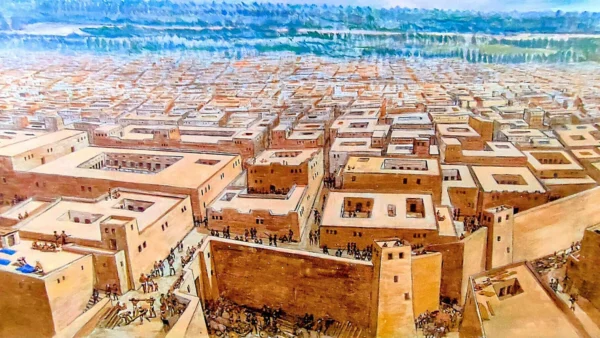
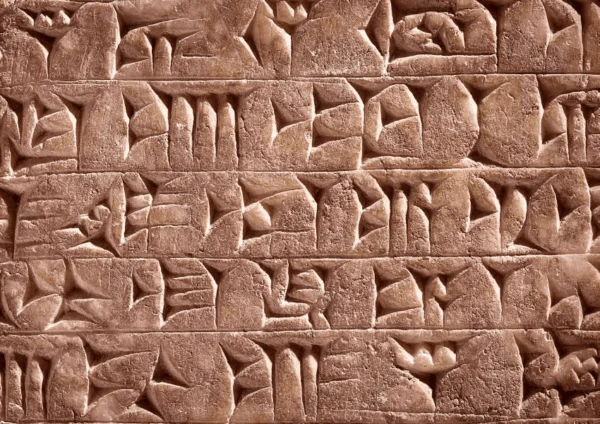
Thirty-two hundred years before Christ, southern Iraq smelled of mud and barley. Wet clay pressed against reed tips made the first pictures-three lines for grain, a goat’s head for goats. They weren’t pretty; they were practical. Priests counted offerings, traders measured debts. Every wedge was a calorie, every calorie a life. By thirty hundred, the pictures stopped being pictures. A fish, ku, meant enter too, because mouth-shaped gaps let things in. Sound piggy-backed on shape; grammar began to breathe.
Two.
Verbs ruled
Sumer didn’t mess around: dug (do), gen (go), ku (enter). Nouns followed like porters-munus (woman), lugal (king), dingir (god)-tagged by suffixes such as: -e/ who, -a/ what, -ta/ from. No prepositions, no articles, no wasting stylus-time. One verb could yank the whole sentence: mu-un-dug-ga, whoever did it-perfect for kings who wanted history quickly.
Three.
Culture soaked the clay
Dingir for god came from older wind-spirits; an (sky) from Uralic äinä, Parpola says. Finnish taivas and Sumerian an both lift eyes upward. Ku (eat) matches Finnish kulu, chewed mammoth to chewed bread. Kartvelian uro (mallet) births Sumerian urudu (bronze)-the same swing that shaped copper shaped writing. Egyptian hrw (metal) grinds the same root.
Four.
Grammar is architecture
Agglutinative-stack endings like bricks: lugal-e-a (to-the-king), bad-i-ta (from-the-wall). Finnish piles suffixes, Georgian tacks them, Egyptian slaps them sideways-same DNA, different accents. Cases do the steering: -ta means out of, -ši means into, -e means here now. Want past? duged. Future? dug-e. Mood? dug-en. Lean, metallic, ancient.
Five.
Echoes everywhere
Let’s dig into how Sumerian might echo older roots, hinting at a pre-Sumerian culture. First, take dingir, meaning god or deity. It shows up everywhere-on temples, tablets-but why this word? Scholars see parallels in Akkadian, Babylon’s later tongue, where ilu means divine. Could dingir borrow from a deeper, proto-language? Picture a pre-Sumerian people, maybe hunter-gatherers around the Persian Gulf, who whispered ding or dng for spirits in stars or storms. Sumerians, arriving around thirty-five hundred BCE, molded it into dingir, adding their flair. The grammar clue? Sumerian pronouns like nga (I) or za (you) are stark, almost primal. Compare them to later Semitic tongues, like Akkadian’s anaku for I-wordier, layered. Sumerian’s brevity suggests a raw, pre-urban code, maybe from nomads who needed quick talk by campfires. Their verb dug (to do) also raises eyebrows. It’s simple, universal, but Akkadian’s epēšu (to make/do) feels more ornate. Maybe Sumerians grabbed dug from a proto-culture-say, pastoralists in the Zagros Mountains-whose one-word verbs fit oral chants, not clay tablets. Another gem: ki (earth, place). It’s short, punchy, but shows up in place names like Uruk (unug-ki). Could it trace to a pre-Sumerian k sound for land, like proto-Elamite’s kik? Elamites lived nearby, trading lapis lazuli. Sumerian’s case endings, like -ta (from), might echo their system too-both use suffixes to point direction, no prepositions needed. Why? Pre-Sumerians likely navigated rivers, using place-markers for trade routes. Their grammar, like Sumerian’s, was lean-survival first, poetry later. One last link: munus (woman). It’s basic, but its shape-curved, open-mimics pictographs for fertility or wombs. Pre-Sumerians, maybe early farmers, revered women as life-givers. Their myths, hinted in later Sumerian tales like Inanna’s, carry that echo: women as power, not just roles. Sumerian grammar tags munus with cases, like -e (nominative), keeping her central. Compare to Akkadian’s sinništu-clunkier, less primal. Sumerians kept the old word, but sharpened its grammar for city life. These aren’t just words-they’re fossils. Sumerian, built on clay, might hold whispers of a proto-culture: nomads, farmers, traders who spoke in stars and dirt, their grammar stripped to the bone.
Sumerian ki (earth) meets Georgian k‘ari (land), Armenian ge (earth)-three tongues tasting the same dirt. Verbs lead like drums: King entered temple is lugal-e é-a ku, Georgian mepe-s da-a kidev, Egyptian nsw hr é. Same heartbeat: actor, space, action. The metal, the wall, the sky-words travel routes older than borders.
Six.
Old Syunik/ Sionak
Old Armenian’s roots twist with Sumerian and Kartvelian like vines on a ziggurat. Take an again-Sumerian for sky, Armenian an for mine, but wait: it’s ane in old forms, echoing Sumerian’s heavenly vibe. Parpola might nod-Uralic an for breath, but here’s the Kartvelian kicker: Georgian an means brother, family ties. Why? Sumerians saw sky as kin, gods as siblings-Inanna calls Anu father, but clan-like. Grammar links: Sumerian’s -ta (from) mirrors Armenian -t ablative and Kartvelian -tan (from place). Pre-Sumerians, maybe proto-Caucasus folk, used ta for leaving rivers-Sumer borrows it for trade routes, Armenian for highland paths. Another: Sumerian ku (enter) versus Kartvelian Georgian kidev (enter), Armenian gnal (enter). Spot the k/g shift? Cognate theory-proto-Sianok, a mixed bag, swaps sounds. Culture? Caves, migrations-Kartvelians in hills, Armenians in mountains, Sumerians from plains. They all needed verbs for moving in. Ki (earth)-Sumerian place, Armenian ge (earth), Kartvelian k‘ari (land). Parpola links ki to Uralic maa (land), but Caucasian roots run deep: proto-Kartvelian k‘ aspirates, like Sumerian’s abrupt stops. Why? Volcanic soil, sacred dirt-earth words carry weight. Grammar’s the glue: Sumerian cases -e (nominative), Armenian -s (possessive), Kartvelian -i (genitive)-all tack endings like tags. Imagine pre-Sumerians-call ‘em Sianok-huddled in Anatolia, whispering ki for fertile ground, ku for homecoming. They scatter: some hit Mesopotamia, polish clay; others climb Caucasus, build stone forts. Sumerian verbs lead, nouns follow-Armenian does too, Kartvelian stacks suffixes. It’s not isolate; it’s a web-sky, earth, entry-all from one old tongue, sung under stars. Tablets whisper it: An-ki (heaven-earth), Armenian hymns echo, Georgian tales hum. Want examples in sentences?
So picture them: pre-Sumerian herders from the Urals, proto-Kartvelians in copper hills, proto-Armenians by volcanic lakes. They swap words at fords, in markets, under star-flooded skies. One says sky with an, another enter with ku, a third hammer with uro. Centuries later, a scribe in Uruk presses the sounds into clay; a priest in Gori carves them on stone; a scribe in Thebes paints them on tomb walls. The grammar holds: subject oblique, object tagged, verb last-because doing is what lasts. Seven. Final sentence. An-ki-ta lugal-e urudu bad-a da-dug-ge. From heaven-earth, to the king, the bronze wall was built. Listen: the sky opens, the king steps forward, bronze rings the city, and the verb lands like a hammer on an anvil. That’s Sumerian-verb, clay, copper, and sky, all in one breath. Sumerian: An-ki-ta ku-a-e. Means: From heaven and earth, entering. An sky, ki earth, -ta from, ku enter, -a present, -e nominative. Punchy-sky leads, earth grounds, verb slams it home. Now Armenian, old style: Anunn-t gnal-s. Roughly: From sky-earth, entering is. Anunn blends sky-god Anu with earth, -t ablative like Sumerian -ta, gnal enter, -s possessive twist. Less clay, more echo-gods mingle. Georgian: An-k‘ari-tan kidev-i. Translation: From sky-land, entering. An brother-sky, k‘ari land, -tan from, kidev enter, -i genitive. Suffixes stack-family feel, motion clear. Notice the rhythm? Sumerian verbs first, Armenian fuses gods, Georgian tags places. Grammar’s cousinly: cases do the work, no fluff. Picture Sianok/ Syunik folk, millennia back, saying from the big place, we go in-same bones, different skins. Tablets, stones, tongues-all singing.
Seven
The Familiar Links
Ok, let’s take “the king built the bronze wall” in Sumerian, Georgian, Egyptian.
Sumerian: Lugal-e urudu bad-a dug. Lugal-e: to the king. Urudu: bronze. Bad-a: wall. Dug: built. Classic verb last, no filler-perfect for a clay tablet.
Georgian, old style: Mepe-s uro-t badi daaklavi. Mepe-s: of the king. Uro-t: with the mallet, bronze. Badi: wall. Daaklavi: “I built”.
Old Egyptian: Nsw hrw bd hr. Nsw: king. Hrw: copper/bronze. Bd: wall. Hr: build. No vowels written, but sounds like nesoo heh-roo bed heh-ra. Hieroglyphs: falcon head for king, metal bar for bronze, stacked bricks for wall. All cultures shove the noun first (i.e.king) then what he touched (bronze wall) then the verb. Why? It’s simple: Authority. The king swings first. And every time, that locative ending-t, a-pins the bronze to the wall, wall to king. Dr Anna Meskhi says this isn’t an accident; it’s grammar memory-from the same mountain forge. Feel the echo?
Eight
The importance of Dr Anna Meskhi:
Meskhi’s work flips the script concerning the Sumerian-Kartvelian-Egyptian connection.
Kartvelian isn’t just a footnote; it’s the blueprint. Start with uro, Sumerian for copper or bronze. In Georgian, uro means mallet, that hammer striking metal.
It’s not random, Meskhi says, that Kartvelians shaped the word first given that there were proto-metalworkers hammering ingots by the Black Sea, before Sumerians dragged it south for urudu. But why the linguistic-cultural link? There were trade routes of lapis from Afghanistan, tin from Anatolia, and the Georgian hills supplied ore while the Sumerian tablets counted it.
Grammar seals it: Sumerian urudu-a (with bronze), Georgian uro-t (by mallet)-both use locative cases, no articles.
The Egyptian echoes it: hrdw for metal, but listen for the hoard in hurdu in the old forms, we receive the ancient meaning trapped in the guttural like uro. Dr. Meskhi traced h/k shifts found in the Mother culture: the Proto-Caucasus lived their language and their language echoed their lifestyle, that is: melting ore, as this function whispered ur.
Nine
Further linguistic-cultural links that Dr Anna Meskhi discovered:
Egyptian scribes borrow and add hieroglyphs for a mallet pic for build. Culture? Ziggurats, pyramids-both stone on metal frames. Another: kakkala, Sumerian plant, Georgian kakali walnut tree. Meskhi spots it-walnuts from Caucasus forests, traded to Mesopotamia. Kak root means grow in Kartvelian, Sumerians stretch it to all greens. Egyptian k3k3 grain? Same buzz-agriculture’s heartbeat. Grammar: Sumerian kakkala-e (the plant), Georgian kakali-s (of walnut)-possessive twist. Pre-Sumerian? Farmers, and not nomads planting, hammering, writing. Last one: bad – Sumerian wall, Georgian badi wall, Egyptian bdw enclosure.
Dr. Meskhi calls it “the fortress triad-defenses against raiders”. Again, the Pictographs carry the culture such as in the pictographs for wall lines and stacked bricks since flood-defending-walls meant life.
Ten
Terse Comparative analysis:
Sumerian sentences: bad-a dug (built wall), Georgian badi daaklavi (I built wall)-verbs dominate. Egyptian: bdw hr (make enclosure)—- all carry the same action pulse.
Eleven
Dr. Meskhi’s big idea:
The Kartvelian’s grammar is agglutinative, suffix heavy, and is Sumerian’s mom, and Egyptian’s aunt.
Twelve
An ode to Dr Meshki’s findings:
Lugal-e bad-a (to king, wall) and the Georgian mepe-s badi (to king, wall) flow like water as shown in her Linguo-culturology work.
Imagine proto-people called Kartvelo-Sumerians (around twenty-five hundred BCE), mixing clay and clay, words and walls. Georgian hills to Nile, Tigris-they carried uro hammers, kakali nuts, bad barriers. Not borrowed-shared blood.
Her books nail it: Sumerian verbs from Kartvelian verbs, Egyptian nouns from Georgian roots. It’s a chain, not a tree.
Thirteen
The Parpola-Weave
Let’s weave that in with Dr. Simo Parpola’s work! Parpola flips the script on Sumerian as an isolate. He argues it’s Uralic, a cousin to Finnish and Hungarian. Take an (sky) in Sumerian. In Finnish, taivas means sky, but dig deeper: än or äinä echoes old Uralic roots for heaven, starry and sacred. Why? Sumerians and Finns both gazed up-Sumer at ziggurats, Finns at northern lights-same awe, different tongues.
Parpola spots ku (eat) in Sumerian matching Chinese chi (eat), Finnish kulu (consume), Hebrew echol (eat), Arabic yakul (eat), etc. Coincidence? Nope, proto-Uralics, roaming Siberia, might’ve carried ku for chewing mammoth. Sumerians, migrating south, kept it, adding grammar flair: ku-a (eating). Verbs rule both-Finnish slaps suffixes like Sumerian, no word order fuss. Dingir (god) links to Finnish henki (spirit), twisting through ding- sounds.
Parpola says Uralic’s breathy consonants match Sumerian’s clicks. Picture pre-Sumerians, maybe herders, whispering hen for divine wind for the Sumerian molds it to dingir for sky gods like Anu.
Fourteen
Grammar is key
Sumerian’s verb chains, like mu-un-dug (did), mirror Finnish’s teke-e (makes), both stacking morphemes like Lego. So, why is this a cognate?
Uralic’s vowel harmony-words flow smooth-pops in Sumerian hymns, sung aloud. Finnish käsi (hand) and Sumerian šu (hand) share a guttural k/š shift. Parpola traces this to proto-Uralic nomads, maybe around the Urals, swapping goods with early farmers. Sumerians borrow šu which is a pictograph of a palm while the grammar tags it with -ta (by hand).
Culture binds it: hands mean craft in both-Sumerian potters, Finnish weavers. One more: Sumerian ur (dog) versus Finnish koira (dog). Parpola links ur to Uralic kor or kur, a barky root. Dogs were packmates-hunting in Finland, guarding in Ur.
Fifteen
Grammar’s lean:
Sumerian ur-e (the dog), Finnish koira-n (of dog)-cases do the heavy lifting. Parpola’s big claim: Sumerian’s agglutinative grammar-words are like beads on a string is the very DNA of Uralic!
Finnish piles suffixes as does Sumerian (as in lugal-e-a [to the king]).
Sixteen
Proto-culture?
Imagine steppe folk, thirty thousand years back, stringing sounds. They scatter as some hit Mesopotamia and become Sumerian while others freeze in Finland. These are of the same roots just a different clay. Tablets from Nippur show this: verbs first, nouns tagged, echoing Finnish tales around fires. It’s not just words but a shared pulse, from dog howls to sky gods.
Only Dr. Anna Meshki has given me a scope to look into a world that could have echoed 100,000 years of linguistic and cosmological formations (and maybe more).
I take away with all of this as a ‘collective narrative’ teaching us that ORDER will have its way, including its message to us.
Once, when seas were younger and stars still argued over their places, there was a circle of light hovering above the Atlantic-a ring of twelve knights in a blazing celestial plate, each crowned by his own sun. They weren’t men, they were the zodiac itself, wearing flesh only because mortals needed mirrors they could touch.
Uther Pendragon, taught of Merlin, the Druid, read them as riding out from Avalon in their heavenly signages, as their spears tipped with the dawn.
In his vision, Uther thought they were questionable omens until one appeared before him as he lowered his visor. Behold, it was the solar god, Galahad, flesh received. Galahad’s face, older than language, saying to Uther the same thing every version of the story forgets to make obvious: “we’re echoes, your legend’s just a noise we haven’t shaken off yet.
Pendragon didn’t flinch. He bowed instead, the way you’d greet lightning after it promised to stay polite. Then, came the other incarnations acknowledging Uther as they dismounted.
Lancelot’s horse was still sweating plasma. Bors, one of Arthur’s faithful knights, had frost on his beard; while Arthur’s knight Kay smelled like iron filings.
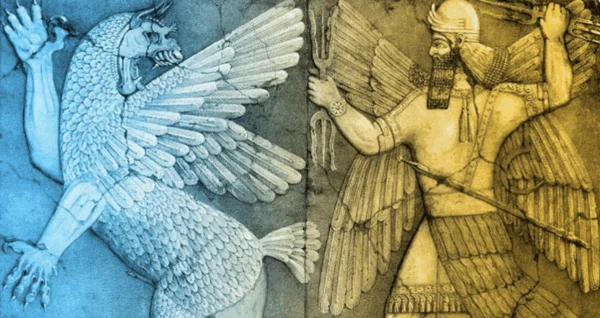
They sat in Pendragon’s hall, told him how they’d started elsewhere-how Marduk once split a dragon named Tiamat and scattered her scales into constellations, how each scale grew teeth, how those teeth became spears, how the spears forgot they were once scales and thought they were gods.
Persia heard the crash first-Ahura Mazda watching firebirds turn into armored men who guarded orchards of gold apples. Greece tried to rename them: Apollo for Gawain, Aries for Percival, Hermes for Merlin who’d always been older than the rest.
Rome stamped coins with their profiles, forgetting the solar god’s origins continued to mint more. Babylon burned the coins, built ziggurats out of the ash, and waited for eagles. Eagles never came; the knights rode west instead, chasing a rumor that a child would be born who wouldn’t need armor.
Christ arrived anyway, quiet as snowfall on a battlefield. The knights were drunk in a stable-Tristan teaching shepherds to sing in seven languages they’d invent centuries later. They watched the manger from shadows, arguing whether redemption was just another quest. Lancelot said yes. Mordred, who hadn’t drawn breath since Troy but still counted as family, said no. No one asked Mary her opinion; mortals rarely get that luxury in myths. They left Bethlehem before dawn, leaving behind only hoofprints that glowed for three days. Then centuries blurred: Rome fell, fell again, kept falling like a drunk who thinks gravity’s optional. The knights followed the dark, armor dimming to candle-flame.
Somewhere between Lindisfarne and Camelot, they shrank back into human size, edges softening, suns cooling to hearths. Still, every dawn carried their fingerprints-Gawain’s red hair streaking the horizon, Percival’s silence in the frost, Galahad’s brief smile when fog again lifts just enough to see Avalon.
Arthur inherited the leftovers: a round table cracked where Mordred once stabbed it, Excalibur humming faintly like a radio between stations. He didn’t know the blade was Tiamat’s last tooth, and didn’t need to.
Myths work best when the listeners finish the story themselves. So when the final battle comes-because it always does-Arthur mortally dies holding a spear older than his kingdom, only to return to the land of apples.
The knights ride out one last time, not as gods but as afterimages, scattering across oceans they’ll never own, finding their identities circumferencing the Solar King’s image.