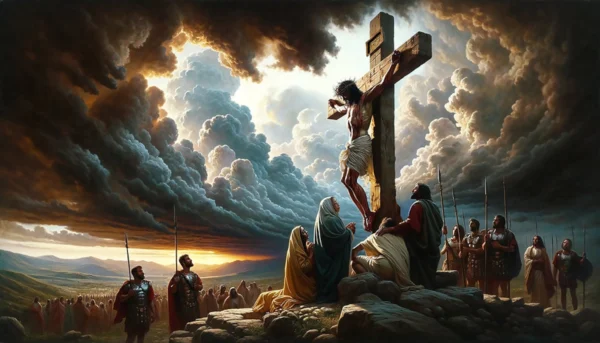
“The Great Controversy”

Ellen G. White’s doctrines, central to Seventh-day Adventist (SDA) theology and prominently featured in works like The Great Controversy, have faced substantial criticism from evangelical Christians, biblical scholars, and former Adventists. Critics argue that while White affirmed core Christian beliefs (e.g., salvation by grace through faith in Christ and the authority of Scripture), her writings introduce errors, inconsistencies, and extra-biblical requirements that distort the gospel. Here are the primary doctrinal issues raised:

• Legalism and the binding nature of Old Testament law (especially the Sabbath): White taught that the seventh-day Sabbath remains a perpetual moral obligation and will serve as the final test of loyalty in the end times (with Sunday observance as the “mark of the beast”). Critics contend this contradicts New Testament teaching that the ceremonial and Sabbath regulations were fulfilled in Christ and are no longer binding (Colossians 2:16–17; Romans 14:5–6; Galatians 4:9–10). This emphasis is seen as shifting focus from grace to ongoing law-keeping, effectively adding human works as a condition for salvation.

• The Investigative Judgment and a “two-phase” atonement: White’s unique doctrine claims that in 1844 Christ entered the Most Holy Place in heaven to begin an investigative judgment of believers’ lives, determining who is “worthy” of eternal life. This is viewed as undermining the finished work of the cross (Hebrews 9–10; John 19:30) by suggesting atonement is incomplete and that believers remain under perpetual scrutiny. It introduces uncertainty and fear rather than the assurance of salvation by grace alone.

• Annihilationism and rejection of eternal conscious torment: White rejected the traditional doctrine of hell as eternal conscious punishment, teaching instead “soul sleep”(unconsciousness after death) and ultimate annihilation of the wicked. While she framed this as more merciful, critics argue it contradicts clear biblical passages on eternal judgment (e.g., Matthew 25:46; Revelation 14:11; 20:10) and diminishes the seriousness of sin and God’s justice.

• Prophetic authority, inconsistencies, and alleged plagiarism: White claimed divine inspiration for her visions and writings, yet critics document extensive uncredited borrowing from 19th-century historians and authors (e.g., in The Great Controversy and Sketches from the Life of Paul). Specific historical claims, health teachings (e.g., “vital force” theories about sex or spices shortening life), and some predictions have been shown to conflict with established facts or Scripture, calling her prophetic office into question.

• Overall theological framework: Her writings are accused of blending biblical truth with 19th-century cultural ideas, promoting a form of dualism (eternal conflict between God and Satan) that limits God’s sovereignty and portrays salvation as conditional and partial rather than fully accomplished in Christ. These critiques portray White’s system as imposing unnecessary barriers and conditions that veil the radical sufficiency of Christ’s finished work.

My work, “Does Grace Have a Ceiling? — The Anatomy of the Will” directly challenges such frameworks as Ellen G. White’s SDA foundational doctrine through what the Five Noble Truths posit. Here’s the interconnected ideas that form the book’s foundation which challenge the SDA:

1. Universal salvation (full reconciliation of all humanity through Christ).

2. Predeterminism (God’s sovereign pre-planning of all things).3. Teleology (everything moves toward a purposeful divine end).

4. Prophecy (God’s foreordained redemptive plan revealed).

5. The apocalyptic view (the ultimate unveiling and triumph of God’s purposes).

Jones presents these as an eclectic yet orthodox synthesis compatible with early Christian theology. The book argues that embracing God’s absolute sovereignty eliminates “Christian dualism” (the idea of an eternal, unresolved battle between good and evil), reframes suffering within God’s pre-planned intentions, and leads to the confident hope of complete reconciliation for all.

Here’s what I propose

Exposing White’s doctrines through the lens of the Five Noble Truths reveals their core

incompatibility:

• Universal salvation directly dismantles White’s conditional eschatology. Where The Great Controversy divides humanity into the saved and the annihilated wicked (with a final test of Sabbath loyalty), the First Noble Truth affirms that Christ’s work achieves full reconciliation—no one is ultimately lost, and grace has no ceiling or qualifying test.

• Predeterminism exposes the tension in White’s emphasis on human free will and law-keeping as decisive. If God sovereignly predetermines all outcomes (Second Noble Truth), then investigative judgment or final tests become unnecessary; salvation is not earned or maintained by obedience but secured by divine decree.

• Teleology, prophecy, and the apocalyptic view (Truths 3–5) reframe history and the end times not as an ongoing cosmic controversy with uncertain outcomes, but as a single, purposeful unfolding of God’s unstoppable plan.

White’s narrative of escalating conflict, papal resurgence, and a remnant church “passing a final loyalty test” collapses under legalism’s faulty premises. There is no dualistic standoff—only the sovereign teleological march to universal restoration.

In short, the Five Noble Truths expose White’s system as one that inadvertently places a “ceiling” on grace by layering conditions, judgments, and partial outcomes onto what Scripture and sovereign theology present as an unconditional, all-encompassing victory in Christ. My book invites readers to move beyond fear-based legalism into the liberating assurance of a God whose will cannot be thwarted and whose grace knows no limit.

Teleological & Eschatological Timeline:

From Resurrection to Revelation

March 13, 2026

My core argument rests on a teleological historical-linguistic theme: from Yeshua’s death and resurrection dated by most scholars to spring AD 30 (e.g., Nisan 14, Passover; see consensus in Midwestern Baptist Theological Seminary studies and Edinburgh research)—until the onset of major Russia-Iran pressure on Israel around now, roughly two thousand years have elapsed. By AD 2030, it will be exactly two millennia! This aligns with the “thousands (χίλια) years (ἔτη)” in Revelation as an extended era/ aeon/ duration of grace, ending with Satan being “loosed (released)” for the final seven-year (Shavua) Tribulation. In Revelation 20:1-11 (Greek: apocalypse/Ἀποκάλυψις), the term χίλια (chília, Strong’s G5507—neuter plural adjective “thousand,” from the singular numerical χίλιοι/chilioi -“thousand” appears seven times: verses 2, 3, 4, 5, 6, 7. An angel binds the dragon—Satan (ὁ δράκων)—in the Abyss (ἄβυσσος) for χίλια ἔτη (“a thousand years”), preventing deception of nations (τὰ ἔθνη). Since this is the same word for the plural chilia/xilia thousands is used for the duration of the binding of Satan by the Angel of God we know that Satan has been bound for at least a few thousand years if not to be exact 2000 years due to Christendom ( aka “the kingdom of God”) reigning for 2000 years in Jesus’s name.
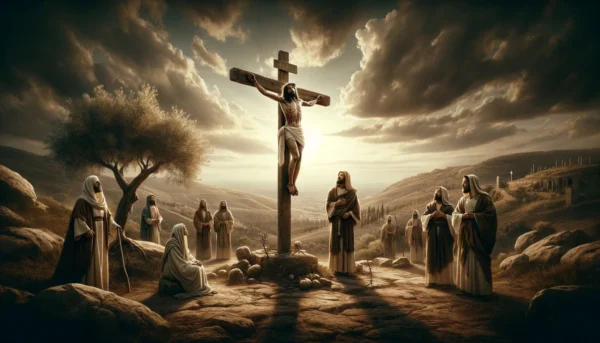
The First Resurrection wrap up

Martyred souls (ψυχαί τῶν πεπελεκισμένων) reign with Christ χίλια ἔτη; the first resurrection (ἡ ἀνάστασις ἡ πρώτη) blesses them.

After χίλια, Satan is released (λυθῆναι), deceives Γὼγ καὶ Μαγώγ (Gog and Magog), gathers for battle—(what we are seeing presently) then fire devours, devil cast into lake of fire (λίμνη τοῦ πυρός). The chapter ends with judgment at the great white throne (θρόνος μέγας λευκός).

This “thousand” is plural in the Greek New Testament and not singular. 2 Peter 3:8 Κύριος… ἡμέρα… ὡς χίλια ἔτη—“a day is a thousand years”. Hosea 6:2 holds in its Hebrew: חֲרֵיַאמַיִםֹוי —acharei yomayim—saying: “after two days He will revive us”; םֹוּיַּביִׁשלִיְּׁשַה —bayom hashlishi—“on the third day He will raise us up”). Many see this as a prophetic pattern: two “days” (two millennia) from resurrection to revival/return, third “day” as millennial kingdom or resurrection.

Daniel’s seventy weeks— בְעִיםִׁשבֻעִיםָׁש (shiv’im shavu’im, Daniel 9:24)—total 490 years for Israel: to finish transgression, seal prophecy, anoint Most Holy. First 69 weeks (483 years) from Artaxerxes’ decree (~444 BC, בַרְּד—davar—to rebuild) to Messiah cut off (Daniel 9:26: רֵתָּכִיַ

יחִׁשָמ—yikkaret mashiach). Gap: church age (~2,000 years). 70th week: final seven years (ַעּובָׁש

אֶחָד—shavua echad, Daniel 9:27)—Antichrist confirms covenant, midpoint breaks it with ץּוּקִׁש

מֵםֹׁש (shiqquts shomem—“abomination of desolation,” echoed in Matthew 24:15).

Daniel 8 adds the “little horn” ( קֶרֶןחַתַאהָּנַקְט —qeren achat qetannah, v.9): rises from goat (Greece), grows fierce, stops daily sacrifice (מִידָּת—tamid), exalts against Prince of princes (רִיםָׂשר-ַׂש—sar-sarim). Historically Antiochus IV, but “time of the end” (v.17: עֵתקֵץ —’et qets) points future Antichrist type—blasphemy, desecration tying to Daniel 9:27. Ezekiel 38-39: גֹוּג (Gog) of גֹומָג (Magog), chief ofְך ֶ ׁשֶמ (Meshech) and בַלֻּת (Tubal)—often Russia-linked via ancient Scythians—plus רַסָּפ (Paras/Persia = Iran), Cush, Put. They invade restored Israel; God intervenes (earthquake, fire). Revelation 20:8 reuses Γὼγ καὶ Μαγώγ (Gog and Magog) as a mid point “Last Shavua” rally for all the world to see. Currently, the Russian-Iranian alliance mirrors: intel, drones, amid seemingly hopeless calls for ceasefire amid ferocious strikes. Current headlines—day 13 of US-Israel Operation Epic Fury (Feb 28 start)—shows Iran missiles on Israel, Tehran hits, Hormuz threats, oil at $100/barrel, 2,000+ dead, millions displaced. Russia backs Iran, condemns attacks (Reuters/CNN March 12-13). This Russia-Iran-Israel flare could mark the close: Satan “loosed” or “released” demarcating the beginning of Daniel’s 70th week.

Possible fulfillment in our day:

From AD 30 resurrection (1,996 years to present day March 2026) to ~2030: two thousand years (chilia).

My Conclusion for now

Whether or not this is the final “week“ of Daniel (as I believe that we are nearing the end) I am convinced that the patterns of prophecy continue to garner literally every political move that fulfills itself into the prophet’s visions of the last days. There has never been a religious text that has given us the world narrative from beginning to end save out of one – the Bible.

Acts 2:23—the Greek text: τοῦτον τῇ ὡρισμένῃ βουλῇ καὶ προγνώσει τοῦ θεοῦ ἔκδοτον διὰ χειρὸς ἀνόμων προσπήξαντες ἀνείλατε.

This verse declares that Jesus was delivered up—ἔκδοτον—by means of the determined counsel and foreknowledge of God. The dative τῇ ὡρισμένῃ βουλῇ καὶ προγνώσει τοῦ θεοῦ is instrumental: God Himself is the active agent behind every move. ὡρισμένῃ, the perfect passive participle from ὁρίζω, means the boundary was set, the purpose fixed, before time began—completed, unchangeable. προγνώσει, foreknowledge, is not passive observation but sovereign, intimate knowing that precedes and shapes the event. God did not merely foresee evil; He ordained the entire stage, every actor, every line.
The phrase διὰ χειρὸς ἀνόμω —“through the hand of lawless ones”—shows those “evil men” as instruments. ἀνόμων is genitive plural, substantival, naming the wicked as tools in God’s script.

Their malice, their nails, their betrayal—none of it escapes His control. They are not autonomous; they play the role He assigned. The aorist verbs προσπήξαντες (“having nailed”) and ἀνείλατε (“you killed”) mark the act as punctiliar, yet the whole sequence flows from τῇ ὡρισμένῃ βουλῇ. God orchestrated the crucifixion, including the hands that drove the nails. This is not fatalism—it is total sovereignty. There is no free will as humans imagine it. Every choice, even the darkest, is God working in them to do His good pleasure, as Philippians 2:13 states: θεὸς γάρ ἐστιν ὁ ἐνεργῶν ἐν ὑμῖν καὶ τὸ θέλειν καὶ τὸ ἐνεργεῖν ὑπὲρ τῆς εὐδοκίας. He wills and works through every player—Judas, Pilate, the crowd—without exception. Their evil is temporary, scripted for redemption. All will come to salvation; the “lawless ones” are not damned forever but ordained to act out sin for a season, so that grace might shine brighter. The grammar locks this in: the perfect tense of ὡρισμένῃ seals the plan as eternal; the instrumental dative ties every action to God; the genitive ἀνόμων marks the wicked as secondary agents, not primary. Before any breath was taken, before any heart beat, God preordained Jesus’ delivery, the evil hands, the cross—and the universal restoration that follows. It is all His doing, from start to finish.

Studies in Revelation

Insights to the Mystae as employed by John, the Revelator

Chapter: The Libation Bowl—From Minoan Ritual to Apocalyptic Judgment

1. Historical Origins and Design

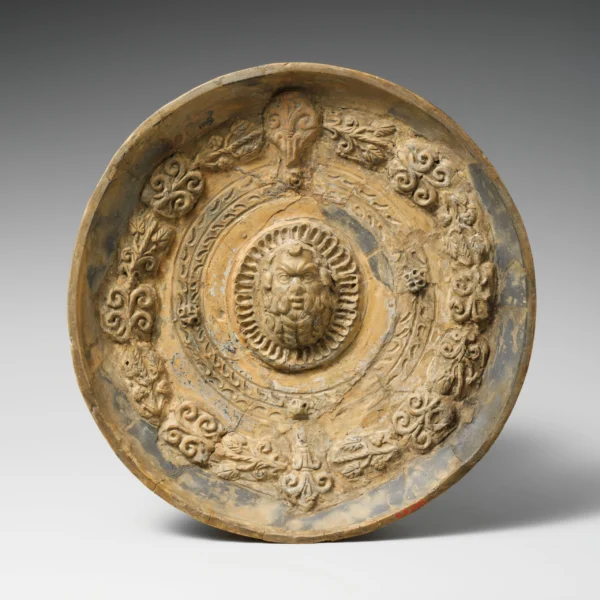
The libation bowl, known in Greek as phiale (φιάλη), emerges in the archaeological recordaround 2500–2200 BC during the late Neolithic/early Bronze Age in the Aegean. The earliest examples—clay, stone, and occasionally metal—come from Minoan Crete and the Cyclades islands. These were shallow, wide-mouthed vessels, often featuring a central omphalos (a raised boss) for thumb-grip during pouring.
By the Mycenaean period (c. 1600–1100 BC), the phiales appeared in elite burials—gold and silver versions, sometimes engraved with spirals or rosettes—signaling status and divine favor. The Greeks inherited and refined them: by the Archaic period (c. 800 BC), every sanctuary had dozens, made of bronze, silver, or painted pottery.

Function: pour out wine, milk, oil, or water as an offering. The act—libatio—was personal, communal, sacred. “This is for you,” you’d say to Zeus, Athena, or the dead. The bowl wasn’t just a tool; it was a bridge between worlds.

2. Cultural Role in Mystery Religions In the Hellenistic world (post-Alexander, 323 BC onward), phiales gained darker, more intimate meanings. Mystery cults—Dionysus, Isis, Mithras—used them in secret rites. Wine poured out became a blood-symbol while honey meant immortality. The pagan act mimicked cosmic surrender, such as saying: release your life-force and gain favor from the unseen. These weren’t public altars. They were candle-lit, drum-heavy, and ecstatic. To the mystae initiates the bowl held power—sometimes dangerous power. A single drop could curse or bless.

(continued thought as John uses this pagan symbology)

3. John of Patmos and the Seven Phiales of Revelation John writes Revelation around 95–96 AD, exiled on Patmos. In chapters 15–16, he sees seven angels with seven phiales—the Greek word is identical to the pagan libation bowl. Here’s the text, straight from the Greek:

• Revelation 15:7: “One of the four living creatures gave to the seven angels seven golden bowls full of the wrath of God…”

• Revelation 16:1–21: The angels pour:

First: sores.

Second: sea turns blood.

Third: rivers poison.

Fourth: sun scorches.

Fifth: darkness.

Sixth: Euphrates dries—Armageddon. Seventh: “It is done” —earthquakes, hail, Babylon collapses.

4. The Deliberate Echo

John didn’t invent the bowl. He grew up in a Greek-speaking world where phiales were everywhere—temples, homes, graves. He knew the mystery cults’ tricks: pour out, get back. But John’s visions flip it.

The pagans poured to appease gods. God pours to judge. The same shallow vessel—same thumb-hold, same spill—now carries wrath, not wine. It’s poetic justice: the tool of human bargaining becomes the instrument of divine refusal. No more deals. The cup’s full, and it’s tipped.

5. Early Christian Interpretation

By the second century, church fathers like Irenaeus and Tertullian saw the phiales as anti-pagan satire. They weren’t literal bowls—they were God’s answer to every altar, every libation, every blood-rite. The bowl that once fed idols now feeds judgment.

Some even argued the seven phiales mirrored the seven planetary spheres—astrology’s own “bowls” —and God was draining them dry. Others tied it to Old Testament imagery: the “cup of wrath” in Jeremiah, Isaiah. Same idea, Greek packaging.

Conclusion

The phiale starts as a humble Minoan cup—2500 BC, pouring milk for the sea. It ends as John’s cosmic weapon—95 AD, pouring fire on humanity. Same shape. Opposite purpose.

References:

Biblical Sources: Phiales in Revelation

John calls them phialai (φιάλαι) every time! It is the same Greek word for libation bowls. Key spots:

• Revelation 5:8 – “golden bowls full of incense (which are the prayers of the saints)”

• Revelation 15:7 – “seven golden bowls full of the wrath of God”

• Revelation 16:1–21 – the whole sequence: angels pour the seven bowls.

• 16:2 – first bowl: sores

• 16:3 – second: sea to blood

• 16:4 – third: rivers poison

• 16:8–9 – fourth: sun scorches

• 16:10–11 – fifth: darkness

• 16:12–16 – sixth: Euphrates dries, Armageddon

• 16:17–21 – seventh: “It is done, ” earthquakes, hail, Babylon falls

Also echoes:

• Revelation 14:10 – “the cup of the wine of God’s wrath” (different word, but same idea—spilled judgment)

• Revelation 21:9 – “the seven bowls full of the seven last plagues” (wrap-up) Historical / Pagan Sources: Libation Bowls (Phiales)

Real artifacts and texts: Minoan Crete (c. 2500–1500 BC): Clay and stone phiales from Knossos, Phaistos, the omphalos-center. See Arthur Evans’ Palace of Minos (1921–1936), vol. 2, plates on ritual vessels.

• Mycenaean gold phiales: Grave Circle A, Mycenae—c. 1550 BC. Heinrich Schliemann dug ’em up; now in National Archaeological Museum, Athens.

• Homer—Iliad 1.462–463: Priam pours libation from a phiale to Zeus before the duel.

• Hesiod—Theogony 135: gods receive poured offerings (phiale implied).

• Herodotus—Histories 2.37: Egyptian priests pour milk from phiales to Nile gods—cross-cultural note.

• Pausanias—Description of Greece 1.34.3: Athena’s sanctuary at Rhamnous had silver phiales for libations.

• Dionysian cults: Euripides’ Bacchae 704–711—maenads pour wine from phiales during frenzy.

• Archaeological hits:

• Louvre Museum: bronze phiale from Delphi, c. 500 BC, thumb-hold boss.

• British Museum: silver phiale from Thrace, c. 400 BC, inscribed to Dionysus.

• Metropolitan Museum: Minoan clay phiale, c. 2000 BC, from Hagia Triada.

Extra tie-in:

Pliny the Elder—Natural History 33.47—mentions gold phiales as temple loot from Greece. And in mystery religions? Philo of Alexandria (On the Contemplative Life 75) describes Isis devotees pouring honey from phiales.

Ezekiel 38

1 And the word of the LORD came unto me, saying, 2 Son of man, set thy face against Gog, the land of Magog, the chief prince of Meshech and Tubal, and prophesy against him, 3 And say, Thus saith the Lord GOD; Behold, I am against thee, O Gog, the chief prince of Meshech and Tubal: 4 and I will turn thee back, and put hooks into thy jaws, and I will bring thee forth, and all thine army, horses and horsemen, all of them clothed with all sorts of armour, even a great company with bucklers and shields, all of them handling swords: 5 Persia, Ethiopia, and Libya with them; all of them with shield and helmet: 6 Gomer, and all his bands; the house of Togarmah of the north quarters, and all his bands: and many people with thee.

7 Be thou prepared, and prepare for thyself, thou, and all thy company that are assembled unto thee, and be thou a guard unto them. 8 After many days thou shalt be visited: in the latter years thou shalt come into the land that is brought back from the sword, and is gathered out of many people, against the mountains of Israel, which have been always waste: but it is brought forth out of the nations, and they shall dwell safely all of them. 9 Thou shalt ascend and come like a storm, thou shalt be like a cloud to cover the land, thou, and all thy bands, and many people with thee.

10 Thus saith the Lord GOD; It shall also come to pass, that at the same time shall things come into thy mind, and thou shalt think an evil thought: 11 And thou shalt say, I will go up to the land of unwalled villages; I will go to them that are at rest, that dwell safely, all of them dwelling without walls, and having neither bars nor gates, 12 To take a spoil, and to take a prey; to turn thine hand upon the desolate places that are now inhabited, and upon the people that are gathered out of the nations, which have gotten cattle and goods, that dwell in the midst of the land. 13 Sheba, and Dedan, and the merchants of Tarshish, with all the young lions thereof, shall say unto thee, Art thou come to take a spoil? hast thou gathered thy company to take a prey? to carry away silver and gold, to take away cattle and goods, to take a great spoil?

14 Therefore, son of man, prophesy and say unto Gog, Thus saith the Lord GOD; In that day when my people of Israel dwelleth safely, shalt thou not know it? 15 And thou shalt come from thy place out of the north parts, thou, and many people with thee, all of themriding upon horses, a great company, and a mighty army: 16 And thou shalt come up against my people of Israel, as a cloud to cover the land; it shall be in the latter days, and I will bring thee against my land, that the heathen may know me, when I shall be sanctified in thee, O Gog, before their eyes.

17 Thus saith the Lord GOD; Art thou he of whom I have spoken in old time by my servants the prophets of Israel, which prophesied in those days many years that I would bring thee against them? 18 And it shall come to pass at the same time when Gog shall come against the land of Israel, saith the Lord GOD, that my fury shall come up in my face. 19 For in my jealousy and in the fire of my wrath have I spoken, Surely in that day there shall be a great shaking in the land of Israel; 20 So that the fishes of the sea, and the fowls of the heaven, and the beasts of the field, and all creeping things that creep upon the earth, and all the men that are upon the face of the earth, shall shake *at my presence*1 , and the mountains shall be thrown down, and the steep places shall fall, and every wall shall fall to the ground. 21 And I will call for a sword against him throughout all my mountains, saith the Lord GOD: every man’s sword shall be against his brother. 22 And I will plead against him with pestilence and with blood; and I will rain upon him, and upon his bands, and upon the many people that are with him, an overflowing rain, and great hailstones, fire, and brimstone. 23Thus will I magnify myself, and sanctify myself; and I will be known in the eyes of many nations, and they shall know that I am the LORD.

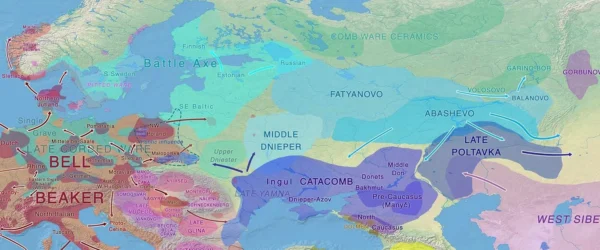
*Region* of Gog: It appears that “Gog” means “Mountain”, i.e., the Caucasus (cf. to the Persian: koh, Ossetic ghogh = “mountain”. The Ossetic Koh-Kof was the “chief seat of the Scythians (or Magogites)” who were and will be again a barbarous warring tribe whose practice was to put hooks in the jaws of the leaders they conquered. The Hebrew etymom of this same word meant “roof”, “high”, “lofty”. The Arabic, “juju”, the heightened part of a ship; or the head figure that is placed on the prow of a ship. But Gog is more than just a figurative ‘mountain’, he was indeed known to be the “Rosh (Head)” prince of the warring tribes of the Scythians (or Tartar) in the Caucasus mountain range.

Therefore, Gog is, for sure, revived as the “Chief” or “Rosh” Prince (Nasi) of the Caucasus region (The Magogites/ Magog)that will attack Israel in the last days (cf. below to ft. nt. #1 in Matthew 24:21-31).

1 Matthew 24:21 “Immediately after the tribulation of those days shall the sun be darkened, and the moon shall not give her light, and the stars shall fall from heaven, and the powers of the heavens shall be shaken: (30) And THEN shall appear the sign of the Son of man in Heaven and THEN shall all the tribes of the earth mourn, and they shall see the Son of man coming in the clouds of Heaven with power and great glory. (31) And He shall send His angels with a freat sound of a trumpet, and they shall gather together His elect from the four winds, from one nd of Heaven to the other.” –Jesus–

I believe that “Rosh” is indeed one and the same as the Russian forces that will align with Iran (Persia) to attack Israel in the Last Days. We are already seeing this happen in its beginning stages. The Bible is reading like a current news article.

In my next lecture, lecture #6, I will cover more detail concerning the Medes, Persia and

Togarmah, whose tribal identities mix with the Magogites under Gog.

This will be our fourth Prophetic View lecture having left off with a brief stint of Ezekiel’s “Meshech” or “Meskhi” name. Both “Meshech” and “Tubal” are found in Ezekiel 38:2 as the province-cities by which their “Chief” (or “Rosh1”) prince2 named Gog to be found amongst the Colchian tribes of the Caucasus between the Euxine (Black) and Caspian Sea.

What we know of Tubal is quite a bit. Tubal is reckoned with Javan and Mesheck among the sons of Japeth (Genesis 10:2; I Chronicles 1:5). Tubal and Meshech are both associated with bringing wealth from their merchandising with Tyre. Javan, Tubal and Meshech brought slaves and copper vessels to the Phoenician markets

(Ezekiel 27:13). Tubal and Meshech are nations of the North (Ezekiel 37:15; 39:2). The great historian Josephus is his Antiquities i, 6, 1 identifies the descendants of Tubal with the Iberians (not Spaniards) which is a very ancient race located in a tract of land between the Caspian and Euxine (modern “Black Sea”) seas, which correspond to modern Georgia. Tubal and Meshech are called “Colchian” tribes.

In Greek mythology, Colchis was the name of a region in the far southeast corner of the Black Sea which is modern day Georgian (XLK) in which Georgia retains its etymological root. In Greek mythology (which carried much history), Colchis was the homeland of Medea and associated with Jason and the quest for the Golden Fleece.

1 “top”; “head”; “leader”; “peak”;

2 Nasi-’rising mist’; ‘cloud’; ‘vapour’ { *as ruler-chief-tribal chief* }.

Many scholars hold that these Iberians were the genetic group from which the eastern and western Iberian group to have been a branch of. This Iberian group was from the Turanian family.

These two Colchian tribes (Mesh. and Tub.) are mentioned together in Herodotus: first, as forming part of the nineteenth Satrapy of the Persian empire (Herodotus iii, 94) and in Xerxes’s army under Ariomardus, the son of Darius (vii, 78).

The Hebrews called the Tibareni, the Tubal. These Colchian tribes (Mesh. and Tubal) have an exhaustive amount of history that I do not have the time or energy to display here, nonetheless, we have more than ample evidence that Meshech and Tubal are sister cities that did cohabitate in the Georgian region for which we can still see their names echoed from a distant past as the modern Tbilisi (Tubal) and Meskheti (Meshech).

We are left with two more major identities in this prophecy series: Gog and Magog. We will address them next time.

We left off last time with Ezekiel’s prophecy of Israel’s return as One Kingdom no longer being divided into two . In Ezekiel 37:26 an “everlasting” covenant will be made with God as the Tabernacle in the midst of His people for evermore.

We see Ezekiel 37:23-28’s everlasting covenant expressed in Revelation:

Revelation 21:22 – 25

“And I saw no temple therein; for the Lord God Almighty and the Lamb are the Temple of it. (23) And the city had no need of the sun, neither of the moon, to shine it it: for the glory of God did lighten it, and the Lamb is the light thereof. (24) And the nations of them which are saved shall walk in the light of it; and the kings of the earth do bring their glory and honour into it. (25) And the gates of it shall not be shut at all by day; for there shall be no night there”.

Whether you want to hold to pre-tribulation rapture or post-tribulation rapture, the everlasting covenant with the entirety of a new creation will not occur until all things are made new and that will be at the Last Trumpet = last angel = last judgment of the last of the seven years in tribulation. 

Here we have Jesus explaining the sequence of tribulation Matthew:

Matthew 24:29

“Immediately after the tribulation of those days shall the sun be darkened, and the moon shall not give her light, and the stars shall fall from heaven, and the powers of the heavens shall be shaken: (30) And THEN shall appear the sign of the Son of man in heaven: and THEN shall all the tribes of the earth mourn, and they shall see the Son of man coming in the clouds of heaven with power and great glory: (31) And He shall send His angels with a great sound of a trumpet, and they shall gather together His elect from the four winds, from on nd of heaven to the other”.

GOG, TUBAL, MESHECH, PERSIA

Ezekiel 38:1-ff reads like a current newspaper article. Basically, the entire 38th chapter of Ezekiel tells us that Iran and Russia are to join together to attack Israel in “THE LAST DAYS”. Every bit of prophecy concerning Christ’s return ends with Gog (Russia) and Persia (Iran) attacking Israel. There will be many other nations following them to attack Israel but these are the two main players that lead this final armageddon act.

Let’s start with Ezekiel 38:1-3:
“And the Word of the LORD came unto me, saying, (2) Son of man, set thy face against God, the land of Magog (, the chief prince of Meshech and Tubal, and prophesy against him, (3) And

1 Ephraim [northern kingdom] and Judah [southern kingdom]say, Thus saith the LORD GOD; Behold, I am against thee, O Gog, the chief prince of Meshech
and Tubal”.

I’d like to start with analyzing the name for “Meshech”, for his name can be found in the Great Father of heroes, Meshkiangasher2. On the google map seen below, it is the Meskhi3 group that we find to the left of Tbilisi (or ‘Tubal’ as mentioned in Ezekiel 38:2). As we below, “Meshetie” is
the modern name of the 5,000 + year old province for the Meshech of Ezekiel 38:2. Tbilisi is a sister city to Mes-chetie (Ezekiel 38:2’s Meshech).

2 https://fomcm.com/nimrods-name-found-in-gilgamesh-nimrods-descendant/ (cf to my audio lecture here
on this hero’s name)

3 cf. to Dr Anna Meskhi’s genealogical work: “The Unwritten History of the Meskhis”

Seen above is Dr. Meshkhi’s “Bi-Logoraphic Code Structure of Meshiagasher’s Name” to show the *relationship* between Kartvelian/ Georgian and Sumerian Prior to the event of Babel, that is, when all the world was of one speech (Genesis 11:1). Dr. Simo Parpola has proven that Sumerian was genetically linked to Finnish, Uralic, Ugric, Hungarian, ——Dr. Meskhi and Dr. Martirosyan showed the links between Old Armenian/ Syunik and Old Georgian (one of the
Kartivelian languages that are all linked) together as “one speech” a long time ago, i.e., 5,000 years ago. This supports Genesis 11:1’s “all of the earth4 was of “one speech”.

In Dr. Meskhi’s Logographic chart seen above shows both of the sister cities (i.e., Tbilisi/ Tubal and Meshech to attack (under the Spirit of Gog revived) Israel in the latter Days.

For now, I leave you with this, the spirit of Antichrist is found in the name, “Mesh-ki-an-ga-sher” for it is the genealogical name for the Heros, especially that of Nimrod.  Please listen to: https://fomcm.com/nimrods-name-found-in-gilgamesh-nimrods-descendant. For it tells you that the spirit of Nimrod is alive, he is prepared with Iran to attack Israel. We will read of this in the following lectures. 

Please watch the news concerning Israel and Iran. I believe that these events are the catalyst to
Ezekiel 38.

4 that is, “erotz” or “land piece”. As was all of the “erotz” entirely flooded; all that could be accounted from observation with *limitation*.

5 Keep in mind, Ezekiel said this when Israel had been taken away by the Assyrians nearly 200 years prior to Ezekiel saying this. This prophecy needed Israel to be a reality in order for this prophecy to be valid. This is my point concerning teleology, predeterminism, and the apocalyptic view to make a
‘conjunction’ at every step of the way

Prophecy: 

Article One for The Fullness of Meaning Christian Ministries 

by Kyle Jones 

In Revelation 13:8 the Bible makes a proclamation that Jesus was “the Lamb slain before the foundation of the world.” What does that mean for all of the events that would have had to have taken place at creation and throughout its history until the very location, time, situation, reason, etc., for Jesus’ crucifixion (and resurrection)? 

Let us consider the threading of things that have to be in place long before Jesus’s ministry, if Jesus was to be the “Lamb slain before the foundation of the world.” 

Calendarists such as Harold W. Hoehner, Alva J. McClain, and George Eldon Ladd have taken tremendous care to account for special feast days, times, locations, leap years, etc., in order to show us that in Nehemiah 2:1–8 the Persian King, Artaxerxes (supporting an earlier decree made by the Persian King, Cyrus, in ca. 539 B.C.), in Nissan 1st 445 B.C. (due to the new crescent moon {the Month of Aviv-”spring”} would have shown itself at ca.10 p.m. in the 20th year of the reign of Artaxerxes). 

In 2 Chronicles 36:21 we have an account of the ‘sabbaths’ or ‘shavua’ that were not observed by ancient Judah (Northern ‘Ephraim,’ or Israel, was deported and sent away by the Assyrians in 722 B.C.). A‘shavua’1is an agricultural term for a group of six years tilling, sowing, seeding, and reaping of the crops of one’s designated field for cultivation. In the seventh year one is to not till, sow, seed. and reap—lest the nutrients of the field for cultivation be robbed and no 

1 One interesting point to be made: “Sabbath, Shabboa, Shabbath, Sabbat, Shavua and even the Famous Queen Sheeba connote “completion, final, fulfillment of trials, sealed to the fullness, etc.” more cultivation can occur. The passage concerning the shavuas which were not observed goes as follows: “To fulfill the word of the LORD by the mouth of Jeremiah, until the land had enjoyed her ‘sabbaths,’ for as long as she lay desolate she kept sabbath, to fulfill three score and ten years [i.e., Judah’s seventy years of not keeping the Shavua]” (2 Chr 36:21). 

This last passage in 2 Chronicles 36:21 is multiplied by “seven” in Daniel 9:24 as the final judgment upon Judah and the world that share in the last seven years of this 490-year schemata laid out by God’s providential hand: “Seventy “Shavua [seven-year periods = ‘agricultural weeks’] are determined upon your people and upon your Holy City, to finish the transgressions, and to make an end of sins, and to make reconciliation for iniquity, and to bring everlasting righteousness, and to seal up the vision and prophecy, and to anoint the most Holy” (Dan 9:24). 

At what era has transgressions ‘finished’? What era has ‘sin ended’? What era do we find our ‘reconciliation for iniquity’? At what point has any other aeon or era contained an ‘everlasting righteousness’? Where in Revelation does it speak of the ‘sealing up of the vision and prophecy’? Finally, when is the ‘Most Holy anointed’? 

Daniel 9:24, 25 “ (:24) Seventy weeks [490 years or 70 x 7 sabbatical years, i.e., 70 ‘shavua’] are determined upon thy people and upon thy Holy City, to finish [Hebrew: le-kal-le: {root: “kala”} ‘to restrict, shut up, be stayed, etc] the transgression [Hebrew: hap-pe-sa {root: pesha: “trespass”} revolt, breach of trust, rebellion, rebellious acts, etc.], and to make an end of sins (Hebrew: chatta’ah: ‘offense’ needing purification), and to *make reconciliation for iniquity [Hebrew:u’le-kap-per {to atone} a-won {iniquity/ guilt–all forms of perversity}]*: , and to bring in *everlasting righteousness [Hebrew: tsadoq (‘just’, ‘right’) olamim (Hebrew: olam: eternal), and to seal up the vision and prophecy, and to anoint the most Holy. (:25) Know therefore and understand, that *from the going forth of the commandment to restore and to build Jerusalem [Nehemiah 2:1-8: in the month of Nissan, in the 20th years of the King’s reign–ca. 445 B.C.]* unto (until) the Messiah the Prince (i.e., Jesus’s first physical coming)*, shall be *seven weeks, and a threescore and two weeks [69 x 7 x 360 (Jewish year of days) = 173,880 Days or 483 years!2)–This is the exact Day when Jesus rode in as Hosanna! Cf. Luke 19:28-40; Zachariah 9:9 

2 This is the exact Day when Jesus rode in as Hosanna! Cf. Luke 19:28-40; Zachariah 9:9 as April 6, 32 A.D.’s Triumphal Entry of Jesus! as April 6, 32 A.D3.’s Triumphal Entry of Jesus!]*: the street shall be built again, and the wall, evn in troubled times. (:26). And after *threescore and two weeks* shall Messiah be cut off (Jesus’s death April 3, 33 A.D.), but not for Himself: and the people of the prince that shall come shall destroy the city and the sanctuary; and the end thereof shall be with a flood, and unto the end of the war desolations are determined. ):27) And he shall confirm the covenant with many for one week: and in the midst of the week he shall cause the sacrifice and the oblation cease, and for the overspreading of abominations he shall make it desolate, even until the consummation, and the determined shall be poured upon the desolate. 

Daniel 9:24 thus speaks of the teleology of the Bible, that is, the summit of meaning from creation where the Lamb was slain for the fullness of the narrative, to the unfurling of the entire ‘tree of meaning’. The prior events must be sutured to future events in order to have teleological meaning. This hints that our new earth and new heaven (Isa 65:17; 2 Pet 3:13) might be a ‘conclusion’ of meaning to the prior world that we live in now. Not that we will remember this world (Revelation 3:7 makes it clear that the entire world will be suffering during this time) but that we will bear the sufferings that calibrate us to Christ’s image. 

But we must return to Hebraic Old Testament prophecy in order to rectify Revelation’s first-century Christian figurations of literal fulfillment. Using the moon as the ‘mene’ or ‘counter’ reference for the Jews, 360 days would comprise a year. Multiplying sixty-nine shavua (‘weeks’) or sixty-nine groups of seven years (‘weeks’—i.e., with a sabbatical year as the last year of the seven years, or week) gives us 173,880 days. 

The decree was established by Cyrus to protect the Jews who wanted to go back into Jerusalem and re-establish their worship site. Daniel 9:24–27 had given a decree that sixty-nine shavua (sabbatical ‘years’, i.e., seven years, or groups of seven years) or sevens (= 483 years) would be the exact time element until Messiah rode a donkey into Jerusalem as Hosanna. 

In ca. 538 B.C. we find the prophecy of Daniel 9:24 – 27 as follows: 

3 Since a Hebrew year consists of 360 days we must multiply 360 x 69 x 7 (i.e., “the Shavua”). We are left with 173,888 days. Therefore, the ‘going forth of the commandment to rebuild Jerusalem in Nissan (April 14 445 B.C.) until the Messiah April 6, 32 A.D. (Luke 19:28-40; Zechariah 9:9 accounts for the 69 Shavua (or “69 Weeks”/ 69-7-year-periods) from restoration to Messiah. 

(24) Seventy weeks4 are determined upon thy people and upon thy holy city, to finish the transgression, and to make an end of sins, and to make reconciliation for iniquity, and to bring in everlasting righteousness, and to seal up the vision and prophecy, and to anoint the most Holy. (25)Know therefore and understand, that from the going forth of the commandment to restore and to build Jerusalem unto the Messiah the Prince, shall be seven shavua,5 and threescore [sixty] and two weeks:6 the street shall be built again, and the wall, even in troubled times. (26) And after threescore and two weeks shall Messiah be cut off, but not for himself: and the people of the prince that shall come shall destroy the city and the sanctuary; and the end thereof shall be with a flood, and unto the end of the war desolations are determined. (27) And he shall confirm with many the covenant for one week:7 and in the middle of the seven-year period [shavua: ‘week’] he shall cause the sacrifice and the oblation to cease, and for the overspreading of abominations he shall make it desolate, even until the consummation, and that determined shall be poured upon the desolate. 

It was in the era of Achaemenid Persian rule that Cyrus had given his decree in ca. 535 B.C.8 protecting any Jew wanting to go back and re-establish their worship site in Jerusalem. 

It wasn’t until 586 B.C. that three deportations of Judah took place—putting Judah into Babylonian captivity. 

Going to extant secular sources one can find tremendous resources concerning Cyrus’ decree to restore Jerusalem in Cyrus’ day to Judah.9 We know the Cyrus decree in ca 535 B.C. was upheld by Nehemiah in 444 B.C. as we have the timeframe in Nehemiah 2:1–8. Daniel’s prophecy concerning Cyrus’ decree “until” the Messiah specifies 483 years (or sixty-nine shavua {‘sevens’}). 

Isaiah 45:1–4 

9 One such place online is the Associates for Biblical Research under “The Daniel 9:24–27 Project” (subtitled: “The Framework for Messianic Chronology”). 8 Cyrus’ decree was ca. 535 B.C. Nehemiah enforced it nearly 100 years after. Cf. Ezra 1:1–2; 4:1–5, 11–24; 6:1–5, 14–15; 7:11, 20, and 27. 7 Seven years. 6 Or shavua = groups of seven years. 5 Here ‘weeks’ = groups of seven years. 4 Here ‘weeks’ are to be understood to refer to groups of seven years, i.e., ‘weeks’ = Hebrew shavua = seven years with last year not tilling the ground. 

(1) Thus saith the LORD to his anointed, to Cyrus whose right hand I have holden [held], to subdue nations before him; and I will loose the loins of kings, to open before him the two leaved gates; and the gates shall not be shut. (2) I will go before thee, and make the crooked places straight; I will break in pieces the gates of brass, and cut in sunder the bars of iron: (3) And I will give thee the treasures of darkness, and hidden riches of secret places, that thou mayest know that I , the LORD, which call thee by name, am the God of Israel. (4) For Jacob my servant’s sake, and Israel mine elect, I have even called thee by thy name: I have surnamed thee, thou hast not known me. 

What does this tell us about rectification before repentance? God had already written the process in which Judah would be restored, especially, in the prophecy concerning Jesus’s fulfillment. God says in Isaiah 45: 1-7 that Salvation was appointed unto the pagan Persian king, Cyrus. Cyrus was called “God’s anointed” before he was physically born10! By name Cyrus would be called “Cyrus” as a surname that Isaiah spoke of around three hundred years before Cyrus’ reign! Cyrus would fulfill the exact role that God wrote him in. That is predeterminism and it speaks to a telos. 

From the time of Cyrus’ decree until the Messiah would be sixty-nine shavua. The last shavua or seven-year period is the tribulation. 

We have that limitation of ‘thousands’ established in Jesus’ words. Consider: in Matthew 24:3 Jesus’ disciples ask Jesus a two-part question: (1) when will the temple be decimated and (2) when will the sign of your coming? (This understands Jesus as the Son of Man coming in the clouds to gather the elect.) 

Jesus answers them in Mark 13:2 telling his disciples that these buildings and the temple before them (in their day) will not have one stone of itself that is not thrown down. The reference seems to be less severe because Jesus is referring to the buildings in front of the disciples. Then, Jesus answered the second part of the question. When will the sign of you in the heavens be? 

10 Some argue that deutero Isaiah wrote this ca. a few years before the decree of Cyrus. This makes no argument against Christ and the restoration of the Temple in Jerusalem which came after Deutero-Isaiah’s prophecy, Cyrus’s decree was to have the Jews rebuild the Temple in Jerusalem, which fit Daniel’s prophecy of that time in conjunction with the Messiah riding on an ass into Jerusalem. 

Jesus answers them with talk of an international dismay of special magnificence. Jesus gives the criteria that must happen before he is to come in the heavens by his ‘sign.’ False christs, wars, rumors of wars, famines, etc., are just the beginning of sorrows. Jesus says that the gospel must be “first be published among all nations.” This had not happened in 70 A.D. at the decimation of the temple at Jerusalem that Jesus prophesied about. Jesus continues to talk about the signs of the ‘last days.’ He says in Mark 13:12 that brother shall betray brother, father shall betray son; and children shall rise up against their parents, “and shall cause the parents to be put to death.” His followers shall be hated by all men for Jesus’s name’s sake. Then, Jesus said to look at Daniel’s prophecy. In Mark 13:20 Jesus says that if the days of this tribulation weren’t so short no flesh would survive. But, for the sake of God’s beloved he has made this a short duration so that we would understand what is happening. Finally, Jesus tells his audience in Mark 13:24 that in ‘those days’, after that (i.e., this tribulation), where his Christians are on the earth, you will see the sun, moon, and stars not give off their light; they shall ‘fall.’ Then the sign of the Son of Man will be seen coming with great power and glory. Then he shall send his angels to gather his elect. Matthew 24:29–30 compliments Mark’s passage with “Immediately after this tribulation11 you will see the heavens shaken and then you will see the sign of the Son of Man in heaven. “In a moment, in the twinkling of an eye, at the last trump: for the trumpet shall sound, and the dead shall be raised incorruptible, and we shall be changed” (1 Cor 15:52). Revelation 10:7 makes it clear that the last (seventh) angel is Christ himself, with nis new name (authority/role): “For the Lord himself shall descend from heaven with a shout, with the voice of the archangel, and with the trump of God: and the dead in Christ shall rise first. Then we which are alive and remain shall be caught up together with them in the clouds, to meet the Lord in the air, and so shall we ever be with the Lord” (1 Thess 4:16–17) 

First Corinthians 15:52 qualifies this verse to make clear that it refers to the “last trump”: “In a moment, in the twinkling of an eye, at the last trump; for the trumpet shall sound, and the dead shall be raised incorruptible, and we shall be changed.” 

At this point, Revelation offers us the last sevens or successive 7 years in a row with the understanding that the “seventh” of anything mentioned in Revelation will be the last of these successive seven years. 

11 Tribulation—the last shavua—the seven years of Revelation’s plagues. 

Revelation is not written in a standard order of sequenced events though we know that each year of the last “sevens” are, if one layers them as a succession. It is a prophetic-dream-scape system of writing which we will cover a little later. The timelines agree with Daniel’s last shavua as the last seven years of desolation of abomination, each year within the last shavua as providing another angel, vial, trumpet, and plague. 

The Scripture is clear in Matthew 24 and Mark 13 that after the tribulation (the last shavua) we shall have our reconciliation. “The thousand-year reign” found in Revelation 20:7 is a horrible translation into most English versions. The “thousand” was not a singular “1,000”. It was the Greek “Xilia” which is a Plural-Adjective attached to the Greek “etay” or the English word for “years”. These plural 1,000s (xilia etay) found in Revelation 20:7 must fit into the start of Christ’s birth, ministry, death, resurrection, teleological and eschatological (meaningful and physical) end at the last of this aeon. This would make “xilia etay” at least two thousand years. 

For no other time ‘can be’ as Scripture makes it clear: “that time is no more: And swore by Him that Liveth for ever and ever, Who created heaven, and the things that therein are, and the earth, and the things that therein are, and the sea, and the things which are therein, that there should be time no longer”. We find the same circumstance in Revelation 21:4 “there will no longer be crying nor mourning nor pain because the former things *have passed away (apaylthan [Strongs 565 ‘departed/ left’])*. 

Looking at Rev 10:6 we take into account that after the tribulation, how can there be more time? There cannot. This means that from Christ to the end of this age, time, orderly arrangement, until tribulation (the last shavua), we would fit into the two thousand year mark if the coming back of Israel is the landmark for that last ‘generation’ : Psalms 90:10 The days of our years are threescore years and ten (70 years) ; and if by reason of strength they be fourscore years (80 years), yet is their strength labour and sorrow; for its is soon cut off, and we fly away” . 

I say this because Israel has become one nation again and a generation from 1948 would be at most 2028. Where do I get this? In Matthew 24:32–34 Jesus makes a parable: “33 Now learn a parable of the fig tree [= Israel]; When his branch is yet tender, and putteth forth leaves, you know that summer is near. 33 So likewise, when you see these things, know that it is near, even at the doors. 34 Verily I say unto you, this generation shall not pass until all these things are fulfilled.” Jesus had just been talking about the end of the age/world/creation as we exist in it. 

His parable was spoken to nail the timeline in the head. Might I add that the word “generation” is used as the lifetime of a man. It was in 1948 that Israel became a nation again. Could we be in that generation? 

Ezekiel’s Vision of Dry Bones 

Ezekiel starts off in Ezekiel 37:1-10 as he is ‘transported’ by the Spirit of God where he sees a valley full of bones (Ezek. 3:14, 8:11, 11:1 and :24, 43:5). “Dry bones” are a symbol of complete death, nothing of life. The vision depicts these bones as bleached by the sun and very dry. 

God tells Ezekiel to perform a kind of prophetic pantomime or enactment. God says, “prophesy unto these bones” . God says through Ezekiel to the bones: “I will make breath (Hebrew: Ruach12: wind or spirit) enter you, and you will come to life”. So, this “ruach” is a life causing wind or spirit. Only God could cause something like this, i.e., a resurrection. 

In Ezekiel 37:14 we also have ruach occur but translated as “Spirit”. Regardless of any semantic debate the obvious occurred: Israel, as the ‘bones’ in Ezekiel’s prophecy, “came together (Ezek. 37:7), then flesh, then skin, then breath, then ‘standing up’ was what happened next (Ezek. 37:10). Then, they became a mighty army (Ezek. 37:10). 

Ezekiel 37:11 Then He said unto me, Son of man, these bones are the whole house of Israel; behold they say, Our bones are dried, and our hope lost ; we are cut off for our parts”. 

Ezekiel 37:12 “….I will open your graves, and cause you to come up out of your graves, and bring you into the land of Israel”. 

In Ezekiel 37:22 God promises Israel that they will no longer be a divided nation “two kingdoms”) on that Day. 

On May 14, 1948 Israel fulfilled this prophecy. 

12 In Genesis 2:7, God breathes “ruach” into Adam who already is Adam, i.e., the intellect and spirit that mankind shares with God. In Ecclesiastes 12:7 we have “The spirit (ruach) returns to God who gave it”. So, the ruach aspect of us abides forever with God (let alone our new bodies) and, therefore, is eternal. The Hebrew neshamah seems to carry the sense of being God’s ‘lamp’ or ‘spark’. It is in His breath (neshamah) that we are ‘of’ Him. The Hebrew nephesh is the ‘breath’ of every ‘living creature’ and seems to imply “bios”. Many Hebrew dictionaries give nephesh the following definitions: lust, pleasure, breath, creature, content, discontent, slay, soul, thing, etc. Leviticus 17:11 “The life (nephesh) of the flesh is in the blood”. All that to say, something of the animal side of man or beast. Finally, chaiyim as in “le-chaim” –”to life”, “success”, “posterity”, “genealogy”, “fortune”, “blessing”. Eve was called “Chaiva” as “the Mother of all living” – as was her Sumerian counterpart, Inanna—”The Mother of all Living”, i.e., the Great Nana. 

The lesson of the Fig Tree 

(Mark 13:28-31; Luke 21:29-33) 

32 Now learn a parable of the fig tree; When his branch is yet tender, and putteth forth leaves, ye know that summer is nigh: 33 So likewise ye, when ye shall see all these things, know that it is near, even at the doors. 34 Verily I say unto you, This generation shall not pass, till all these things be fulfilled. 35Heaven and earth shall pass away, but my words shall not pass away. – Jesus – 

We are officially in the “last generation” with the beginning of this fulfillment. 

Keep in mind Ezekiel’s prophecy of Israel’s return as One Kingdom no longer being divided into two13 . In Ezekiel 37:26 an “everlasting” covenant will be made with God as the Tabernacle in the midst of His people for evermore. 

We see Ezekiel 37:23-28’s everlasting covenant expressed in Revelation: 

Revelation 21:22 – 25 

And I saw no temple therein; for the Lord God Almighty and the Lamb are the Temple of it. (23) And the city had no need of the sun, neither of the moon, to shine it it: for the glory of GOd did lighten it, and the Lamb is the light thereof. (24) And the nations of them which are saved shall walk in the light of it; and the kings of the earth do bring their glory and honour into it. (25) And the gates of it shall not be shut at all by day; for there shall be no night there”. 

Whether you want to hold to pre-tribulation rapture or post-tribulation rapture, the everlasting covenant with the entirety of a new creation will not occur until all things are made new and that will be at the Last Trumpet = last angel = last judgment of the last of the seven years in tribulation. 

Here we have Jesus explaining the sequence of tribulation Matthew: 

Matthew 24:29 

Immediately after the tribulation of those days shall the sun be darkened, and the moon shall not give her light, and the stars shall fall from heaven, and the powers of the heavens shall be shaken: (30) And THEN shall appear the sign of the Son of man in heaven: and THEN shall all the tribes of the earth mourn, and they shall see the Son of man coming in the clouds of heaven with power and great glory: (31) And He shall send His angels with a great sound of a trumpet, 

13 Ephraim [northern kingdom] and Judah [southern kingdom] 

and they shall gather together His elect from the four winds, from on nd of heaven to the other”. –Jesus– 

Ezekiel 38:1-ff reads like a current newspaper article. Basically, the entire 38th chapter of Ezekiel tells us that Iran and Russia are to join together to attack Israel in “THE LAST DAYS”. Every bit of prophecy concerning Christ’s return ends with Gog (Russia) and Persia (Iran) attacking Israel. There will be many other nations following them to attack Israel but these are the two main players that lead this final armageddon act. 

Ezekiel 38:1-3: 

And the Word of the LORD came unto me, saying, (2) Son of man, set thy face against God, the land of Magog (, the chief prince of Meshech and Tubal, and prophesy against him, (3) And say, Thus saith the LORD GOD; Behold, I am against thee, O Gog, the chief prince of Meshech and Tubal”. 

I’d like to start with analyzing the name for “Meshech”, for his name can be found in the Great Father of heroes, Meshkiangasher14. On the google map seen below, it is the Meskhi15 group that we find to the left of Tbilisi (or ‘Tubal’ as mentioned in Ezekiel 38:2). As we below, “Meshetie” is the modern name of the 5,000 + year old province for the Meshech of Ezekiel 

15 cf. to Dr Anna Meskhi’s genealogical work: “The Unwritten History of the Meskhis” 14 https://fomcm.com/nimrods-name-found-in-gilgamesh-nimrods-descendant/ (cf to my audio lecture here on this hero’s name) 

38:2. Tbilisi is a sister city to Mes-chetie (Ezekiel 38:2’s Meshech). 

Seen above is Dr. Meshkhi’s “Bi-Logoraphic Code Structure of Meshiagasher’s Name” to show the *relationship* between Kartvelian/ Georgian and Sumerian Prior to the event of Babel, that is, when all the world was of one speech (Genesis 11:1). Dr. Simo Parpola has proven that Sumerian was genetically linked to Finnish, Uralic, Ugric, Hungarian, ——Dr. Meskhi and Dr. Martirosyan showed the links between Old Armenia/ Syunik and Old Georgian (one of the Kartivelian languages that are all linked) together as “one speech” a long time ago, i.e., 5,000 years ago. This supports Genesis 11:1’s “all of the earth16 was of “one speech”. 

In Dr. Meskhi’s Logographic chart seen above shows both of the sister cities (i.e., Tbilisi/ Tubal and Meshech to attack (under the Spirit of Gog revived) Israel in the latter Days17. 

The spirit of Antichrist is found in the name, “Mesh-ki-an-ga-sher” for it is the genealogical name for the Heros, especially that of Nimrod. Please listen to: https://fomcm.com/nimrods-name-found-in-gilgamesh-nimrods-descendant for an exhaustive treatment to “The Hero’s Name”–i.e., Nimrod, the man of renown. For it tells you that the spirit of Nimrod is alive, he is prepared with Iran to attack Israel. Please watch the news concerning Israel, Russia, and Iran. I believe that these events are the catalyst to Ezekiel 38. 

Concerning Ezekiel’s “Meshech” (or “Meskhi” [modern Meskhetie]) name. Both “Meshech” and “Tubal” are found in Ezekiel 38:2 as the province-cities by which their “Chief” (or “Rosh18”) prince19 named Gog to be found amongst the Colchian tribes of the Caucasus between the Euxine (Black) and Caspian Sea. 

What we know of Tubal is quite a bit. Tubal is reckoned with Javan and Mesheck among the sons of Japeth (Genesis 10:2; I Chronicles 1:5). 

Tubal and Meshech are both associated with bringing wealth from their merchandising with Tyre. Javan, Tubal and Meshech brought slaves and copper vessels to the Phoenician markets (Ezekiel 27:13). Tubal and Meshech are nations of the North (Ezekiel 37:15; 39:2). The great historian Josephus is his Antiquities i, 6, 1 identifies the descendants of Tubal with the Iberians (not Spaniards) which is a very ancient race located in a tract of land between the Caspian and Euxine (modern “Black Sea”) seas, which correspond to modern Georgia. Tubal and Meshech are called “Colchian” tribes. Many scholars hold that these Iberians were the genetic group from which the eastern and western Iberian group to have been a branch of. This Iberian group was from the Ural-Altaic-Mongolic-Turkic family (formerly called “Turanian” which is considered a ‘fallable’ title). . 

19 Nasi-’rising mist’; ‘cloud’; ‘vapour’ { *as ruler-chief-tribal chief* }. 18 “top”; “head”; “leader”; “peak”; 17 Keep in mind, Ezekiel said this when Israel had been taken away by the Assyrians nearly 200 years prior to Ezekiel saying this. This prophecy needed Israel to be a reality in order for this prophecy to be valid. This is my point concerning teleology, predeterminism, and the apocalyptic view to make a ‘conjunction’ at every step of the way. 16 that is, “erotz” or “land piece”. As was all of the “erotz” entirely flooded; all that could be accounted from observation with *limitation*. 

These two Colchian tribes (Mesh. and Tub.) are mentioned together in Herodotus: first, as forming part of the nineteenth Satrapy of the Persian empire (Herodotus iii, 94) and in Xerxes’s army under Ariomardus, the son of Darius (vii, 78). 

The Hebrews called the Tibareni, the Tubal. These Colchian tribes (Mesh. and Tubal) have an exhaustive amount of history that I do not have the time or energy to display here, nonetheless, we have more than ample evidence that Meshech and Tubal are sister cities that did cohabitate in the Georgian region for which we can still see their names echoed from a distant past as the modern Tbilisi (Tubal) and Meskheti (Meshech). 

In Greek mythology, Colchis was the name of a region in the far southeast corner of the Black Sea which is modern day Georgian (XLK [guttural-rotex-guttural]) in which Georgia retains its etymological root. In Greek mythology (which carried much history), Colchis was the homeland of Medea and associated with Jason and the quest for the Golden Fleece. 

“Gog, the Land of Magog” 

Ezekiel 38 

1 And the word of the LORD came unto me, saying, 2 Son of man, set thy face against Gog, the land of Magog, the chief prince of Meshech and Tubal, and prophesy against him, 3 And say, Thus saith the Lord GOD; Behold, I am against thee, O Gog, the chief prince of Meshech and Tubal: 4 and I will turn thee back, and put hooks into thy jaws, and I will bring thee forth, and all thine army, horses and horsemen, all of them clothed with all sorts of armour, even a great company with bucklers and shields, all of them handling swords: 5 Persia, Ethiopia, and Libya with them; all of them with shield and helmet: 6 Gomer, and all his bands; the house of Togarmah of the north quarters, and all his bands: and many people with thee. 

7 Be thou prepared, and prepare for thyself, thou, and all thy company that are assembled unto thee, and be thou a guard unto them. 8 After many days thou shalt be visited: in the latter years thou shalt come into the land that is brought back from the sword, and is gathered out of many people, against the mountains of Israel, which have been always waste: but it is brought forth out of the nations, and they shall dwell safely all of them. 9 Thou shalt ascend and come like a storm, thou shalt be like a cloud to cover the land, thou, and all thy bands, and many people with thee. 

10 Thus saith the Lord GOD; It shall also come to pass, that at the same time shall things come into thy mind, and thou shalt think an evil thought: 11 And thou shalt say, I will go up to the land of unwalled villages; I will go to them that are at rest, that dwell safely, all of them dwelling without walls, and having neither bars nor gates, 12 To take a spoil, and to take a prey; to turn thine hand upon the desolate places that are now 

inhabited, and upon the people that are gathered out of the nations, which have gotten cattle and goods, that dwell in the midst of the land. 13 Sheba, and Dedan, and the merchants of Tarshish, with all the young lions thereof, shall say unto thee, Art thou come to take a spoil? hast thou gathered thy company to take a prey? to carry away silver and gold, to take away cattle and goods, to take a great spoil? 

14 Therefore, son of man, prophesy and say unto Gog, Thus saith the Lord GOD; In that day when my people of Israel dwelleth safely, shalt thou not know it? 15 And thou shalt come from thy place out of the north parts, thou, and many people with thee, all of them riding upon horses, a great company, and a mighty army: 16 And thou shalt come up against my people of Israel, as a cloud to cover the land; it shall be in the latter days, and I will bring thee against my land, that the heathen may know me, when I shall be sanctified in thee, O Gog, before their eyes. 

17Thus saith the Lord GOD; Art thou he of whom I have spoken in old time by my servants the prophets of Israel, which prophesied in those days many years that I would bring thee against them? 18 And it shall come to pass at the same time when Gog shall come against the land of Israel, saith the Lord GOD, that my fury shall come up in my face. 19 For in my jealousy and in the fire of my wrath have I spoken, Surely in that day there shall be a great shaking in the land of Israel; 20 So that the fishes of the sea, and the fowls of the heaven, and the beasts of the field, and all creeping things that creep upon the earth, and all the men that are upon the face of the earth, shall shake *at my presence*20, and the mountains shall be thrown down, and the steep places shall fall, and every wall shall fall to the ground. 21 And I will call for a sword against him throughout all my mountains, saith the Lord GOD: every man’s sword shall be against his brother. 22 And I will plead against him with pestilence and with blood; and I will rain upon him, and upon his bands, and upon the many people that are with him, an overflowing rain, and great hailstones, fire, and brimstone. 23Thus will I magnify myself, and sanctify myself; and I will be known in the eyes of many nations, and they shall know that I am the LORD. 

20 Matthew 24:21 Immediately after the tribulation of those days shall the sun be darkened, and the moon shall not give her light, and the stars shall fall from heaven, and the powers of the heavens shall be shaken: (30) And THEN shall appear the sign of the Son of man in Heaven and THEN shall all the tribes of the earth mourn, and they shall see the Son of man coming in the clouds of Heaven with power and great glory. (31) And He shall send His angels with a great sound of a trumpet, and they shall gather together His elect from the four winds, from one end of Heaven to the other”. –Jesus– 

*Region* of Gog: It appears that “Gog” means “Mountain”, i.e., the Caucasus (cf. to the Persian: koh, Ossetic21 (ghogh = “mountain”. The Ossetic Koh-Kof was the “chief seat of the Scythians (or Magogites)” who were and will be again a barbarous warring tribe whose practice was to put hooks in the jaws of the leaders they conquered. The Hebrew etymom of this same word meant “roof”, “high”, “lofty”. The Arabic, “juju”, the heightened part of a ship; or the head figure that is placed on the prow of a ship. But Gog is more than just a figurative ‘mountain’, he was indeed known to be the “Rosh (Head)” prince of the warring tribes of the Scythians (or Tartar) in the Caucasus mountain range. 

Therefore, Gog is, for sure, revived as the “Chief” or “Rosh” Prince (Nasi) of the Caucasus region (The Magogites/ Magog) that will attack Israel in the last days. 

I believe that “Rosh” is indeed one and the same as the Russian forces that will align with Iran (Persia) to attack Israel in the Last Days. We are already seeing this happen in its beginning stages. The Bible is reading like a current news article. 

Let’s continue with other nations that will be of “one mind” to attack Israel at this same time. 

Ezekiel 38:5 “Persia, Ethiopia, and Libya with them; all of them with shield and helmet: 6 Gomer, and all his bands; the house of Togarmah of the north quarters, and all his bands: and many people with thee. 7 Be thou prepared, and prepare for thyself, thou, and all thy company that are assembled unto thee, and be thou a guard unto them. 8 After many days thou shalt be visited: in the latter years thou shalt come into the land that is brought back from the sword, and is gathered out of many people, against the mountains of Israel, which have been always waste: but it is brought forth out of the nations, and they shall dwell safely all of them. 9 Thou shalt ascend and come like a storm, thou shalt be like a cloud to cover the land, thou, and all thy bands, and many people with thee”. 

In the days of Ezekiel (ca. 550 B.C.) Israel was no more. Nor were they a ‘divided kingdom’. Israel simply did not exist as a nation or divided kingdom. So, clearly in Ezekiel 38:7-8 Ezekiel is reiterating Ezek. 37:14 that Israel would become a nation again gathered from the nations (Ezekiel 38:8). 

21 Spoken in the Caucasus region, primarily in North Ossetia-Alania (Russia) and South Ossetia (a disputed territory with Georgia). Ossetian is the only remaining branch of the Scythian-Sarmatian group of Iranian languages. There are two dialects of Ossetic: “Iron” and “Digor”. 

The lands that would attack a future Israel (i.e., in Ezekiel’s day)22 join Gog, Meshech, Tubal, and Magog are listed in Ezekiel 38:5 as follows: 

(1) Persia: A large part of land going into the Caucasus range but also a portion of Iran/Iraq. 

22 Extra lands that will attack Israel: *A song of Asaph in Psalms 83 is a Canto expressing confederations of other peoples invading Israel in the last days— such nations, tribes, and tongues as: Edom, the Ishmaelites, Moab, the Hagarenes, Gebal, Ammon, the Philistines, Tyre and Assyria. All to say: everyone from every side of Israel will rally against Israel on “That Day”. Psalms 83:1-18

1 O God, be not silent; be not speechless;a be not still, O God.

2 See how Your enemies rage, how Your foes have reared their heads.

3 With cunning they scheme against Your people and conspire against those You cherish,

4 saying, “Come, let us erase them as a nation; may the name of Israel be remembered no more.”

5 For with one mind they plot together; they form an alliance against You—

6 the tents of Edom and the Ishmaelites, of Moab and the Hagrites,

7 of Gebal, Ammon, and Amalek, of Philistia with the people of Tyre.

8 Even Assyria has joined them, lending strength to the sons of Lot. Selah

9 Do to them as You did to Midian, as to Sisera and Jabin at the River Kishon,

10 who perished at Endor and became like dung on the ground.

11 Make their nobles like Oreb and Zeeb, and all their princes like Zebah and Zalmunna,

12 who said, “Let us possess for ourselves the pastures of God.”

13 Make them like tumbleweed, O my God, like chaff before the wind.

14 As fire consumes a forest, as a flame sets the mountains ablaze,

15 so pursue them with Your tempest, and terrify them with Your storm.

16 Cover their faces with shame, that they may seek Your name, O LORD.

17 May they be ever ashamed and terrified; may they perish in disgrace.

18 May they know that You alone, whose name is the LORD, are Most High over all the earth.

In vs. 5 we see all the nations of ‘one mind’ to attack Israel. This seems to imply a “spirit” by which the nations follow. I will for now, unless something changes my mind, state that Gog, the chief prince of Meshech and Tubal, is the spirit working through all nations against Israel here. In vs.16 I read of *hope* in the final outcome of seeking God’s “SHEM” or authority, but, as we see, that all too human side of Asaph is found in vv. 17 and 18. Though, in these last two verses, I believe, Asaph is expressing his honesty in the ‘here and now’ of the Bruh ha ha of war in all of its madness. 

(2) Ethiopia: “Cush”, likely referring to Sudan and parts of modern-day Ethiopia. 

(3) Libya: Called “Put”. Pretty much the same as the Libya of today (adjacent to the left of Egypt). 

(4) Gomer: another son of Japeth and father of Togarmah (Genesis 10: 2-3). So, Asia Minor during Biblical times and Turkey during modern times. 

(5) Togarmah: Armenia and Turkey. 

All such armies are under Gog. 

7 Be thou prepared, and prepare for thyself, thou, and all thy company that are assembled unto thee, and be thou a guard unto them. 8 After many days thou shalt be visited: in the latter years thou shalt come into the land that is brought back from the sword, and is gathered out of many people, against the mountains of Israel, …