1.  Y-R-H (יָרָה): Root meaning “to shoot”, is much like the Greek notion of a directed arrow shot with intention to hit the bullseye. The Hebrew Y-R-H finds similar ideas for “will, intention, educate, lead, guide, teach, etc.” that the Greek holds in its boule/ belous: “arrow/ bullet/ volley/ volition/ directive, etc. as in the Hebrew Y-R-H: “to teach/direct/intentfully cast, etc.”.  

Y-R-H conveys intentional guidance and is much broader than just the “law”. Y-R-H encompasses teaching, instruction, and/ or a path such as the Pentateuch, specific rules, or wisdom. Related words Y-R-H include Moreh/ M-R-H (teacher/guide) and Torah/ T-R-H (instruction). The archery imagery suggests aiming within the boundary of God’s desire, law, heart, etc. while maintaining an understanding that His Will brings about events (sometimes destructive) that though we might not understand – we can believe by faith that God does not contradict Himself in His goodness when evil is employed  but He uses destruction to ‘bring about’ His good intention within a straight  line to His intention.

2.  D-A’-T(th) (דַּעַת): From the root Y-D-’A (יָדַע, to know), means a deep, relational, or experiential knowledge— not just intellectual awareness. Seen in Genesis 4:1 (Adam “knew” Eve) and Proverbs 1:7, where  D-A’-T(th) pairs with Y-R-H to signify wisdom rooted in knowing God’s sovereignty.

3.  Y-R-A and D-A’-T(th) Paired: In Proverbs 1:7, yirah (fear/awe, feminine form of Y-R-A) and da’at connect, showing that reverent “fear” of God leads to practical, intelligible wisdom. Da’at also appears in legal and artisanal contexts (e.g., Exodus 35:31) implying expertise or intimate understanding.

4.  T-R-H (תּוֹרָה): Derived from Y-R-H, it means divine teaching or guidance, not just law. It’s the arrow pointing the way (e.g., Exodus 24:12). Often paired with verbs like shamor (to keep) or lamad (to learn), Torah or T-R-H is a feminine noun symbolizing a straight path to wisdom, as in “The Torah”—”The Law’. 

5.  MuSaR (מוּסָר, Instruction): Found in Proverbs 8:10-12, it represents discipline or instruction leading to da’at/ D-A’-T(th). M-S-R echoes Torah’s guiding role, aiming the learner toward a deep understanding, like an arrow hitting the target.

6.  Interplay in Wisdom Literature: Proverbs 1:7, 9:10 and Psalm 119 tie da’at/ D-A’-T(th) – “deep knowing” – together with T-R-H/ torah (guidance), and Y-R-H (teaching/shooting) together. Torah/ T-R-H is the path, yarah/ Y-R-H the act of aiming, and da’at/ D-A’’T(th) is more or less the bullseye of understanding within God’s will. Jeremiah 3:15 and Isaiah 28:9-10 reinforce this with Y-R-H in the hiphil (causative) form meaning “to cause to know.”

Endcap: 

The archery metaphor ties it all together. Yarah is shooting with intention, Torah is the arrow, and da’at is hitting the bullseye. 

Further studies on Hebrew prefixes like le-, hi-, or te- will show that they steer the verb yarah/ Y-R-H to emphasize direction, intensity, or purpose. 

Key Themes

•  Archery Imagery: The terms reflect a trajectory of intentionality, like an archer aiming at a target, paralleling the Greek toxiphilus (lover of archery).

•  Wisdom as Relational: Da’at emphasizes intimate, covenantal knowledge of God, gained through Torah’s guidance (Y-R-H).

•  Guidance and Will: Torah and Y-R-H direct the will toward God’s purpose, with MuSaR reinforcing disciplined learning.”

0:00
0:00
skip_previous
play_arrow
pause
skip_next
replay_10
volume_up
volume_down
volume_off
description
view_headline
Nothing found!
close
0:00
0:00
skip_previous
play_arrow
pause
skip_next
replay_10
volume_up
volume_down
volume_off
description
view_headline
Nothing found!
close
0:00
0:00
skip_previous
play_arrow
pause
skip_next
replay_10
volume_up
volume_down
volume_off
description
view_headline
Nothing found!
close
0:00
0:00
skip_previous
play_arrow
pause
skip_next
replay_10
volume_up
volume_down
volume_off
description
view_headline
Nothing found!
close

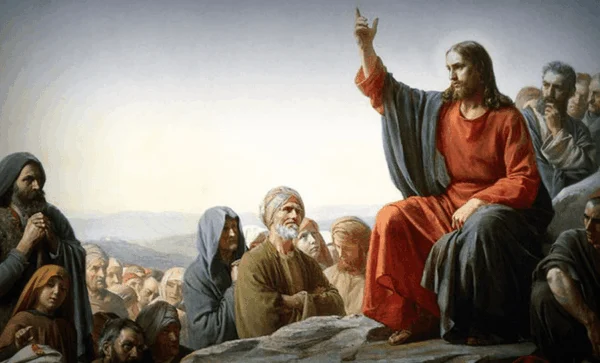
In this lecture you will see how Jesus was juxtaposed against the rabble of Rabbis that had occupied Jerusalem being filled with countless opinions and entanglements of the law, all of which became a contradicting theological mess. In this way, Jesus’ teachings were seen as the only logical ‘way’ amidst these chaotic ego-centric based Rabbins of Babylonian and Persian persuasion. Jesus was the True Rabbi and His word was his deed. He died to it and Resurrected us all unto life and freed us from the quagmire of man’s opinions.

0:00
0:00
skip_previous
play_arrow
pause
skip_next
replay_10
volume_up
volume_down
volume_off
description
view_headline
Nothing found!
close

Sheol is the Hebrew word for Hell. This word was disseminated throughout the early Oriental World. We find that the origin and usage of this word (prior to 1,000 B.C.) had been a much earlier word than the word used by the Hebrews. The root meaning of SHL (Sheol) did not mean ‘to damn to hell without hope’, rather, it meant “a place to make a legal plea before a jury or oratorium concerning what your grief has been with the hope of a fair ending”. That is to say, the place by which ‘hope’ is given through a legal recourse by stating your sufferance. The final idea: until we are ‘in hell’ we will not call out to God. We need hell to understand our alignment with the eternally Holy. The arguments posited in this audio lecture refer back as far as ca. 5,500 years ago leaving every area on the globe affected. As to what has become of this meaning in contemporary understanding is for another lecture.

0:00
0:00
skip_previous
play_arrow
pause
skip_next
replay_10
volume_up
volume_down
volume_off
description
view_headline
Nothing found!
close

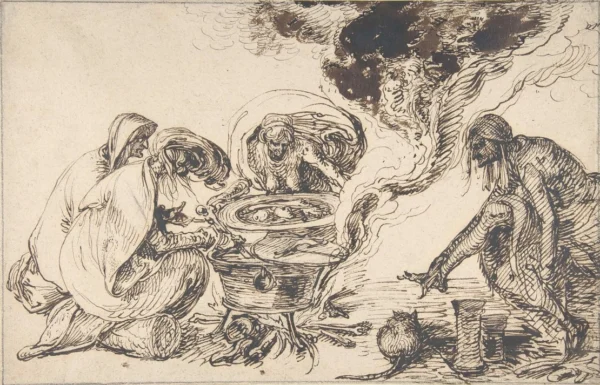
“In non formal discussions with a student of mine I am covering the subject of the first witch. I am bringing to light the stage by which “ the Witch” bore its meaning via the modus operandi of Enki and Inanna in their respective Sumerian texts. These Sumerian texts do not only parallel that of the Biblical Satan and Eve characters but that the “Legend” of Eve and the Serpent are supported via the Legend of Enki and Inanna. I believe that true history accounted within the midst of the Sumerian and Biblical account of the first Witch”.

0:00
0:00
skip_previous
play_arrow
pause
skip_next
replay_10
volume_up
volume_down
volume_off
description
view_headline
Nothing found!
close

“In non formal discussions with a student of mine  I am covering the subject of the first witch. I am bringing to light the stage by which “ the Witch” bore its meaning via the modus operandi of Enki and Inanna in their respective Sumerian texts. These Sumerian texts do not only parallel that of the Biblical Satan and Eve characters but that the “Legend” of Eve and the Serpent are supported via the Legend of Enki and Inanna. I believe that true history accounted within the midst of the Sumerian and Biblical account of the first Witch”. 
0:00
0:00
skip_previous
play_arrow
pause
skip_next
replay_10
volume_up
volume_down
volume_off
description
view_headline
Nothing found!
close

“In non formal discussions with a student of mine  I am covering the subject of the first witch. I am bringing to light the stage by which “ the Witch” bore its meaning via the modus operandi of Enki and Inanna in their respective Sumerian texts. These Sumerian texts do not only parallel that of the Biblical Satan and Eve characters but that the “Legend” of Eve and the Serpent are supported via the Legend of Enki and Inanna. I believe that true history accounted within the midst of the Sumerian and Biblical account of the first Witch”. 
0:00
0:00
skip_previous
play_arrow
pause
skip_next
replay_10
volume_up
volume_down
volume_off
description
view_headline
Nothing found!
close

“In non formal discussions with a student of mine  I am covering the subject of the first witch. I am bringing to light the stage by which “ the Witch” bore its meaning via the modus operandi of Enki and Inanna in their respective Sumerian texts. These Sumerian texts do not only parallel that of the Biblical Satan and Eve characters but that the “Legend” of Eve and the Serpent are supported via the Legend of Enki and Inanna. I believe that true history accounted within the midst of the Sumerian and Biblical account of the first Witch”. 

0:00
0:00
skip_previous
play_arrow
pause
skip_next
replay_10
volume_up
volume_down
volume_off
description
view_headline
Nothing found!
close