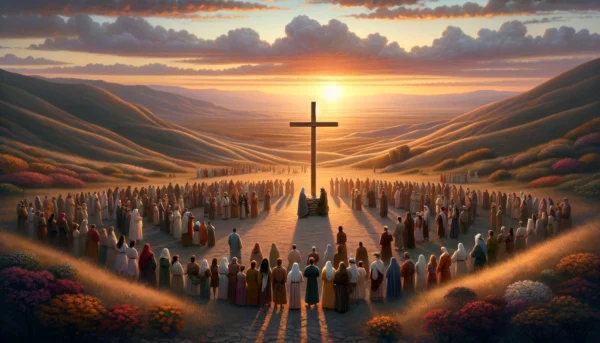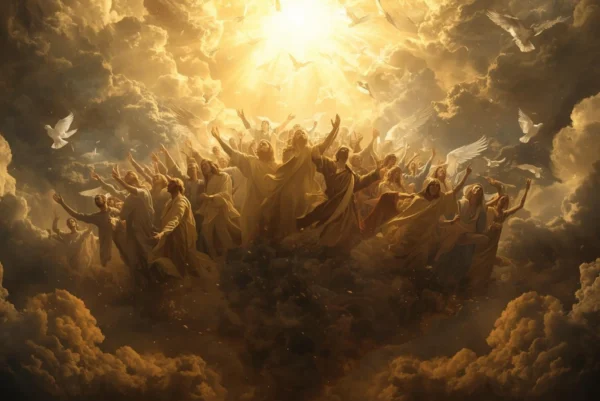
The most widely cited estimates of Christian martyrdom come from the Center for the Study of Global Christianity at Gordon-Conwell Theological Seminary. They calculate a cumulative total of approximately seventy million Christian martyrs from the first century to the present day. Strikingly, more than half of that total — over thirty-five million — occurred in the twentieth century alone (we have not finished per capita the 21st century), largely driven by state-sponsored violence under communist and fascist regimes. 

In the earliest centuries, documented cases were relatively few. Persecution remained sporadic and localized until the massive scale of twentieth-century totalitarian regimes produced an unprecedented spike. For the twenty-first century, the Center’s estimates average between ninety thousand and one hundred thousand martyrs per year, although they have walked back some of the higher figures after recognizing that many deaths in active conflict zones, such as the Democratic Republic of Congo, were not primarily motivated by religious identity. 

A more conservative approach is taken by Open Doors, which restricts its count to clearly faith-motivated killings. In their most recent reporting period, they documented 4,849 Christians murdered specifically for their faith, with over ninety percent of those cases concentrated in sub-Saharan Africa, the vast majority in Nigeria. This illustrates a critical statistical distinction: while absolute numbers have risen dramatically with the global Christian population, the stricter, faith-specific counts remain in the low thousands annually rather than tens of thousands. 

When we narrow our focus to the first century, the picture changes markedly. The earliest recorded martyrdom is that of Stephen, stoned around 34 to 36 CE. The apostle James, son of Zebedee, was executed by Herod Agrippa the First around 44 CE. Both Peter and Paul are traditionally held to have been martyred in Rome under Nero between 64 and 67 CE, following the Great Fire of Rome in 64 CE that triggered the first imperial persecution. All told, the total number of Christian martyrs in the first century is estimated at fewer than one thousand. 

At that time the entire Christian population numbered perhaps only seven thousand to ten thousand believers by the year 100. Persecution was episodic, driven first by local Jewish authorities and later by Roman imperial policy. Surviving records suggest a rate of roughly ten to twenty documented martyrdoms per decade. In absolute terms today’s annual figures are five thousand to ten thousand times higher, yet the per-capita martyrdom rate in the first century was arguably higher given the minuscule base population. 

That’s the statistical overview — broad trends, source methodologies, and the sharp contrast between the first century and the modern era. 

Dispensationalism-vs-Covenant-Theology

The primary fallacies of dispensationalism in light of the Hebrew and Greek New Testament.

Dispensationalism rests on three pillars: strict ages called οἰκονομία (oikonomia – Ephesians 1:10, 3:2; Colossians 1:25 – “administration of the fullness of the times”), αἰών (aiōn – over 120 times, like Ephesians 2:2 κατὰ τὸν αἰῶνα τοῦ κόσμου τούτου, “according to the age of this world”), rigid Israel-church split, and literalism over fulfillment. All three collapse when we read the originals. Dr. Ramelli’s research in Terms for Eternity confirms αἰών denotes an age or era, not rigid compartments with different salvific tests. The contrasting term ἀΐδιος (aïdios), from ἀεί meaning “always” or “ever,” carries the strict sense of true, unending eternity without beginning or end. Pagan authors like Plato use it for timeless eternity in the Timaeus, Aristotle prefers it almost three hundred times for eternal things and never uses aiōnios, and Stoics employ it for perpetual duration. In the Septuagint it appears only twice, always for true eternity. In the New Testament it occurs just twice: Romans 1:20 ἀΐδιος δύναμις (aïdios dynamis) – “eternal power” of God, visible in creation, and Jude 1:6 ἀϊδίοις δεσμοῖς (aïdiois desmois) – “eternal chains” binding fallen angels until judgment. Notice: ἀΐδιος is never used for punishment of humans or for the fire of Gehenna; that’s always αἰώνιος. This sharp distinction, proven across classical, biblical, and patristic texts by Ramelli and Konstan, shows the New Testament writers deliberately chose αἰώνιος for age-related outcomes and reserved ἀΐδιος for God’s own unending attributes.

First, segmented dispensations. Ephesians 2:7 Greek: ἐν τοῖς αἰῶσιν τοῖς ἐπερχομένοις (en tois aiōsin tois eperchomenois) – “in the ages the coming ones” – shows grace displayed across continuous ages, not a new test period. Hebrews 1:2 ἐπʼ ἐσχάτου τῶν ἡμερῶν τούτων (ep’ eschatou tōn hēmerōn toutōn) – “in the lastmost of these days” – puts us already in the climax, not waiting for another dispensation.

Galatians 3:16 τῷ δὲ Ἀβραὰμ ἐρρέθησαν αἱ ἐπαγγελίαι καὶ τῷ σπέρματι αὐτοῦ (tō de Abraam errethēsan hai epangeliai kai tō spermati autou) – “to Abraham were spoken the promises and to his seed” – singular seed, not seeds. Galatians 3:29 ἄρα τοῦ Ἀβραὰμ σπέρμα ἐστέ (ara tou Abraam sperma este) – “you are Abraham’s seed” – one corporate seed in Christ, not a later dispensation.

Second, the Israel-church split. ἐκκλησία (ekklēsia) is the same word the Septuagint uses for Israel’s assembly. Acts 7:38 calls the wilderness congregation τῇ ἐκκλησίᾳ ἐν τῇ ἐρήμῳ (tē ekklēsia en tē erēmō). Galatians 6:16 ἐπὶ τὸν Ἰσραὴλ τοῦ θεοῦ (epi ton Israēl tou theou) – “upon the Israel of God” – puts the church right inside that name.

Ephesians 2:15 εἰς ἕνα καινὸν ἄνθρωπον (eis hena kainon anthrōpon) – “into one new man” – singular “one,” not two tracks. Romans 11:17 συγκοινωνὸς τῆς ῥίζης (synkoinōnos tēs rhizēs) – “fellow partaker of the root” – Gentiles grafted into Israel’s own olive tree, same root, same tree. 1 Peter 2:9 ὑμεῖς δὲ γένος ἐκλεκτόν, βασίλειον ἱεράτευμα, ἔθνος ἅγιον (hymeis de genos eklekton, basileion hierateuma, ethnos hagion) – directly from the Greek Old Testament of Exodus 19:6 ὑμεῖς δὲ ἔσεσθέ μοι βασίλειον ἱεράτευμα καὶ ἔθνος ἅγιον (basileion hierateuma kai ethnos hagion), שכוֹֹֹֹּּׁ and the Hebrew מַמְלֶכֶת הֲנִים וְג י קָד (mamleket kohanim v’goy qadosh).

Third, the misreading of fulfillment. Matthew 21:43 δοθήσεται ἔθνει ποιοῦντι τοὺς καρποὺς αὐτῆς (dothēsetai ethnei poiounti tous karpous autēs) – “given to a nation producing its fruits.” 2

Corinthians 1:20 ὅσαι γὰρ ἐπαγγελίαι θεοῦ, ἐν αὐτῷ τὸ ναί (hosai gar epangeliai theou, en autō to nai) – “all the promises of God are in him the Yes.”

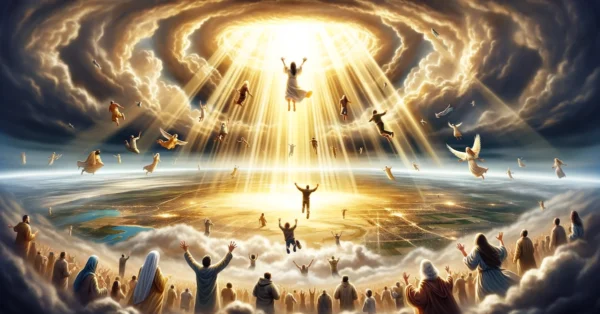
The idea of a secret pre-tribulation rapture has no clear Greek textual basis. Instead, the New Testament teaches a post-tribulation gathering at Christ’s final and only παρουσία (parousia – personal visible coming). 1 Thessalonians 4:17 ἅμα σὺν αὐτοῖς ἁρπαγησόμεθα ἐν νεφέλαις (hama syn autois harpagēsometha en nephelais) – “together with them we will be snatched in clouds” – happens after the dead in Christ rise, at the loud command, trumpet of God, and the Lord’s descent. This is the same παρουσία described in Matthew 24:30-31 καὶ τότε ὄψονται τὸν υἱὸν τοῦ ἀνθρώπου ἐρχόμενον ἐπὶ τῶν νεφελῶν (kai tote opsontai ton huion tou anthrōpou erchomenon epi tōn nephelōn) – “then they will see the Son of Man coming on the clouds” – with a great trumpet, gathering his elect immediately after the tribulation of those days. 2 Thessalonians 2:1 περὶ τῆς παρουσίας τοῦ κυρίου ἡμῶν καὶ ἡμῶν ἐπισυναγωγῆς ἐπ’ αὐτόν (peri tēs parousias tou kyriou hēmōn kai hēmōn episynagōgēs ep’ auton) – “concerning the parousia of our Lord and our gathering together to him” – links the gathering directly to that final, public parousia, not a secret event before tribulation. 1 Corinthians 15:51-52 ἐν τῇ ἐσχάτῃ σάλπιγγι (en tē eschatē salpingi) – “at the last trumpet” – confirms this gathering occurs at the very end, not in a separate pre-trib rapture.

The Old Testament prophets themselves foretold that God’s people would see this very same parousia. Zechariah 12:10 שודבִִֶֶָָּּּּּּׁׁ Hebrew: וְהִ יט אֵלַי אֵת אֲ ר־ קָר (vehibbitu elai et asher-daqaru) – יובַַֹּּּּּ “they will look on me whom they have pierced.” Zechariah 14:4 וְעָמְד רַגְלָיו ם־הַה א (ve’amdu raglav bayyom-hahu) – “his feet will stand in that day on the Mount of Olives.” Isaiah 25:9 יובאַַָֹּּּּ Hebrew: וְ מַר ם הַה א (ve’amar bayyom hahu) – “it will be said in that day,” the redeemed will see the Lord. These Old Testament Jews are clearly promised they will witness the same final parousia as the church.

On Knoch, his ultra-literal concordant method still splits οἰκονομία into separate stewardships with different gospels. Ephesians 3:2 τὴν οἰκονομίαν τῆς χάριτος τοῦ θεοῦ (tēn oikonomian tēs charitos tou theou) – “the administration of the grace of God” – is one grace, not a new compartment. Colossians 1:25 κατὰ τὴν οἰκονομίαν τοῦ θεοῦ (kata tēn oikonomian tou theou) ties the mystery straight to the one divine household plan.

Additional direct texts: Romans 4:11-12 Abraham father of all who believe; Galatians 3:8 προευαγγελίζομαι (proeuangelizomai) – gospel preached beforehand to Abraham; Ephesians 2:19 συμπολῖται τῶν ἁγίων (sympolitai tōn hagiōn) – fellow citizens with the saints, same citizenship; Colossians 3:11 ὅπου οὐκ ἔνι Ἕλλην καὶ Ἰουδαῖος (hopou ouk eni Hellēn kai Ioudaios) – “there is not Greek and Jew,” absolute unity.

וֹ Hebrew side: ע לָם (olam) in the Old Testament means long duration or eternity, never changing מִִּּ salvation rules. Hosea 1:9 לֹא־עַ י (lo-ammi) – “not my people” – reversed in the church in 1 לָָּּ Peter 2:10 νῦν δὲ λαὸς θεοῦ (nyn de laos theou). Exodus 19:5 סְגֻ ה (segullah) – treasured possession – now applied to the whole people of God in Christ.

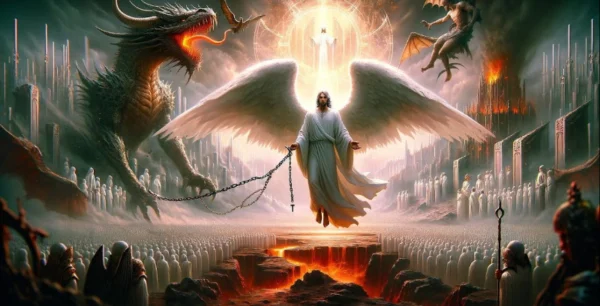
Now on the eternal chains: Jude 1:6 uses ἀϊδίοις δεσμοῖς — eternal chains — for the angels who left their proper domain. These chains are from heaven, yet they bind events in time on this earth. Even though they are called eternal (aïdios), they are still operating within history, holding back judgment until the final day. This shows that “eternal” in the biblical sense can describe something that originates in God’s timeless realm but has its effect inside time, not outside of it. God’s ἀΐδιος power works within the ages, not by creating separate dispensations.

The primary fallacies of dispensationalism in light of the Hebrew and Greek New Testament. 

Dispensationalism, pioneered by John Nelson Darby in the nineteenth century, rests on three core pillars: a strict division of history into distinct ages or dispensations (Greek oikonomia or aiōn), a rigid separation between Israel and the church, and a literalistic hermeneutic that prioritizes Old Testament ethnic promises over New Testament fulfillment. When examined through the original languages and the full biblical witness, these pillars collapse under exegetical weight. 

First, the fallacy of segmented dispensations. The Greek aiōn appears over 120 times in the New Testament, consistently meaning “age” or “era,” not a compartmentalized test of mankind with changing rules of salvation. Ephesians 2:7 speaks of “the ages to come,” and Hebrews 1:2 of God speaking “in these last days” — the eschatais hēmerais — showing one continuous redemptive arc climaxing in Christ, not seven disconnected economies. The Hebrew ʿôlām in the Old Testament likewise denotes long duration or eternity, never implying God changes His salvific method across eras. The claim that each dispensation tests man under different conditions contradicts Romans 4 and Galatians 3, where Abraham is justified by faith centuries before the Mosaic law. 

Second, the fatal Israel-church dichotomy. Dispensationalism insists the church is a “parenthesis” in God’s plan for national Israel. Yet the Greek ekklēsia — the word for “church” — is used in the Septuagint to translate the Hebrew qāhāl, the assembly of Israel. Stephen in Acts 7:38 calls the wilderness congregation “the ekklēsia in the wilderness.” Paul in Galatians 6:16 calls the church “the Israel of God.” Ephesians 2:14–16 declares Christ has made Jew and Gentile “one new man,” breaking down the dividing wall. Romans 11’s olive tree shows Gentiles grafted into the same root as Israel — not a separate tree. Peter in 1 Peter 2:9 applies Exodus 19:5–6’s language of Israel directly to the church: “a chosen race, a royal priesthood, a holy nation.” The Greek makes the continuity unmistakable. 

Third, the misreading of fulfillment. Dispensationalism demands a future literal fulfillment of every Old Testament promise to ethnic Israel apart from the church. But the New Testament repeatedly declares fulfillment in Christ and His people. Matthew 21:43 — the kingdom is taken from Israel and given to a people producing its fruit. Galatians 3:16, 29 — the seed of Abraham is Christ, and those in Christ are Abraham’s offspring. The Hebrew promises find their telos in the Messiah, not in a future national state detached from the church. 

These errors produce further distortions: multiple plans of salvation across ages, a secret pre-tribulation rapture with no clear Greek textual basis, and a hermeneutic that elevates Old Testament shadows above New Testament reality. The biblical authors, writing in Hebrew and Greek, present one covenant people of God, one plan of salvation by grace through faith, and one climax in Christ — not segmented dispensations or parallel tracks for Israel and the church. 

In short, dispensationalism fragments what the original languages and the biblical authors deliberately unify. The Greek and Hebrew witness a single, Christ-centered redemptive history, not Darby’s segmented system. 

Shadow and Redeemer in Lilith sit at the heart of MacDonald’s theology. Lilith is not merely evil; she is the primal rebel whose refusal to submit mirrors the human soul’s pride. Yet MacDonald redeems her. In Chapter 29 she finally drinks the water of life and is restored, becoming the vehicle through which Adam’s first wife is brought back into the family of God. The Shadow that pursues Vane is the dark double of self-will, but it too is ultimately dissolved in the same waters. Redemption is universal because the numinous pull of divine beauty finally overcomes every shadow.

Here is where MacDonald’s romanticism parts company with Carl Jung’s individuation. Jung saw the shadow as an autonomous archetype that must be integrated—made conscious and owned—so the ego can become whole. MacDonald’s Shadow, by contrast, cannot be integrated; it must be dissolved. The romantic tradition, from Chrétien’s knights who serve an ideal lady they can never possess, through Guillaume de Lorris’s lover forever separated from the Rose by allegorical barriers, insists that the self is healed not by balancing its darkness but by surrendering to a beauty greater than itself. Aesthetic arrest is not a therapeutic tool; it is a conversion. The soul does not grow by assimilating its shadow; it dies to itself and is reborn when the numinous strikes.

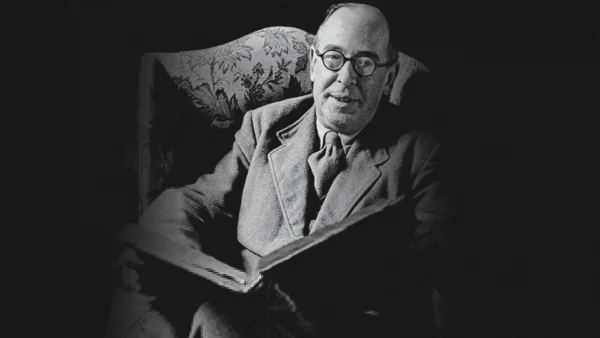
Lewis makes this explicit in The Allegory of Love: courtly love is “a process of refinement in which the lover is ennobled precisely because he never attains the object of his desire” (Chapter II, p. 31). The tension is never resolved inside the self; it is resolved by adoration of the transcendent. The Discarded Image shows the medieval cosmos as a hierarchy in which every lower thing finds its meaning by pointing upward, never by absorbing its opposite. MacDonald’s Fairy Land and Shadow Land function exactly that way: the Shadow is not a missing piece of the psyche to be welcomed; it is a parasite that dies when the soul turns toward the living water. Jung’s individuation keeps the ego at the center; MacDonald’s romance dethrones the ego entirely.

That is why the romantic vision ultimately judges Jung’s project unworkable. The self cannot heal itself by balancing its parts. Only the arresting beauty of the numinous—Plato’s shudder before the divine form, the Latin numen that commands both terror and irresistible attraction—can break the Shadow’s power. Individuation circles forever inside the finite self; aesthetic arrest opens the self outward to the infinite.

Doctoral-level presentation: Fatal exegetical and theological flaws in Ellen G. White’s core doctrines when examined against the Hebrew and Greek texts of Scripture.

Ellen G. White’s writings shaped Seventh-day Adventist theology, particularly the Investigative Judgment beginning in 1844, the perpetual binding nature of the seventh-day Sabbath, and related sanctuary typology. When held against the original Hebrew and Greek, these teachings reveal significant interpretive and doctrinal difficulties.

1. The Investigative Judgment and Daniel 8:14

White and early Adventists interpreted Daniel 8:14 — “Unto two thousand and three hundred days; then shall the sanctuary be cleansed” — as a heavenly Investigative Judgment starting in 1844 via the year-day principle. The Hebrew דַַּּ verb here is נִצְ ק (nisdaq), a Niphal form of צָדַק (tsadaq), meaning “to be justified,” “vindicated,” or “restored to its rightful state.” It is not the standard Hebrew word for ritual cleansing, which is טָהֵר (taher), used repeatedly in Leviticus 16 for the Day of Atonement.

This linguistic mismatch is critical. The context of Daniel 8 concerns the little horn’s desecration of the sanctuary and host; nisdaq speaks of vindication after oppression, not an investigative process of believers’ records. The Greek Septuagint renders it with καθαρισθήσεται (katharisthesetai), but this is a later interpretive choice, not the Hebrew original. No New Testament passage links a post-ascension heavenly judgment of believers’ works to salvation, contradicting passages like Romans 8:1 (“There is therefore now no condemnation”) and John 5:24.

2. The Sabbath as seal and test of loyalty

White taught that the seventh-day Sabbath is the seal of God and that Sunday observance is the mark of the beast, essential for final salvation. The New Testament Greek offers no support. The word σάββατον (sabbaton) appears frequently, yet the apostles never command Gentile believers to observe the seventh day. Colossians 2:16 explicitly states, “Let no one judge you in respect of… a Sabbath day” (sabbatōn). Hebrews 4:9 uses σαββατισμός (sabbatismos) — a Sabbath-rest — to describe the rest believers enter through faith in Christ, not a weekly calendar observance.

The early church evidence White cited — that “all Christians” kept the Sabbath for centuries — does not align with the historical record. By the second century, many churches gathered on the first day (kuriakē hēmera), as seen in Acts 20:7 and 1 Corinthians 16:2. The Greek New Testament presents the Sabbath command as part of the old covenant shadows fulfilled in Christ, not an enduring moral test separating God’s remnant people.

3. Perfectionism and assurance

White’s emphasis that believers must achieve sinless perfection of character before the close of probation, or they will be lost, creates a works-oriented tension. The Greek of 1 John 1:8 directly contradicts any claim of sinless perfection in this life: “If we say that we have no sin, we deceive ourselves.” Romans 7:14–25 and Galatians 5:17 describe the ongoing struggle of the believer, while justification is by faith alone (pistei, Romans 3–5), not by reaching a state of flawless character.

Overall assessment

These doctrines rely on a selective, typological reading that inflates the Hebrew of Daniel and the Greek of the New Testament beyond their plain sense. The original languages present one finished atonement at the cross, justification by faith apart from works of the law, and freedom from the ceremonial calendar for Gentile believers. White’s system, while sincere and pastorally motivated, introduces elements that the Hebrew and Greek texts do not sustain.

The biblical witness, in its original languages, centers on the completed work of Christ and the believer’s immediate assurance in Him — not a delayed heavenly investigation or a weekly day as the final test of loyalty.

This creates the central tension: a prophetic voice that points people to Scripture, yet whose distinctive teachings do not consistently withstand close examination of that same Scripture in its original Hebrew and Greek.

The narrative arc of Christ’s incarnation, passion, and triumph emerges not merely as a singular historical event but as a profound convergence of ancient archetypes, refracted through cosmic, mythic, and symbolic lenses—yet it stands apart in its linear trajectory, from Alpha to Omega, against the endless loops of cyclical myth.

Machen’s defense of the virgin birth—anchored in Matthew 1:18-25 and Luke 1:26-38—grounds the story in a deliberate divine entry: the Holy Spirit’s overshadowing (Luke 1:35) fulfills Isaiah 7:14, birthing a sinless figure external to human decay. This inaugurates a forward-moving redemption, not a seasonal reset. Molnar’s astronomy adds celestial punctuation—the Star of Bethlehem, Jupiter-lunar occultation in Aries circa 6 BC—proclaiming kingship (Matthew 2:2), fulfilling Numbers 24:17, with Christ as the bright morning star (Revelation 22:16). Light signals beginning, shadows death (Matthew 27:45), radiance resurrection—a straight line, not a circle.

Watkins’s dragon-slaying—Indra versus Vritra, Thor versus Jormungandr—echoes chaos subdued, but Scripture linearizes it: Genesis 3:15’s promise culminates in Revelation 12’s dragon cast down, Calvary’s bruise, resurrection’s seal—once-for-all, no eternal churn.

Thavapalan’s Mesopotamian hues—namru brilliance, lapis blue—frame stars as God’s numbered script (Psalm 147:4), from birth’s glow to death’s eclipse to glory’s crystal light (Revelation 21:11). Osiris, dismembered by Set, reassembled by Isis, rules the underworld cyclically—renewal tied to Nile floods, ankh as perpetual vitality. Adonis bleeds out in summer, revives in spring; Tammuz mourns, sprouts again—vegetation’s wheel, per Frazer’s Golden Bough, where death and rebirth mirror harvest, rituals lamenting then rejoicing, no endpoint.

Campbell’s monomyth overlays the hero’s arc—call, ordeal, abyss, return—but in dying gods, it spirals: descent into underworld, ego-loss, seasonal emergence, back to origin. Osiris never walks earth again; Adonis fades. Jesus descends to Hades (1 Peter 3:19), rises bodily, appears to witnesses, ascends—linear progression: baptism to ministry to cross to empty tomb to eternal reign. No repeat; the cycle breaks. Frazer catalogs these gods as nature’s echo—decay, revival, decay—yet critiques reveal the “dying-and-rising” label as overstated: many merely disappear or rule dead realms, no true bodily triumph over mortality.

Here lies the juxtaposition: cyclical myths dissolve into cosmic mist—eternal return, no progress, humanity trapped in myth’s loop, offering ritual hope without historical anchor. Christ’s story arcs forward: Alpha in virgin womb, Omega in resurrection glory (Revelation 1:8, 22:13)—a one-time victory swallowing death (1 Corinthians 15:54), atonement actualized, not symbolic. Where gods cycle nowhere, the Messiah advances history toward consummation—light over darkness, life over endless night.

A seamless tapestry: echoes resolved into crescendo, myth yielding to linear fulfillment.

In the framework of analytical psychology, Carl Gustav Jung conceptualized the shadow as the repressed, unconscious aspects of the personality—encompassing instinctual drives, moral failings, and unacknowledged aggression that must be confronted and integrated to achieve individuation which is the process toward psychic wholeness. The crucifixion, in Jungian exegesis, functions symbolically as a voluntary ego-dissolution, i.e, a confrontation with the collective shadow, culminating in the Self’s emergence through mythic rebirth.

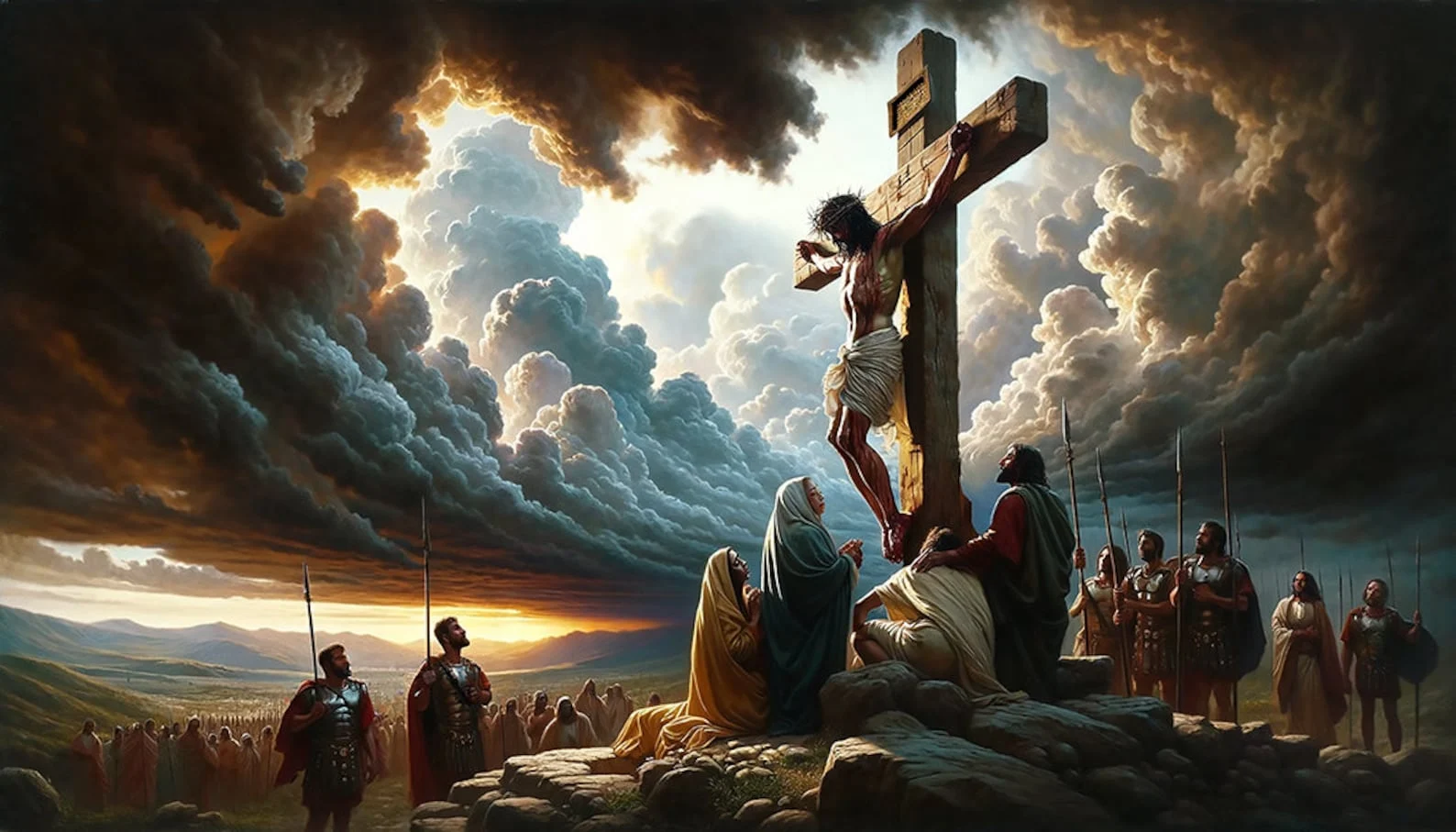
Jung’s Christological interpretation, however, subordinates historical soteriology to anthropological projection. Contra Jung, the cross represents not internal psychic drama but objective, vicarious atonement. The event—real blood, real nails, the cry of dereliction (“My God, why have you forsaken me?”) constitutes substitutionary sacrifice: Christ, as the God-man, bears humanity’s sin collectively, not as archetype but as historical Redeemer while the Resurrection affirms bodily vindication, not symbolic rebirth.

Dr. René Girard amplifies this critique of Jungian individuation through mimetic theory. Human desire, imitative rather than innate, engenders rivalry; unresolved conflict precipitates the scapegoat mechanism, that is, the collective violence channeled onto an arbitrary victim (a.k.a. ”social cannibalism”), whose death restores social equilibrium. Myths and rituals perpetuate this cycle by mythologizing the victim’s guilt. Pre-Christian societies relied on it; the Gospels invert it. Jesus, innocent and divine, exposes the mechanism’s deceit: his execution reveals violence as foundational, not redemptive. Unlike Jung’s “shadow-integration” (individual and therapeutic), Girard’s framework is anthropological and ethical. Christ does not model self-actualization; he terminates the victimage cycle by siding with the victim, rendering further scapegoating untenable.

Thus, the crucifixion flips the Jungian shadow: rather than internalizing darkness, it externalizes and absorbs it objectively. In the Christological approach, humanity’s mimetic shadow (projected blame, rivalry, violence, etc.) is not “owned” by the ego but born by the Lamb once-for-all. There is no stage-by-stage ascent with the eternal form of the Lamb slain from the foundation of the world. Grace flows ceilingless, as I express in my book, “Does Grace Have a Ceiling?/ The Anatomy of the Will”.

Scripture declares a finished work, not a blueprint or “road map” . Believers enter Christ’s victory, not complete a personal process.

I conclude that Jungian psychology risks a healthy Christological approach with a replacement theology while using Christian nomenclature to usurp the Gospel message and psychologizing Yahweh into a divided divine, flattening incarnation into projection. Simply put: The Son heals our fracture, not a cosmic one. The cross exposes, ends, and redeems—historically, for all.