1000 Year Millennium

Let’s bring in the thousand-year reign to show how it actually strengthens the post-tribulation view and further exposes the incoherence of pre-trib dispensationalism. 

The word for “thousand” in Revelation 20 is χίλια (chilia) — not chilioi in the singular, but the plural form used six times in that chapter alone. That plural usage fits perfectly with the idea of an extended period rather than a literal 365,000-day countdown. 

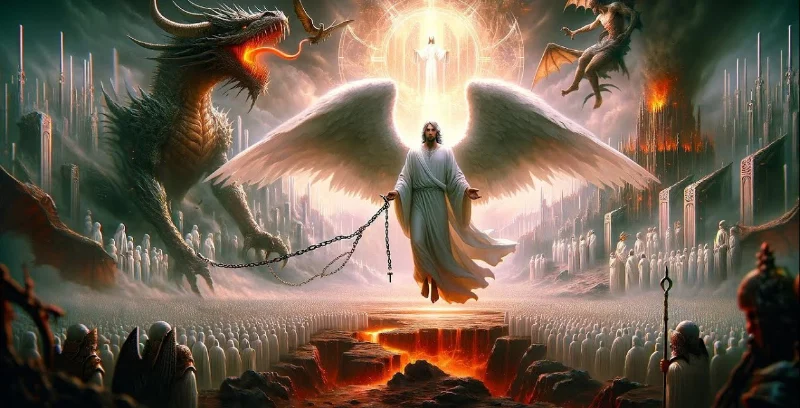
From Christ’s earthly ministry, death, and resurrection until the final tribulation, we are already living in those “thousands of years” — the church age as the millennial reign in its inaugurated form. Satan was bound at the cross so that he could no longer deceive the nations in the same way. That binding is exactly what Revelation 20:2–3 describes: “He seized the dragon… and bound him for a thousand years.” 

This means the “thousand years” are not a future literal kingdom sandwiched between a pre-trib rapture and a final battle. They are the present age in which Christ rules from heaven through His church while Satan’s deception of the Gentiles is restrained. When that restraint is lifted for a short season at the very end, then the final thlipsis comes, immediately followed by the visible parousia, the gathering of the elect, and the final judgment. 

This fits Daniel’s 70 weeks without any artificial gap. The 70th week finds its fulfillment in the consummation at Christ’s return, not in a seven-year future tribulation that requires a secret rapture first. One continuous prophetic timeline, one people of God — Israel and the engrafted church together — enduring to the end, and one glorious return where the dead in Christ rise and we who are alive are caught up to meet the Lord. 

As the author of Does Grace Have a Ceiling? The Anatomy of the Will, I see this as preserving the true sovereignty of grace: it doesn’t whisk us away from trial; it carries us through it to the final victory at the single, visible parousia. 

Everything — Daniel’s shavu’im, the eschate salpingi, the thlipsis of Jacob and the church, the plural chilia, and the gathering of the elect — converges at one majestic endpoint. That is the coherent, Christ-centered telos of all Scripture. 
Pre Tribulation Rapture 3

Post-tribulation alone aligns the full redemptive arc of Scripture from promise to parousia.

Strong’s Greek 2347, θλῖψις (thlipsis), means pressure that constricts—exactly the great tribulation Jesus describes in Matthew 24:21 and 29. This is in distinct contrast to “wrath (orge)”. Εὐθέως δὲ μετὰ τὴν θλῖψιν τῶν ἡμερῶν ἐκείνων… καὶ ἐπισυνάξουσιν τοὺς ἐκλεκτοὺς αὐτοῦ. The gathering of the elect is immediately after thlipsis, not before.

The Hebrew counterpart in Daniel 12:1 is עֵת צָרָה (et tsarah), “a time of trouble” for Daniel’s יּ people, followed by deliverance— מִ עֲַמדֹ —none other shall stand. Jeremiah 30:7 echoes: עֵת צָרָה הִיא לְיַעֲקבֹ מִ ה יִ עַ שנמוֵֵֶֶָָָָּּּּּּּׁׁ —Jacob’s trouble, saved out of it.

At the eschate salpingi, the last trumpet, 1 Corinthians 15:52 declares: ἐν τῇ ἐσχάτῃ σάλπιγγι… καὶ ἡμεῖς ἀλλαγησόμεθα. Revelation 11:15’s seventh trumpet is the same climactic blast announcing the kingdom. One trumpet, one parousia, one gathering.

George Eldon Ladd saw this clearly: the New Testament knows only one blessed hope—the visible return of Christ. No secret escape appears in early church expectation.

Sadly, scholars from Dallas Theological Seminary like John Walvoord and Roy Zuck tried to defend pre-trib by creating a two-stage coming and a strict church-Israel divide. Yet Paul in Romans 11:17-24 uses the olive tree metaphor—wild branches grafted in—to show we share Israel’s root and, in the last days, her suffering.

Alva J. McClain’s kingdom theology actually supports the unified telos: one people of God brought through trial to one glorious appearing.

As the author of Does Grace Have a Ceiling? The Anatomy of the Will, I would point out that dispensational pre-trib creates a ceiling on grace—removing believers from the very trials that historically purified the church and displayed God’s sustaining power.

Teleologically, post-tribulation alone keeps the entire biblical story coherent: Israel’s tsarah, the church’s engrafted thlipsis, the last trumpet, the visible parousia, and the gathering of all God’s elect from the four winds. That is the single, majestic end toward which all prophecy moves.

Let’s expand on our critique of the pre-tribulation rapture and dispensationalism with fifty key verses from both Testaments, in original languages where possible.

1. Matthew 24:29–31 — Εὐθέως δὲ μετὰ τὴν θλῖψιν τῶν ἡμερῶν ἐκείνων… καὶ τότε φανήσεται τὸ σημεῖον τοῦ υἱοῦ τοῦ ἀνθρώπου… καὶ ἐπισυνάξουσιν τοὺς ἐκλεκτοὺς αὐτοῦ ἐκ τῶν τεσσάρων ἀνέμων. The gathering happens immediately after the tribulation, not before.

2 שוגֶֶֹֹּׁׁ –3. Daniel 12:1 — וְעֵת צָרָה אֲ ר לֹא־נִהְיְתָה מִהְי ת י עַד הָעֵת הַהִיא — a time of trouble for Daniel’s people, followed by deliverance. No escape before.

4 שנמוֵֵֶֶָָָָּּּּּּּׁׁ . Jeremiah 30:7 — עֵת צָרָה הִיא לְיַעֲקבֹ מִ ה יִ עַ — Jacob’s trouble, yet he is saved out of it, not from it.

5–6. 1 Corinthians 15:51–52 — ἐν τῇ ἐσχάτῃ σάλπιγγι… καὶ ἡμεῖς ἀλλαγησόμεθα. The resurrection and transformation occur at the last trumpet.

7. Revelation 11:15 — καὶ ὁ ἕβδομος ἄγγελος ἐσάλπισεν — the seventh trumpet brings the kingdom and rewards the saints. Same trumpet, same moment.

8–10. Mark 13:24–27, Luke 21:25–28 — All three Olivet accounts place cosmic signs and the Son of Man’s coming after the great tribulation.

11–15. Old Testament suffering texts — Isaiah 26:20–21, Zephaniah 1:14–18, Joel 2:1–11, Amos 5:18–20, Habakkuk 3:16–19 — all describe God’s people enduring the Day of the Lord, not being removed beforehand.

16–20. New Testament endurance commands — Matthew 24:13, Revelation 13:10, 14:12, 2 Thessalonians 1:4–7, Hebrews 10:36–39 — believers are called to endure thlipsis, not escape it.

21–25. Romans 11:17–24 — we wild olive branches are grafted into Israel’s tree and share her root. Dispensationalism’s sharp church-Israel divide breaks this organic unity.

26–30. Galatians 3:7, 3:29, Ephesians 2:11–22, 3:6 — one new man, one seed of Abraham, one household. Dispensationalism’s two separate peoples contradicts Paul’s clear teaching.

31–35. 2 Thessalonians 2:1–4, 8 — the parousia and our gathering occur after the man of lawlessness is revealed and destroyed by the Lord’s coming — no secret rapture years earlier.

36–40. Revelation 20:4–6 — the first resurrection includes tribulation martyrs. If the church was raptured pre-trib, who are these saints?

41–45. 1 Thessalonians 4:16–17, 5:1–4, 5:9–10 — the same passage that gives us “caught up” also says that day will not overtake believers like a thief — they are awake and prepared, not secretly removed years before.

46–50. Additional OT anchors — Isaiah 13:9–13, Ezekiel 30:3, Malachi 4:1–3, Zechariah 14:1–5 — the Day of the Lord is one unified event of judgment and deliverance for God’s people, not two separate stages.

51–55. More NT witnesses — John 6:39–40, 44, 54 — Jesus says He will raise His own “on the last day,” not seven years before the last day.

Dispensationalism’s two-stage parousia and strict church-Israel separation simply do not arise from these texts. They must be imported into Scripture rather than derived from it. As the author of Does Grace Have a Ceiling? The Anatomy of the Will, I see this framework as undermining the very unity of God’s redemptive plan that grace is meant to display.

The consistent testimony of prophets, Jesus, Paul, and John is one visible, glorious parousia, one last trumpet, one gathering of all God’s people — Jew and Gentile together — after the final tribulation. That is the blessed hope.

The pre-tribulation rapture isn’t mentioned anywhere. The term itself is absent from Scripture. George Eldon Ladd argued in The Blessed Hope that the New Testament presents one unified hope—the visible parousia of Christ, not a secret escape.  

Look at Matthew 24:29: Εὐθέως δὲ μετὰ τὴν θλῖψιν τῶν ἡμερῶν ἐκείνων—immediately after the thlipsis, the tribulation of those days—the cosmic signs occur, then the Son of Man appears, and the elect are gathered. Jesus ties the episunagōgē of His elect directly after thlipsis, not before. 

This matches the eschate salpingi, the last trumpet. First Corinthians 15:52 reads: ἐν τῇ ἐσχάτῃ σάλπιγγι· σαλπίσει γάρ, καὶ οἱ νεκροὶ ἐγερθήσονται ἄφθαρτοι, καὶ ἡμεῖς ἀλλαγησόμεθα—at the last trumpet, the dead are raised imperishable, and we are changed. Revelation 11:15’s seventh trumpet announces the kingdom’s arrival: καὶ ὁ ἕβδομος ἄγγελος ἐσάλπισεν. These are the same eschatological moment. 

The Old Testament anchors this in Israel’s story. Daniel 12:1 speaks of καιρὸς θλίψεως, a time of trouble for Daniel’s people such as never was. Jeremiah 30:7 calls it the time of Jacob’s trouble—yet he shall be saved out of it. Israel endures this final thlipsis. 

We Gentiles are not spared; we are engrafted in. Romans 11:17-24 shows us as wild olive branches grafted into the cultivated tree. We share Israel’s root and, in the last days, her suffering. As the author of Does Grace Have a Ceiling? The Anatomy of the Will, I would say this doctrine subtly undermines grace—it doesn’t remove us from trial, it sustains us through it. 

The prophets, Jesus, Paul, and John all point to one parousia, one trumpet, one gathering—from the four corners of the earth—at Christ’s visible return. The timeline is coherent when we let the text speak.