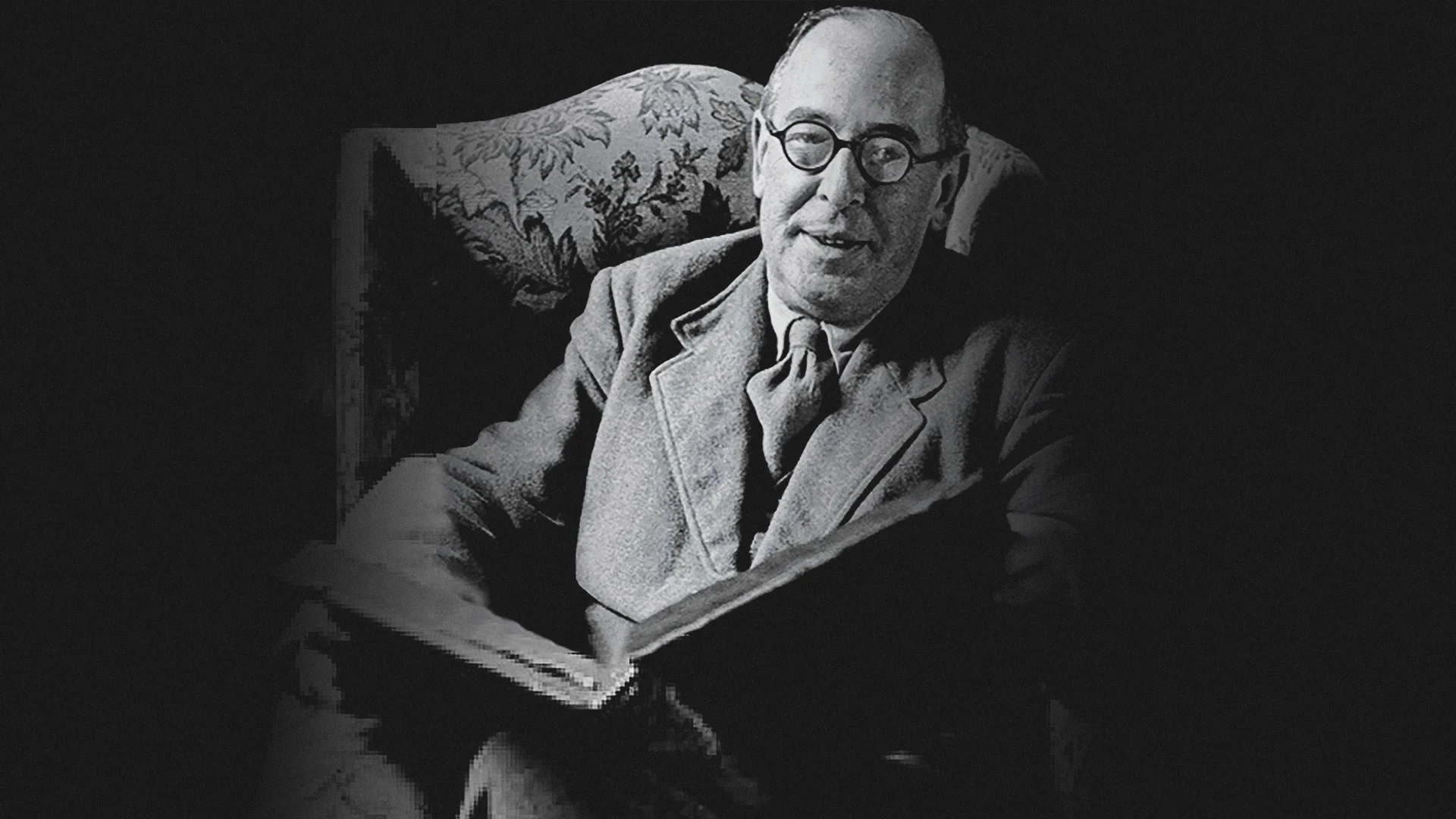
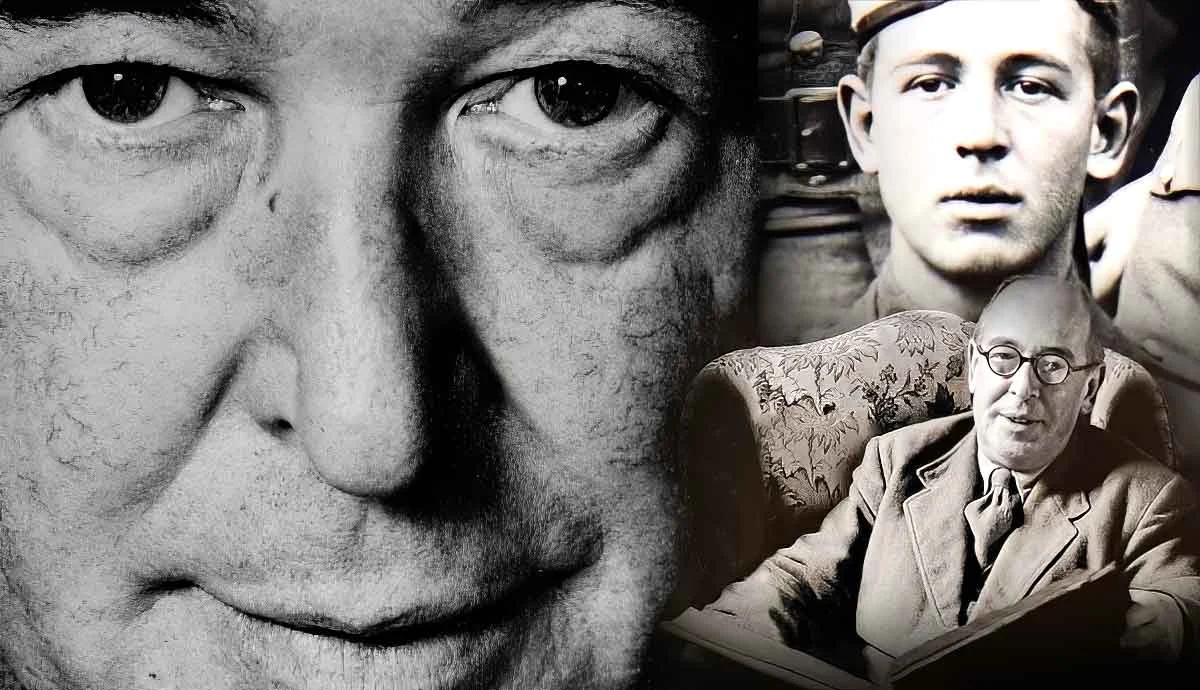
As an admirer of the venerable scholar, C.S. Lewis, I will attempt an integral view of C.S. Lewis’s “The Allegory of Love: A Study in Medieval Tradition (1936)”, “Studies in Words (1960)”, and “The Four Loves (1960)” attempting a coherent doctrinal inquiry into language, literary history, and the taxonomy of human affection. 

My hope is to do more book reviews and synthesis concerning Dr. Lewis’s works and other scholars of his caliber. 

I preface as a key to the exacting mind of Dr. Lewis a triadic view of three of his works which demonstrate Lewis’s methodological precision summed as philological rigor underpinning accurate literary exegesis, which in turn informs theological anthropology. 

In The Allegory of Love, Lewis identifies the abrupt emergence of courtly love in late eleventh-century Languedoc. He enumerates its four constitutive marks: humility, courtesy, adultery, and the religion of love. Lewis writes, “The lover is always abject. Obedience to his lady’s lightest wish, however whimsical, and silent acquiescence in her rebukes, however unjust, are the only virtues he dares to claim. There is a service of love closely modelled on the service which a feudal vassal owes to his lord. The lover is the lady’s ‘man’. He addresses her as midons, which etymologically represents not ‘my lady’ but ‘my lord’. The whole attitude has been rightly described as ‘a feudalisation of love’.” 

This feudalisation, drawing on troubadour poetry, Chrétien de Troyes’s Lancelot, and Andreas Capellanus’s “De Arte Honeste Amandi”, contrasts sharply with classical depictions of love as sensual indulgence or tragic madness. Allegory serves as the necessary vehicle, described as “the subjectivism of an objective age,” enabling the externalization of inner psychological conflict through personification, as refined in Prudentius’s Psychomachia and the Chartres Platonists such as Alanus ab Insulis’s De Planctu Naturae. “The Roman de la Rose” exemplifies their synthesis, with Guillaume de Lorris’s dream-vision and Jean de Meun’s encyclopedic continuation. Chaucer adapts these forms in Troilus and Criseyde, while Spenser’s Faerie Queene resolves the tradition by subordinating courtly adultery to virtuous marriage, as seen in Britomart’s chastity and the Mutability cantos. 

C.S.’s “Studies in Words” supplies the lexical foundation for such literary analysis. Lewis warns against the “dangerous sense,” the modern connotation unconsciously imposed upon historical texts, which distorts interpretation of medieval and classical sources. He introduces “verbicide,” the murder of words through inflation, partisan appropriation, or evaluative drift: “A skillful doctor of words will pronounce the disease to be mortal at the moment when the word in question begins to harbour the adjectival parasites real or true.” Semantic change must be traced with philological care, distinguishing lexical from speaker meaning, to avoid anachronistic readings of terms central to courtly literature—courtesy, love, nature—whose medieval senses differ profoundly from contemporary usage. Recovery of original meanings, including Latin and Old French roots, is prerequisite to faithful exegesis of the texts Lewis examines in The Allegory of Love. 

The Four Loves furnishes the theological capstone. Lewis classifies affection, friendship, Eros, and charity. On romantic love he notes “an unmistakable continuity connects the Provençal love song with the love poetry of the later Middle Ages, and thence with that of the present day,” acknowledging Eros as potentially ennobling yet perilous. “Eros ceases to be a demon only when he ceases to be a god.” Natural loves, including the idealized passion of courtly tradition, become demonic when divinized; they achieve proper order only when subordinated to charity, the supernatural love modeled on divine agape. 

Collectively these works exhibit Lewis’s unified intellect: lexical exactitude prevents misreading of literary tradition, while both disciplines reveal the moral and spiritual dynamics of human affection. His scholarship moves from semantic analysis through historical literary forms to theological discernment, illuminating how medieval innovations in sentiment and expression continue to shape Western understandings of love, language, and the soul’s orientation toward the transcendent. 

This is only a mere synthesis underscoring the interdependence of philology, literary history, and Christian anthropology found in Lewis’s writings and talks. 
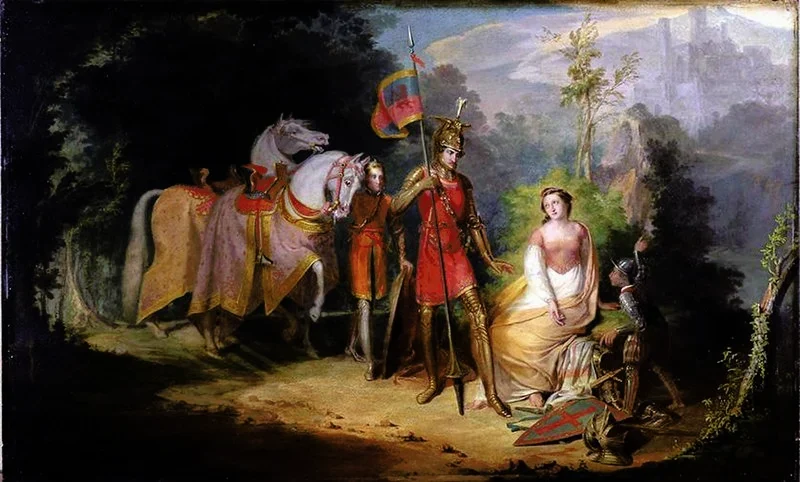
edmund-spensers-epic-poem-the-faerie

 Today we examine C.S. Lewis’s profound appreciation of Edmund Spenser’s The Faerie Queene in his Clarendon Press volume, Poetry and Prose in the Sixteenth Century. 

Lewis dedicates substantial space in the “Golden” section, particularly the chapter on Sidney and Spenser, spanning roughly pages 318 to 393 in the Oxford edition. 

Lewis defines the Faerie Queen as etymologically and structurally sound. The Faerie Queene fuses medieval allegory—from the Latin allegoria, meaning “speaking otherwise”—with the Italian romantic epic. He coins the term “allegorical core” for each book: the House of Holiness in Book I, the House of Alma in Book II, the Garden of Adonis in Book III, the Temple of Venus in Book IV, the Church of Isis in Book V, and Mount Acidale in Book VI. These cores disentangle the book’s central virtue from surrounding adventures. 

Lewis insists the allegory is radical and organic, not a puzzle or disguise. “Symbols are the natural speech of the soul.” He downplays strict historical roman-à-clef readings, preferring “fugitive historical allusions.” Arthur embodies Aristotelian magnanimity or magnificence, while Gloriana represents the “idole of her maker’s great magnificence.” 

Stylistically, Lewis praises Spenser’s Spenserian stanza—nine lines with the rhyme scheme ababbcbcc, the final line an iambic hexameter or alexandrine. This invention creates ordered exuberance, melodic richness, and a harmonious atmosphere unique to Faerie Land. 

He argues the poem’s unity derives not from plot but from its invented milieu: Faerie Land itself, where multiplicity of stories supports rather than impairs coherence. Reading it requires childlike surrender: “It is of course much more than a fairy-tale, but unless we can enjoy it as a fairy-tale first of all, we shall not really care for it.” The door is low; “no prig can be a Spenserian.” 

Ultimately, Lewis calls the experience “invigorating” and “psychotherapeutic.” “To read him is to grow in mental health.” He acknowledges occasional dull patches but celebrates Spenser’s simplicity, rectitude, and embodiment of common wisdom through moving images. 

In sum, Lewis presents The Faerie Queene as a health-giving palace of the imagination, bridging medieval and Renaissance sensibilities through radical allegory and melodic form. It rewards receptive reading with profound moral and imaginative vitality. 

cs-lewis

I offer an integrated view of three of C.S. Lewis’s works: 1) The Allegory of Love: A Study in Medieval Tradition (1936), 2) Studies in Words (1960), and 3) The Four Loves (1960).

I find the combination-synthesis of these 3 major works offer a coherent doctrinal inquiry into language, literary history, and the taxonomy of human affection. Together they demonstrate a methodological precision that moves from philological rigor to accurate literary exegesis and finally to theological anthropology.

In “Studies in Words” , Lewis lays the lexical foundation by warning against the “dangerous sense” , i.e., the unconscious imposition of modern connotations onto historical texts that distorts interpretation.

He diagnoses “verbicide, ” the murder of words through inflation (using overly dramatic, exaggerated, or “big” language for small or ordinary subjects ruins the power of language and renders words useless), partisan appropriation, or evaluative drift: “A skillful doctor of words will pronounce the disease to be mortal at the moment when the word in question begins to harbour the adjectival parasites real or true. ” Semantic change must be traced with philological care, distinguishing lexical from speaker meaning. Recovery of original meanings, including Latin and Old French roots for terms central to courtly literature—courtesy (from cortoisie, refined courtly conduct), love (amor), and nature (natura, often personified as a divinely ordained principle)—is prerequisite to faithful exegesis and prevents anachronistic readings of the texts examined in The Allegory of Love.

This philological rigor directly informs The Allegory of Love. Lewis identifies the abrupt emergence of courtly love in late eleventh-century Languedoc as a pivotal cultural shift. He enumerates its four constitutive marks: humility, courtesy, adultery, and the religion of love. Central to this ethos is its “feudalisation of love”: the lover is rendered abject, owing vassal-like service to his lady. “The lover is always abject. Obedience to his lady’s lightest wish, however whimsical, and silent acquiescence in her rebukes, however unjust, are the only virtues he dares to claim. There is a service of love closely modelled on the service which a feudal vassal owes to his lord. The lover is the lady’s ‘man’. He addresses her as midons, which etymologically represents not ‘my lady’ but ‘my lord’ (midon- “maddonna” – “mother goddess”). This posture, drawn from troubadour poetry, Chrétien de Troyes’s “Lancelot”, and Andreas Capellanus’s “De Arte Honeste Amandi”, contrasts sharply with classical depictions of love as sensual indulgence or tragic madness.

Allegory serves as the necessary vehicle for this new subjectivity, described as “the subjectivism of an objective age. ” It externalizes inner psychological conflict through personification, building upon Prudentius’s Psychomachia and the Chartres Platonists, notably Alanus ab Insulis’s De Planctu Naturae.

The tradition reaches its synthesis in “The Roman de la Rose”, with Guillaume de Lorris’s dream-vision complemented by Jean de Meun’s encyclopedic continuation. Chaucer adapts these forms in “Troilus and Criseyde” , while Spenser’s “The Faerie Queene” resolves the courtly tensions by subordinating adulterous passion to virtuous Christian marriage, as seen in Britomart’s chastity and the Mutability cantos.

“The Four Loves” furnishes the theological capstone. Lewis classifies four types of love: affection (storgē), friendship (philia), Eros, and charity (agapē). He notes an unmistakable continuity “that connects the Provençal love song with the love poetry of the later Middle Ages, and thence with that of the present day,” acknowledging Eros as potentially ennobling (and enabling) yet perilous. “Eros ceases to be a demon only when he ceases to be a god. ” Natural loves, including the idealized passion of the courtly tradition, become demonic when divinized; they achieve their proper order and fulfillment only when subordinated to supernatural charity, the self-giving love modeled on divine agapē. Collectively, these works exhibit Lewis’s unified intellect. Philological exactitude prevents misreading of literary tradition, literary historiography reveals the feudalisation and allegorical expression of eros, and theological discernment subordinates natural loves to charity—lest humility devolve into idolatry, courtesy into mere etiquette, or the “religion of love” into pagan parody.

Lewis’s scholarship thereby models an integrated Christian humanism: historically attentive, linguistically precise, and doctrinally acute. It affirms that all loves find their true telos in the charity that “never faileth,” illuminating how medieval innovations in sentiment and expression continue to shape Western understandings of language, affection, and the soul’s orientation toward the transcendent.

cs-lewis

Here’s a solid outline of C.S. Lewis’s The Allegory of Love based on its chapters and main points. It’s a study in medieval tradition, tracing how courtly love and the allegorical method fused in literature from the 11th century onward. 

Chapter 1: Courtly Love 

Lewis argues this new sentiment exploded in late 11th-century Provence with troubadours. Love became noble and ennobling, unlike classical views where it was either sensual fun or tragic madness. He defines its four key marks: humility (lover as vassal), courtesy, adultery (often the lady’s married), and the religion of love (worshipping Amor). He covers Chrétien de Troyes, especially Lancelot, and Andreas Capellanus’s De Arte Honeste Amandi, which codifies rules but ends with a rejection of love. 

Chapter 2: Allegory 

Allegory isn’t just a device—it’s how an objective age expressed inner life. Lewis traces it from classical personifications, through the “twilight of the gods” where abstractions like Fortuna gained personality, to Prudentius’s Psychomachia (battle of virtues and vices). He highlights the 12th-century Chartres school, Bernardus Silvestris, and Alanus ab Insulis, showing how allegory helped depict psychological conflict. 

Chapter 3: The Romance of the Rose 

The big one. Guillaume de Lorris starts the dream-vision allegory of a lover pursuing the Rose, personifying emotions like Danger, Shame, and Reason. Jean de Meun’s massive continuation adds encyclopedic digressions, satire, and a hymn to Nature. Lewis calls it the perfect marriage of courtly love and allegory. 

Chapter 4: Chaucer 

Lewis praises Chaucer’s handling of love psychology, especially in Troilus and Criseyde, where he moves beyond strict allegory to direct inner experience while still drawing on the tradition. 

Chapter 5: Gower and Thomas Usk 

John Gower’s Confessio Amantis frames love as confession and its eventual death with age. Usk’s Testament of Love uses similar allegorical forms but less successfully. 

Chapter 6: Allegory as the Dominant Form 

Covers later medieval works where allegory took over, including Chaucer’s followers, debates, and dream visions blending erotic and moral elements. 

Chapter 7: The Faerie Queene 

The climax. Spenser’s epic transforms the tradition—courtly love’s adultery yields to marriage as the true foundation of romance. Lewis contrasts gardens of vice and virtue, and sees the Mutability cantos as resolving change versus permanence. 

Lewis’s big idea throughout? This weird medieval blend shaped how the West still thinks about romantic love. It’s dense but brilliant on why these old poems feel so alien yet foundational. 

I pulled this from solid summaries of the text—his references are mostly to the poets themselves, like Chrétien, the Rose, Chaucer, Gower, and Spenser, plus classical roots in Ovid, Prudentius, and the Chartres Platonists. 

Kyle Jones Book Review Synthesis:

Goetics in Macbeth and The Faerie Queene 

Goetics—from the Greek goēteia, meaning sorcery or deceptive magic—refers to low, coercive witchcraft involving spirit-summoning and illusion. In Renaissance literature, it contrasts with higher theurgia or natural magic. 

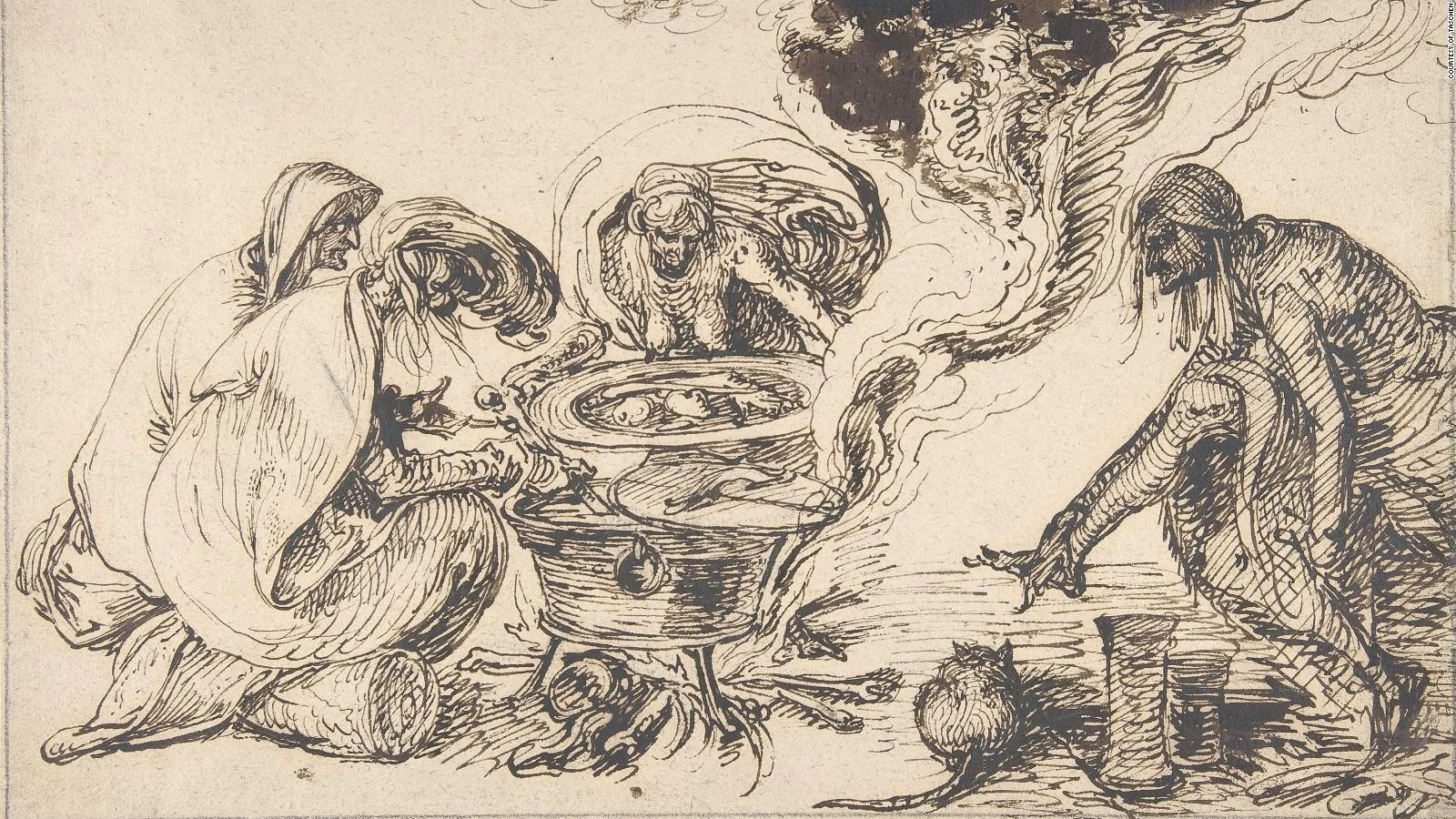
In Macbeth, goetics manifests in the Weird Sisters. Harold Bloom, in Macbeth: A Dagger of the Mind, describes Macbeth as uniquely “in touch with the night world of Hecate and the Weird Sisters.” He calls Macbeth “a weird, an involuntary soothsayer,” whose proleptic imagination already harbors the darkness the witches merely echo. The Arden Shakespeare editions footnote the sisters’ ambiguity—they blend Norn-like fate with vulgar witchery, their prophecies blurring external evil and internal ambition. Their cauldron scene and apparitions exemplify coercive, chthonic goetic ritual, driving Macbeth’s descent into tyranny. 

By contrast, C.S. Lewis in Poetry and Prose in the Sixteenth Century approaches goetics through Spenser’s Archimago, the arch-sorcerer of The Faerie Queene. Archimago practices exactly this deceptive, shape-shifting magic—summoning sprites to create false Una and Redcrosse’s dream-visions. Lewis sees it as part of Spenser’s moral allegory, where goetic illusion tests virtue but remains contained within Faerie Land’s ordered world. Unlike Macbeth’s irreversible plunge, Spenser’s goetics serves the poem’s psychotherapeutic harmony—evil magic is vivid yet ultimately subordinate to the quest for Holiness. 

The juxtaposition is stark. Macbeth’s goetics is tragic, psychological, and chaotic—Bloom’s “night world” consumes the hero. Spenser’s is allegorical, contained, and health-giving—Lewis’s “common wisdom” through images. One destroys; the other instructs. 

Kyle’s Book review:

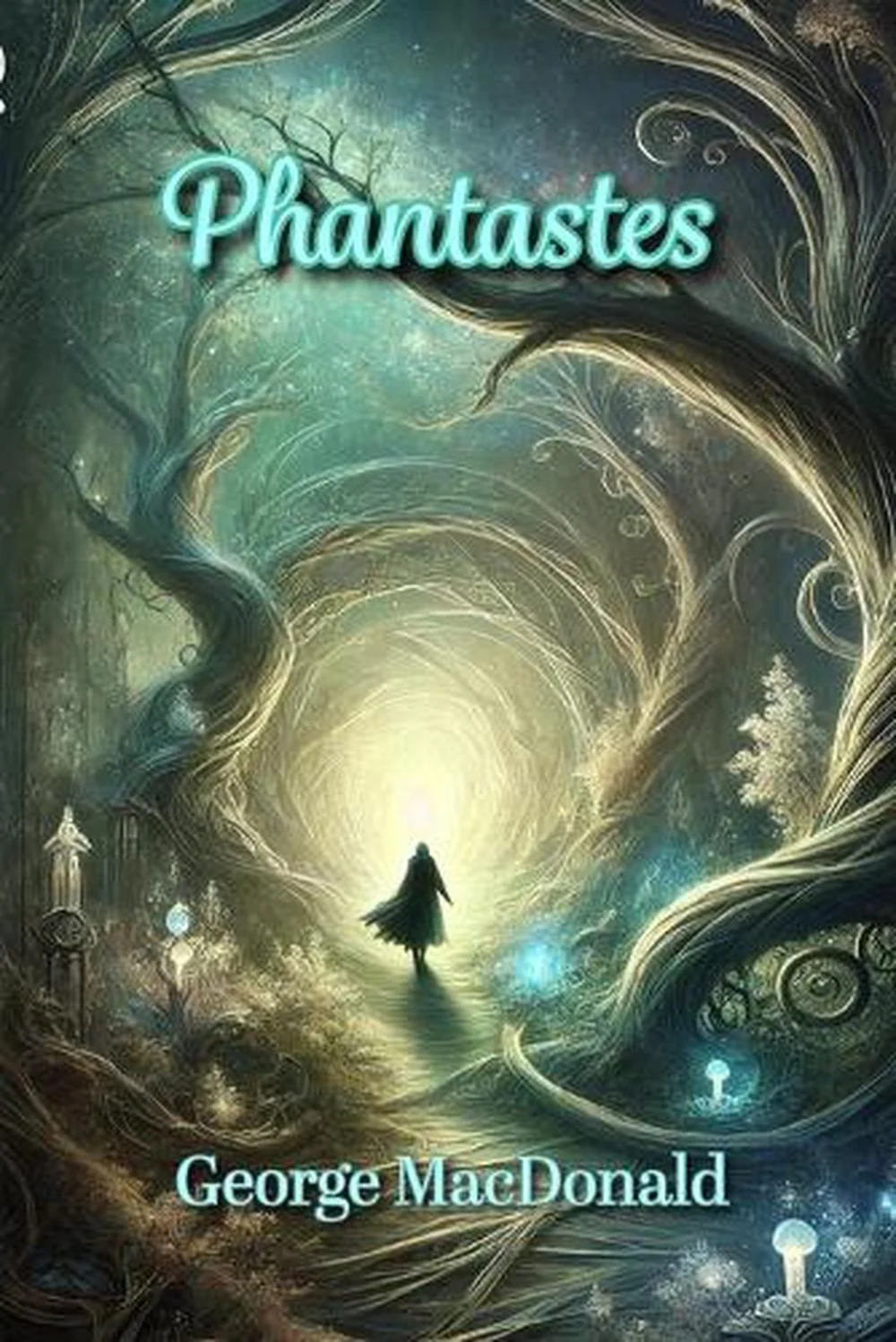
George McDonald’s, “Phantastes 

Phantastes: A Faerie Romance for Men and Women, published in 1858, marks a pivotal moment in literary history as one of the first adult fantasy novels, blending dream-vision, medieval romance, and psychological allegory. 

The protagonist, Anodos—whose name signifies both “pathless” and an “upward ascent”—awakens on his twenty-first birthday to enter Fairy Land. Over twenty-one days, he wanders through enchanted forests inhabited by sentient trees, flower fairies, and deceptive maidens. He awakens a marble lady through song in which she embodies idealized beauty. 

Anodos is pursued by his own dark shadow, acquired after ignoring warnings in a mysterious cottage.This dark shadow functions as a disenchanting force, scorching beauty and revealing MacDonald’s critique of rationalist skepticism that strips wonder from reality. Encounters with the seductive Alder-maiden and Ash-tree goblin highlight temptations of hollow sensuality, while episodes of sacrificial love, like the embedded tale of Cosmo and his princess, underscore that true connection arises through self-giving, not possession: “It is by loving, and not by being loved, that one can come nearest the soul of another.” 

Structurally, the narrative spirals like a dream—episodic yet purposeful—moving from naive wonder toward humility and rebirth. Anodos’s final act of sacrificial substitution leads to his transformation into an enchanting spirit, followed by awakening back in the ordinary world, profoundly altered. 

At its core, Phantastes explores Sehnsucht, that holy longing for transcendent beauty, which MacDonald presents as a veiled encounter with divine holiness. Fairy Land is not escapism but a mythic lens revealing “the quality of Holiness” in everyday reality, where imagination serves as “the presence of the spirit of God.” 

This work baptized C.S. Lewis’s imagination at sixteen, disarming his atheism and seeding his later fiction. Lewis later identified the “bright shadow” resting on Anodos’s journey as Holiness itself, crediting it as the top influence on his life and thought. 

In short, Phantastes isn’t mere fantasy—it’s a metaphysical romance that invites readers into the soul’s pilgrimage toward sacrificial love and enchanted truth.