



“The Johannine writings of Revelation exemplify a genius literary mechanism called ‘parataxis’. Parataxis omits subordination of conjunctions therefore allowing equal themes to be threaded together into a potential meshwork of Genius, namely found in Revelation. John was given a Greek culture by which ideas were conveyed. The Greek language by and large were single-surgical-sentiments developed up to the fullness of the age by which John lived. The strength of the atomic Greek was conjoined by the Hebrew mind of John, in other words – “pictographic”. Having both rules of Indo European and Semeticisms intereplayed, Parataxis allowed John to convey a “Tree” of apacalyptic writing. Branch laid on top of branch; root to stem – branches, etc. Finally, we conclude that Apocalyptic writing is not *just* futurative but ‘collective’. The ‘collective’ Scripture of John’s Apacalypse brings connectivity, coherency, contiguity, and teleology to a seamless Theology”.

0:00
0:00
skip_previous
play_arrow
pause
skip_next
replay_10
volume_up
volume_down
volume_off
description
view_headline
Nothing found!
close

“Willing Suspension of Disbelief: Great Fantasy writings demand our ‘belief’ in the world of Fantasy, hence, they demand a *suspension of disbelief of the Fantasy Writing*. The effect by which this subcreator-writer conveys can ONLY happen by this *kind* of faith. Likened to this, “Faith” in the Biblical God and the inerrancy of the original Hebrew and Greek Scriptures demands that we halt disbelief, and in this *suspension of disbelief of the Bible* we *see* the Kingdom by which IT stands. We can clearly see the beautiful Horror that Jesus Truly is God. Hence, this is what arrests the mind, body, soul…..the horror that ‘all must be lost save that of THIS KINGDOM and ALL who would inhabit this most glorious Kingdom shall be saved”. There is HOPE for ALL!!! “

0:00
0:00
skip_previous
play_arrow
pause
skip_next
replay_10
volume_up
volume_down
volume_off
description
view_headline
Nothing found!
close

“Romans 11:28 – Many of them (Israel) are enemies for YOUR SAKE….but as regarding ELECTION, they (Israel) are beloved for the sake of their forefathers’. The love of God knows no bounds. Hatred is a Human condition and is used to calibrate an outcome. In this lecture we find the Predetermined path TO Universalistic Teleology to be the ONLY sound path without Theological contradictions”

0:00
0:00
skip_previous
play_arrow
pause
skip_next
replay_10
volume_up
volume_down
volume_off
description
view_headline
Nothing found!
close

“In this lecture we cover the souls that exist in, around and at the Great Throne of God AFTER the Second Judgement-i.e., the Final Judgement, the Final Ressurection, the Final Restoration. We find that not only are the Saints there but the “douloi” of the Nations-i.e., the Heathen–‘ethnoi’ “. Only a Full Restoration, or Apacatastasis, would be answerable for this”.

0:00
0:00
skip_previous
play_arrow
pause
skip_next
replay_10
volume_up
volume_down
volume_off
description
view_headline
Nothing found!
close

“This audio lecture covers what Aeon is and what it is not. As we stated in the past written and audio lectures, Aeon means ‘ages’ of finite but undefined time. Aeon is the root word for ‘ages’ used in conjunction with ‘punishment (kolosin)’ by which there is a ‘duration of refining to repentance’. Sadly, the English Versions of the Bible, mostly, base their ‘interpretations’ of the Vulgate into the English as Aeturnum to *Forever Without End*, then, retranslated back to *connote* the original Greek’s “Aeon” as the same meaning! What a corruption and misuse of God’s Word! What fear tactics through this mistranslation have cowherded us all unto a ‘fear relation’ with God! It is a joyous Marriage that we share with God; a union. We will know ONE DAY this union as we should experience in part presently. In the mean time, I have taken many of the pagan (amoral) Greek authors of their day which span over 800 years and use their Literature as the Bible’s Dictionary. We shall see the Glory, Freedom, Genius, Marriage, Care of God towards us by these words”.

0:00
0:00
skip_previous
play_arrow
pause
skip_next
replay_10
volume_up
volume_down
volume_off
description
view_headline
Nothing found!
close

“Apocalyptic Literature is not all about the future- but, rather, it is a type of poetry to express God’s Universal Plan in a collective of time-Aeon

0:00
0:00
skip_previous
play_arrow
pause
skip_next
replay_10
volume_up
volume_down
volume_off
description
view_headline
Nothing found!
close

*To know what something is – is to know what it is not*

k.j.-

PREFACE

The Greek word for “time segment”, or, Aionios was contrasted with Adios – meaning “infinity”. These two terms were used throughout Homeric times down to the 1st century A.D. Christian Church. As we introduce the term “Adion” for infinity in this lecture piece we will see what Aeon is not.

I will be clear: Aeon, meaning “a segment of time”, “an era”, “an eon”, “an age” and “a limited/unknown ‘finite time”, was employed by the Biblical writer, John, in his Revelation – or, “Apocalypse”, for the usage of Hell within its “aeon of purpose”. Moreover, the “ontology” or “coming to be” of ‘an age’ of ‘being a sinful human’ requires AN aeon or “era” of hell to refine them to God; this intimates ‘direction’, therefore, INTENT of a GOD to create a passageway by which we will be refined, ready, and reserved for the final destination, i.e., UNION with GOD.

We, therefore look at our part 4 focusing on the ‘’vocabulary bank’’ by which the New Testament used its terms for Eternity, Perpetuity, Eons, Ages, and infinitude.

Parts 1-3 covered Aeon in all of its forms. We conclude that “Aeon” was used as an *finite undefined time segment*.

Our next focus is Adios (Adion). Since we have seen by its usage that Aeon is not an ‘unending’ term we therefore look to Adios.

We continue to go to the archaic authors of the Greek and Hellenized world to see that ‘Aidios’ was socially normalized in its usage. Again, words are used in their participation of the figuration of a culture. I reiterate from my past 3 lectures that the beginning New Testament community (ca 30 A.D.) had its rich linguistic heritage spanning at least 800 years, if not more, from the Classical Greek authors.

Examples of TIME: ETERNITY

Adios and Chronos working together

Time (1)

One of the earliest cultural usages and accounts of Adios is found in Homer’s “Hymn to Hestia” (ca. 800 B.C.). Here, the ‘goddess resides on a throne’ with mortals. This, by context alone, should give us ample information to see that there is a kind of “time” that can ‘participate’ in this “throne realm” but is separate from….for …if mortality exists there, then ‘mortality’ requires sequential time or “chronos”—which is separate and distinguished from Aidion as we shall see. Chronos is neither subsumed or supervened by Adios at this aforementioned juncture, rather, they (Chronos and Adios) share their ‘attributes’ at certain juncture points for a fuller gestalt of meaning. That is, time and eternity (chronos and Aidios) are ‘conjunctive’ as ‘time’ meets the eternal…or, relating to mortals → **the epiphanal**.

We see Hestia, the Goddess of the *Hearth/ Throne* sitting at her ‘permanent seat’….”edren aidion elaxes”. Such as ‘seat/ throne’ is the hearth at the fireplace. It is where the family convened to talk, eat, share, cook, stay warm, associate with HOME. Hestia, was considered LOVE, THE BELOVED…and, in this Maiden Housekeeper sense, she was Divinely Eternal Without End. Hestia was called, “She of the Public Hearth”. So, there is a sharing of the “time” of mortality and this AIDION throne. This is no more contradictory than when the Eternal God of the Bible talks with the Patriarchs, Matriarchs and Prophets. How About the answerable Platonic idea of “coming to be” to the FULLNESS of the UNIVERSAL found in the very NATURE of JESUS CHRIST ‘coming to HIS FULLNESS?!? I.e., When the UNIVERSAL meets the Particulars. The “participation” by which the gods, Gods act involves such a confluence of different “times”.

Time (2)

We find Aidios inscribed in Hesiod’s “Shield of Hercules” saying, “‘aidion eixon ponon”. This means that no one side can win in this athletic competition. It states the ‘stasis’ by which movability cannot be achieved, therefore, ‘without end’ —–in the duration of the game. But here’s the catch: it is in the ‘picture’ of stasis without resolution. This depiction fires on the mind a never ending battle for glory without resolve….a state of being…a longsuffering of worldly effort…the battle of the EPOS (‘epic ones’) or “eroes” (“heros”).

Time (3)

Anaximander’s ( A.NAX’.uh.MAN.der) Greek says, “Tayn Aidion Kinaysin” —i.e., “The Aidion is perpetual movement”, —-therefore, Aidion shows no retirement of motion, hence, no *aging*.

Time (4)

Anaximenes (A.NAXIMENEEZ) says,”Kinaysin de kai hootos aidion poiei” as to agree with Anaximander.

Time (5)

Anaximander went on to say, “There is a certain NATURE of the infinite” – “phusin tina tou apeirou” – “and that this NATURE is ETERNAL and UNAGING” – “Aidion ein kai a.gayro {“a” = “not” + gayro’ – aging/ i.e., ‘geriatric’}”.

Time (6)

Xenophanes (XSE.NAH’.fa.neez) attests Adios as “indestructable”, immortal, and ungenerated (i.e., uncreated). Xenophanes uses Adios in contrast to anything that is “coming to be” —or “generated”. To conclude Xenophanes: anything that segways to the next event is not Adios.

Time (7)

Diogenes (DIE-AH.jeh.neez) Laertius (Lay.er.ti.uhs) simply agreed with Xenophanes here.

Time (8)

Anaxagoras agreed with Aristotle that “Adios” is ‘without end’

Time (9)

Heraclitus says, “Adios is perpetual motion of things without end”. These “Things” therfore do not share in the attributes of Aeones.

Time (10)

Empedocles says, “There is a “THING OF NECESSITY”, an ancient DECREE of *gods ETERNAL*—- i.e., “Anankayce Krayma Theon Psaypheesma Palaion Aidion”. Conclusively brilliant, Empedocles continues to his conclusion that Aidion is “spherical, eternal, and immobile” – i.e., “Sphairo-eides Kai Aidion Kai Akin-ay-ton To Hen”.

Time (11)

Parmenides used the term Aidion to mean “ALL” in the sense of “ALL that will always be…ALL that is ungenerated and imperishable”.

Time (12)

Simplicius says, “nothing that has a beginning and end is Aidion”

*Time (13)

For me, maybe the most important statement was from Metrodorus of Chios who stated, “The ALL (TO’ PAN) is Eternal (AIDION), Because, If It Came Into Being At A Certain Moment, It Would Come To Be From Non-Being; And It Is Unlimited (Apeiron) Inasmuch As It Is Eternal:For It Does Not Have A Principle (Archay) From Which It Began, Nor A Limit (PERAS) Or An End (TELEUTAY)” For today I will end our section on the usage of Aidion in Greek Antiquity. Thank you,

Kyle Jones

Post Statement and Recap

Our job at fomcm.com is to search for historically overlooked material that substantiates the Bible to the regard that it should be given.

Often, the Westerm “orthodox approach” ‘limits’ the purview of the authentic linguistic content, a.k.a., “Message” of God’s Word by *Westernisms* or recognizable ideas that fit into ‘our sense’ of our Orthodox god. Sadly, the robbery is by and to the ‘church’ by which its failures are founded upon limitations of Eastern Understanding of the Biblical Text. One limitation after the next, always trying to ‘keep up’ with the ever reducing idea of the ‘so called biblical text’ which is currently founded upon man-made notions of God.

Fear is the engine by which ‘an orthodoxy’ fights not repent. Scientists have to secularly ‘repent’ when they find something that counters and finally disproves an older thesis–which becomes no-more-scientific…but simply, WRONG….. . Likewise, Theology SHOULD contain the same humility within their “orthodoxies” —as I speak ‘tongue and cheek’. And again, once there has been grounds for challenging the English Text of King James…one should be allowed to find answers to countertheses via an orthodox ‘council’ without agenda. It is here that I make mention of “rhetors” from the Paideia of the class Trivium.

I speak of “rhetors” in the classical sense by which the first grade of learning Greek and Latin language began the Trivium’s rite of passage to academic bliss. Then, from Language to logic. Finally, argumention (or rhetors) was taught by the very wise secular Greek and Hellenized Christian mothers of the first and second centuries.

These 3 phases (language, logic and rhetors) of the Trivium ( by which the educated Greek class lived) led facets of Greek culture to be strung together with respect and congruity of thought……and not as brute beast ‘authoritarians’ who ‘brawl’ over ideas for dominance and not truth. I need not discuss the brutal nature of this approach in today’s world.

In contrast to this last mentioned civil unrest…. the Paidea of the Greek’s Trivium created learned scholiasts of the Biblical Text to find their ‘senses’ in historical comparitive hermeneutics, Biblical Greek analysis and parsing of the stems of Greek Grammar, socially-contextualizing and examining the socio-linguistic understanding by which the geographical ‘neighbors’ of the Palestinian Jews and Christians understood their God. THIS IS of the Hebrews and New Testament Christ, and, finally, exegete the Biblical Textus Receptus or “Received Authoritative Greek and Hebrew Bible”—as well as the LXX or Septuagent, i.e., the Greek Old Testament by which we have transferable Greek terms with Hebrew.

Finally, fomcm.com gathers writers of Greek pagan antiquity to show that the ‘vocabulary bank’ of the New Testament was not out of a ‘vaccum’. Rather, the Greek New Testament used the Greek language that the ENTIRE Greek world had been baptized in, saturated, steeped in since the inception of Greek culture. This is nothing to overlook, and yet, the Western American Orthodox Church has somehow or another concluded to not deem it important to know what the New Testament REALLY WAS SAYING IN THEIR DAY, THEIR CULTURAL CONTEXT, THEIR SEMIOTIC AGREEMENT, THEIR SLANG, THEIR WAY OF SAYING THINGS, IDIOMS, DIALECTS, etc…. I hear from western ‘authorities’ of the ‘orthodox churches’ saying that “devotion is over theology”. You can’t ‘devote’ to something ill-defined. Why fear exegeting while ‘working on your *devotion*?’. *What IF, ….the “MATHETIKON” (in the Greek) meant “TOTAL DEVOTEE” to the LOGOS or Christ as He spoke on Earth?!!—Well, it does! Lastly, I say….”if you *know* the God you serve then you will serve HIM correctly; otherwise, there will be a false sense by which you relate to the WORDS that HE has spoken and YOU have so neglectfully handled in your isoglossed cultural *SENSE* of “”devotion””.

RECAP

Remember, “Indefinite time” does not have to mean “infinity”, though it could. The WAY in which Aeon and Aidion were used as ‘indefinite times’ were poetically and philosophically expressed a complimentary union of ideas.

Such poetical employment of words could be used to create the seemingly “irrational” mental state of either the poet or the characters by which participate. Therefore, subsuming the ‘rational’ for a beautiful alien ‘irrationality’, if conveyed by the poet correctly, could arrest one’s senses and lure one’s self out of the lust, greed, covet, anger world.

This “irrationality” created words fit for philosophical treatise for the words has concretized into ‘meaning’ and a correlative ‘semiotic commitment’. Hence, the mathematician-philosophers had a ground to work from.

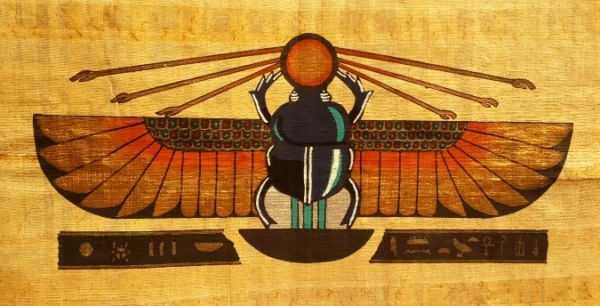
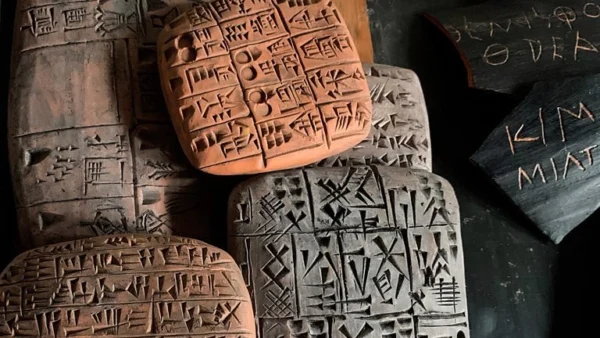
It is not so strange to look at a word complex if we understand ‘pictographic societies’ as our ancestral origins. Herein lies the genius of the Greeks that was not so different, if not related, to the pictographic societies of the Egyptians, Sumerians and the Original Ancient Hebrew pictographic texts of the Pre-Sinaitic Israelites. Such ‘radicals’ as “fire, serpent, toxic, 6 wings, etc.” did indeed mean the “Seraph” or angels that flew with the temple of God in HIS ETERNAL “Train” or Verb of Perpetual – unending Motion through and into this “temporal state”. This is the “Parousia”, per se, of the Old Testament God who condescends to us.

Nonetheless, the force of each archaic Greek word was known by a millennia of usage for the exact purpose to specify categories of thought, therefore, distinguishing one term FROM the other.

The richness of Greek vocabulary is found in how one word can dance around the other, never stepping on the other’s semiotic ‘toes’ —- only reinforcing the other’s role, creating a union of ideas and images due to the strength and value the Greeks held to word care.

To paraphrase Edward Gibbon, the author of the Decline of the Roman empire, “Empires Fall when the study, usage, retention, and guarding of their language is no longer preserved. Double entendres, business-speak, cultural popular slang, etc. are the beginnings of this sorrow”.

“The earliest ideas of Eternity were associated in pictographic form originally. This allowed for ‘pictures’ to be ‘as words’ in the European  world, let alone the recipients of the Semitic world. How much of these pictographic societies such as the Early Chinese, Sumerian, Egyptian, Hittite and Dravidian convey the idea of the ‘eternal’? Did these earlier cultures lose their weight in conveying a non-analytical idea of eternal ‘spatiality’ and ‘time’? How distant were these concepts to the Medieval World? Did King James’ translators have a grasp of any of this? Was *eternity* looked at as ‘segmented times’ in the Middle Ages amidst the Jacobian era? I can say a big Nope for all of these. Let’s take a light jab at this word *eternity* from  what our ancestors thought. This is only a light dig into a much deeper study that fomcm.com will endeavor. Thank you for listening!”

0:00
0:00
skip_previous
play_arrow
pause
skip_next
volume_up
volume_down
volume_off
share
description
view_headline
Nothing found!
close
close
0:00
0:00
skip_previous
play_arrow
pause
skip_next
replay_10
volume_up
volume_down
volume_off
description
view_headline
Nothing found!
close

In parts 1 and 2 we did a brief glimpse into the socio-linguistic aspect of the New Testament *vocabulary*. A more complex study pertaining to parts 1 and 2 can be obtained by studying the Paideia of the Christian youth in the first and second centuries.

The application of historical-morphological filtering of word meanings down to an “age” of “collective reasoning” is necessarily implemented in order to find Biblical “vocabulary agreement’. With this said, for sure the Greek New Testament’s social context could be viewed as heavily influenced by two forces: (1) Socially Naturalized verbal usage from Logographic/ Pictographic Proto-Armenian (Syunik) to Hittite, Proto-Georgian/ Kartvelian and Sumerian pictographic society …and, (2) the ingenious handling of Aristotle’s deductive syllogism and Plato’s agreement of particulars in motion to the fuller receptacle of itself. Such a view synthesized pagan predeterminism with Theistic determinism. It has hyper focused the question of ‘direction’ and ‘duration’ by which the associative words ‘move forward’ in a given society which would therefore be superimposed by a Deity. Simply put, Plato’s etymological treatments concerning Natural elements, their associative words and the evolution of their abstractions became a grammatical and etymological “theology”.

I might add a very interesting point of this study of historical morphology: The “abstract” nature of an ancient Sumerian, Chinese, Egyptian, Hittite, Indus Valley, pictograph was designated as ‘abstract’ due to the Thalian (Thales) approach (starting with Thales, ca. 586 B.C. {the year Judah was taken captive into Babylon}).

Herein lies the beginnings of ‘specific-STRUCTURE’ deduction – a.k.a. “probabilities” – “proving via ‘observation’ “ vs. ‘acting within the ‘genius’ or ‘joining’ of a community without the weariness of analysis. Such examples might be found contrasted in tribal communities. Such as a New Guinean tribe living within their own biosphere perfectly adapted to the genius of the trees, streams, water, food gathering, family life, etc…. Such a lifestyle is what we might call, NATURAL… or “nature”. Language is, on the other hand, “Abstracted” (‘taken from’ “off” + “structure” –”nature at its origins”) from its ‘root form’ of Natural elements such as “sky, tree, stream, dirt, earth, fire, wind, etc.”. To this, there is a ‘meeting ground’ for me that solidifies a verbal-social *semiosis* within the telegraphed (i.e., to that era studied) socio-verbal bank. One needs the other to exist, past needs present and visa versa. If you will, out of time ‘semiosis’.

One might delve into Aristotle’s Rhetoric, generatione et corruptione (coming to be and going away) and Plato’s Cratylus for a wonderful side study on word morphologies and the limitations of their interpretations, aka, ‘semiotics’. So beautifully found for me were the “Natural” elements were linguistically ‘abstracted’ into a combined STORY. They had to go somewhere. The Morphology of the Folktale is all about the natural becoming unnatural and the Morphology of the Folktale also brought about the FULFILLMENT of all things (aeon) in the fullness of time to a mythopoeic and then prophetically instanced culmination of pagan and Biblical agreements. In this ‘eye’ I see NO contradiction between the movement of pagan tales and Semitic prophecy.

I see no distance between Biblical archetypes found either in the Bible or in the Norse Volsung Saga, Greek myths, Rig Veda, etc…..only movements to agreement by force of LOGOS.

The Padeia of the early Greek words found their fulfillments in a Hellenized Christ figure. The origins of Greek Society were in their pagan poets such as Aeschylus, Sappho, Homer, etc….so, how could they be a mistake if the God of the Bible created ALL THINGS (—aeon–)?!?

Such Semitic archetypes, shadows, types, and prophecies did Christ Jesus fulfill! Such European and Hellenized archetypes did Christ fulfill as the Messiah versus the limited Hero. Jesus was and is the physical fountainhead by which all myths, folklores, etc. were pointing to. It was, and still is, the negative of the pagan’s sociatal “photograph” of the Hero that the Christ fulfills. More than this, the efforts of the pagan that ‘miss the mark’ for joy, selflessness, consistency and specific direction are ‘naturally’ painted without cognisance of the Christ. Christ TRULY fills in the MISS (the lacking of the pagan). Truly, if there is a historical Odin that walked around the backstreets of Norway or Iceland no historian wrote it down, only the poets and bards created the mythos. Did Krishna sit down to dinner with a local Indian community in Historical reality? I think not. All of these beautiful pagan stories allude with cultural color a Christ to come and the solidification of the Language, the LOGOS, by which the Greek Words in the New Testament submitted and took to their stations. It is within this ‘imaginative field’ of the fantastic do I digress for I know the literary genius of Tolkien in this world. Yet, even Tolkien was a Christian who believed in the ‘collective consciousness’ of all myths had a bearing of LOGOS to which other worlds could be generated. But, Tolkien’s focus was just that and by THAT he accepted the Trueness of the LOGOS and the power of its deployment upon all of the aons of our existence. This is why I stay within such realities writing this paper which are not ‘subcreated’ within a vacuum of humankind’s opinion, or technical ‘idiocy’—’viewed as one perceives’.

Lastly, the Greek New Testament should be read within the context by which the Christ was in agreement with the Greek myths/ Hellenized Paideia, Christian Paideia, The Greek Old Testament (LXX/ Septuagent), the great philosophers – Plato and Aristotle and our parent, the Hebrew Bible, by which YHVH revealed HIS RHEMA, DABAR, SHEM, and SHEKINAH that we may operate within the confines of His WORDS.