All Posts
scroll to see more>

We begin with three little words that live in every English mouth and almost never get examined: should, could, would. And one more, the quiet one: have.
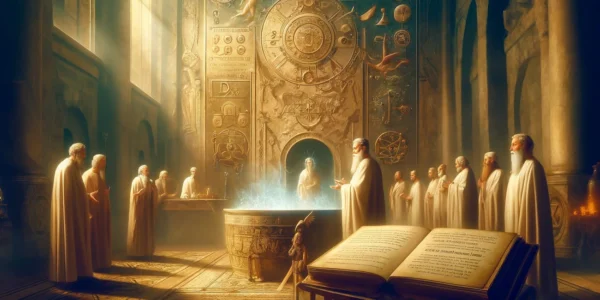
Our English Bibles conceal that four distinct Hebrew terms lie behind the single word “language.”

Here we examine the New Testament concept of freedom through the Greek term eleutheros.

The romantic and almost mythic lineage of sacred metallurgy that connects Cain’s progeny to the very origins of human craft and civilization represents one of the most profound continuities between biblical narrative and ancient Near Eastern material culture.
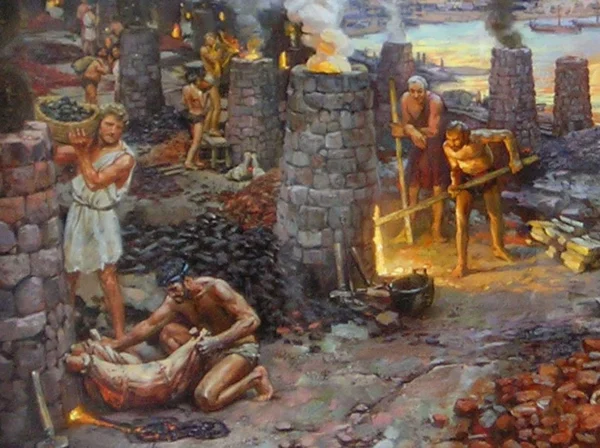
The pre-Mosaic Yahweh cult was deeply rooted in the esoteric metallurgical traditions of the Kenites, a nomadic guild of metalworkers concentrated in the copper-rich regions of the southern Levant,
Our English Bibles conceal that four distinct Hebrew terms lie behind the single word “language.” When the Hebrew of Genesis 11 is read in its native tongue, the failed attempt to establish a “new order” through a “new legislation-language” triggers a kaleidoscopic vision: שֵֵׁׁ Nimrod’s ziggurat, ם (šēm, name), slang, border, lip, boundary, cliques, and micro-tribes.
Just as the builders of Babel sought to establish a name שֵֵׁׁ for themselves ( ם , šēm) in Genesis 11, so too has the American Babel become the central vehicle through which modern humanity asserts its autonomy and self-decree. Scripture’s language is timeless; its Hebrew and Greek texts stand as the final court of appeal for every theological claim.