Articles
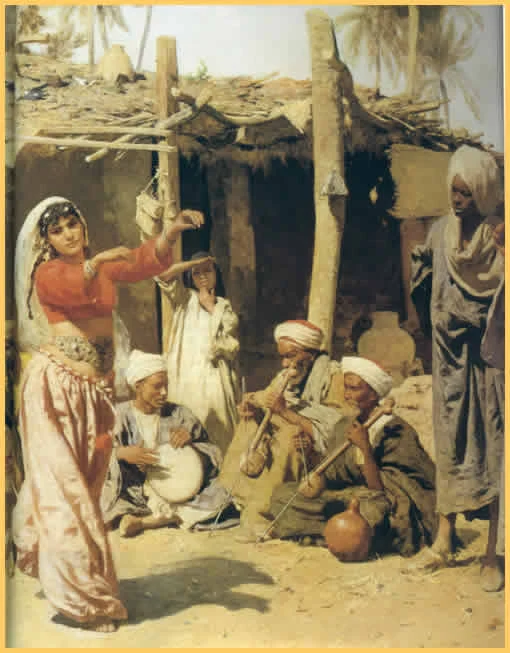
The Solluba, also known as the Sleb, Solubba and the Sulayb (Arabic: ُصلبة, صلیب ), were a Hutaym tribal group in the northern part of the Arabian Peninsula who were clearly distinguishable from the Arabs. Due to social stigma, very few people openly identify as Ṣulayb today.
The “DAY” can mean several things to many people in different cultures. “Daeg” is the term for day in Anglo Saxon. Daeg can refer to the time that the sun brightens the sky. Daeg can also refer to the ‘event’ of some kind of ‘time’ such as a ‘time’ of happiness, ‘time’ of sorrow, in the abstract, the ‘time’ of creation.

In our ancestor’s primitive rituals of enacting the dying god as scapegoat, the god impersonates the innocent. That is, the roles are reversed and it is the god identified as the “nascent-minded”, “idiot” or “fool”.
I was teaching on the very touchy subject of Christian Universal Salvation the other day when one of my students confronted me with what he called the ‘faulty nature’ of the penal system against Christ.
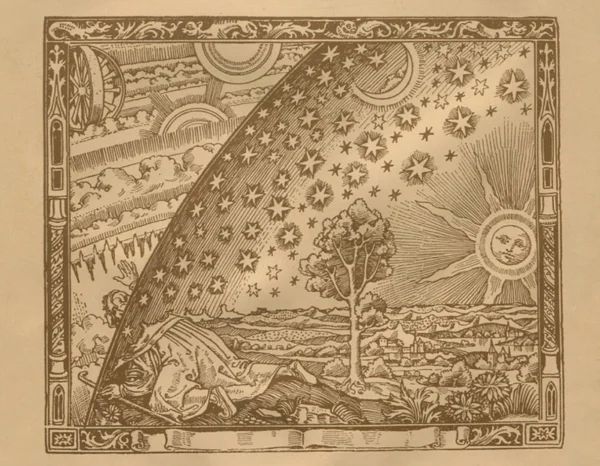
Up until now, we have triangulated our way up to a consistent Theology.

The Greek word for “time segment”, or, Aionios was contrasted with Adios – meaning “infinity”. These two terms were used throughout Homeric times down to the 1st century A.D. Christian Church. As we introduce the term “Adion” for infinity in this lecture piece we will see what Aeon is not.
In parts 1 and 2 we did a brief glimpse into the socio-linguistic aspect of the New Testament *vocabulary*. A more complex study pertaining to parts 1 and 2 can be obtained by studying the Paideia of the Christian youth in the first and second centuries.
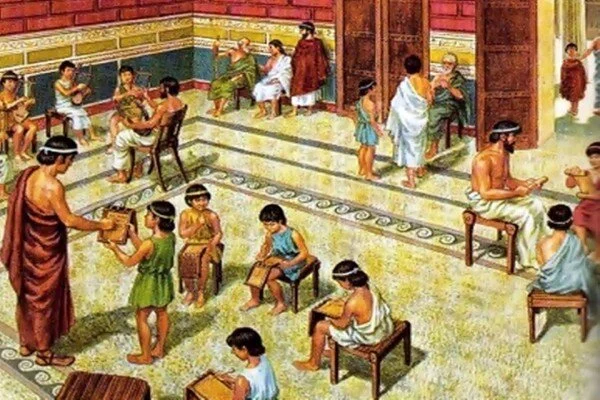
“Paideia” (cf. Dr. Werner Yeager’s treatment on “Christian Paideia” and “Classical Greek Paideia”) was the classical education for the first century Christian Children which means, “to walk; walk; the walk”—-i.e., “the little *footers*”.