
Articles

We left off last time with Ezekiel’s prophecy of Israel’s return as One Kingdom no longer being divided into two . In Ezekiel 37:26 an “everlasting” covenant will be made with God as the Tabernacle in the midst of His people for evermore.

I am a believer that a multitude of convergent events must occur in a person’s life before they can understand the next series of events that will befall them.

Forms, shapes, movements, measurements It was understood by the ancient Israelite that the idiom, “nasa chatta’th”, was a feminine force by which the “shape” or “form of” guilt, shame, and/ or sin was carried away (vide TDOT, Botterwick & Ringgren; Jeff Benner, Ancient Hebrew Lexicon, pg. 121)

This work is a “sifter” of sorts using what I call “The 5 Noble Truths”. Some people might wince when the word “truth” is used, however, I use the mother meaning of the word “truth” found couched in classical Greek, Hittite, Sanskrit, and the early reconstructed Proto-Indo-European language.

In Sumerian, speech was e-me, and clay was i-mi-like Adam and Eve before the fall. When God bent down and shaped Adam from the dust, he didn’t just pack mud; he pressed in the word first.
I mostly dove into the Biblical and classical Greek to find the materials that supported my proposed theory on “the archer of intent” and “his/her” linguistic anatomy. Only later in my search for truths did I find my archery maxim to be fully substantiated in the Tanach (Hebrew Old Testament).

In Sumerian myth, the garden wasn’t called Eden. It was Edin (flat plain). In Sumerian Legend, the steppe was where the gods walked the plains.
Y-R-H (יָרָה): Root meaning “to shoot” (like an arrow) or “to teach/direct.” Y-R-H conveys intentional guidance and is much broader than just the “law”. Y-R-H encompasses teaching, instruction, and/ or a path such as the Pentateuch, specific rules, or wisdom. Related words Y-R-H include Moreh/ M-R-H (teacher/guide) and Torah/ T-R-H (instruction).
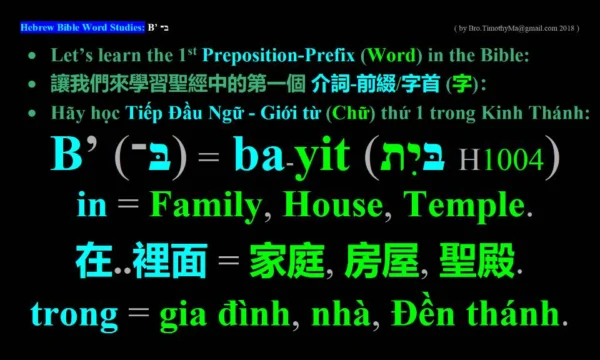
The Hebrew Prefix ba or B- sticks to the front of the basic shuresh or root form of each Hebrew word creating a prepositional ‘in’ or ‘with’ stance with the word that it is modifying.