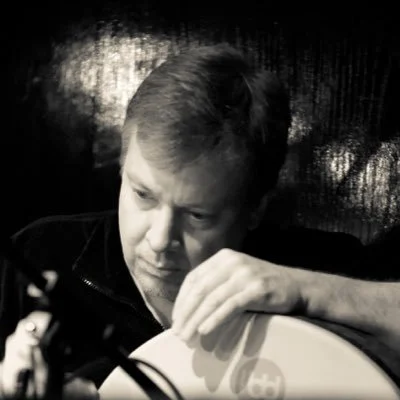
Born in Evanston, Illinois, Bagby was educated at Oberlin College, Ohio, and the Schola Cantorum in Basel, Bagby founded the ensemble Sequentia with Barbara Thornton in 1977. This group takes an innovative approach to medieval repertoires, especially with respect to their treatment of mode: they rely on the harmonic qualities of their voices to guide them through the different modes. Sequentia has released many fine recordings, most of them on Deutsche Harmonia Mundi. During the 1980s and 1990s, the group specialized in the music of Hildegard of Bingen; many of their most famous recordings are from this period. The group has also performed music written in the 12th century from the musical centers Santiago de Compostela, Aquitaine, and Notre Dame.
Benjamin Bagby’s work as a composer also contributes to his recreations of the ancient epics, such as Beowulf, the Icelandic Edda and German music from the 10th and 11th centuries on their recent recording Lost Songs of a Rhineland Harper. His version of Beowulf, which he has been touring around the world since the 1990s, is available on DVD (from a show in Copenhagen); his performance on May 9, 2003 at the International Congress on Medieval Studies is documented and discussed in, and was an impetus for, the 2012 anthology Beowulf at Kalamazoo.[1]
He gave presentations internationally including at the University of Chicago Laboratory Schools.[when?][2]
Bagby (widowed from his longtime collaborator Barbara Thornton) married Croatian chant scholar Katarina Livljanić.[