All Posts
scroll to see more>

The primary fallacies of dispensationalism in light of the Hebrew and Greek New Testament.

Shadow and Redeemer in Lilith sit at the heart of MacDonald’s theology.

Doctoral-level presentation: Fatal exegetical and theological flaws in Ellen G. White’s core doctrines when examined against the Hebrew and Greek texts of Scripture.
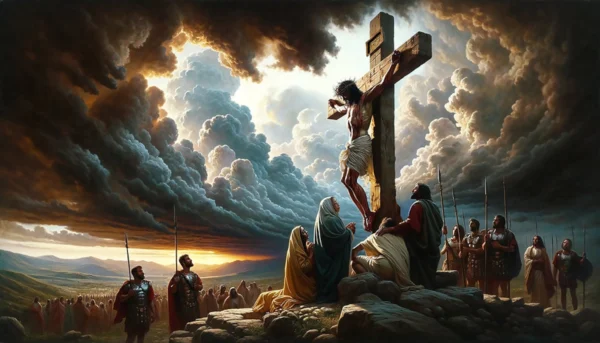
The narrative arc of Christ’s incarnation, passion, and triumph emerges not merely as a singular historical event but as a profound convergence of ancient archetypes, refracted through cosmic, mythic, and symbolic lenses—yet it stands apart in its linear trajectory, from Alpha to Omega, against the endless loops of cyclical myth.

The 4th Mikola Conference was organized at the Finno-Ugric Department of the
University of Szeged on November 13–14, 2014, in commemoration of the memory
of Tibor Mikola, chair of the department for a quarter of a century and remembered
primarily as a scholar of Samoyedic languages.

Herewith offering the reader The Oxford Handbook of Historical Morphology, we consider it worthwhile justifying the very existence of this book and the whole endeavour behind it.

In the framework of analytical psychology, Carl Gustav Jung conceptualized the shadow as the repressed, unconscious aspects of the personality—encompassing instinctual drives, moral failings, and unacknowledged aggression that must be confronted and integrated to achieve individuation which is the process toward psychic wholeness.

Consider the recent YouTube Jungian analysis, “Jesus was the first man to achieve individuation” -ca. 18 min long- , which posited Jesus Christ as the inaugural figure to achieve full individuation.
Ellen G. White’s doctrines, central to Seventh-day Adventist (SDA) theology and prominently featured in works like The Great Controversy, have faced substantial criticism from evangelical Christians, biblical scholars, and former Adventists.