1. Introduction
The mythology of the Norse, attested primarily in thirteenth-century Icelandic manuscripts, preserves a demonstrable inheritance from Proto-Indo-European (PIE) religious and mythological structures. The evidence is primarily linguistic — cognate theonyms and shared lexical fields — and secondarily structural, in the form of parallel narrative motifs attested across geographically and temporally distant Indo-European traditions. This presentation examines four case studies: Týr and the PIE sky-father, the Ymir–Puruṣa cosmogony, Thor and the serpent-slaying complex, and the Æsir–asura lexical correspondence. It also addresses the methodological limits of this approach, including the problem of late attestation and the risk of over-reading parallels as inheritance.
2. The Problem of Attestation
The primary sources are Snorri Sturluson’s Prose Edda, composed around 1220 CE, and the Poetic Edda, preserved in the Codex Regius, dated to the late thirteenth century. These are roughly seven hundred years after the Viking Age began and over a millennium after the Migration Period. This gap raises a legitimate question: are we studying Norse mythology, or a medieval Icelandic reconstruction of it? The answer is both, and the distinction matters. Snorri was a Christian writing in a Christian context, and his euhemerizing tendencies — treating the gods as deified human kings — are well documented. But the linguistic evidence operates independently of Snorri’s narrative framing. A cognate theonym is a cognate theonym regardless of how a thirteenth-century author chose to contextualize it.
3. Methodological Framework
This analysis employs the comparative method as developed in historical linguistics, extended to mythology by scholars such as Georges Dumézil, Calvert Watkins, and Michael Witzel. The core principle is that when two traditions share a cognate lexical item — a theonym, a common noun, or a formulaic phrase — and that item can be traced to a reconstructible PIE root through regular sound correspondences, the shared form constitutes evidence of common inheritance rather than independent invention or borrowing. The strength of the evidence increases when multiple cognates align across several branches of the family, including the Anatolian branch (Hittite), which split off earliest.
4. Case Study I: Týr and the PIE Sky-Father
The clearest case is the theonym Týr. Old Norse Týr descends from Proto-Germanic Tīwaz, which is the regular Grimm’s Law outcome of PIE deywós, a vṛddhi-derivation of dyḗws, “the bright daylight sky.” The same root yields Vedic Sanskrit dyáuṣ (as in Dyáuṣ Pitṛ́, “Sky Father”), Ancient Greek Zeús (as in Zeû páter, “Father Zeus”), Latin Iūpiter (from Djous patēr), and Hittite šiūš (the sky god). The epithet ph₂tḗr, “father,” is preserved in the Vedic, Greek, and Italic forms but has been lost in the Germanic reflex, where the theonym survives in reduced form. The root dyeu- itself is reconstructible as “to shine, be bright,” and it underlies not only the divine names but also the common noun for “god” across the family: Sanskrit devá, Latin deus, Lithuanian Dievas, and Old Irish día. The English weekday name Tuesday preserves the Old English form Tīw, a direct descendant of Tīwaz. Thus the same PIE root that produced Zeus and Jupiter also produced the Norse god of oaths and law, reduced in status but not in etymology.
5. Case Study II: The Ymir–Puruṣa CosmogonyThe Norse creation myth, in which the primordial giant Ymir is slain and his body becomes the world, finds a precise structural parallel in the Puruṣasūkta of the Ṛgveda (10.90). In the Norse account, the gods Odin, Vili, and Vé fashion the cosmos from Ymir’s corpse: his flesh becomes earth, his blood becomes sea, his bones become mountains, his skull becomes sky, and his brain becomes clouds. In the Vedic hymn, the cosmic man Puruṣa is sacrificed by the gods, and his mouth becomes the priestly class, his arms the warriors, his thighs the commoners, his feet the servants; his mind becomes the moon, his eyes the sun, his head heaven, and his feet earth.
The structural homology is striking: a primordial being is dismembered, and the parts of the body are mapped onto the parts of the cosmos and, in the Vedic case, onto the social order. Hermann Güntert argued as early as 1923 for a shared Indo-European origin, and Michael Witzel has noted that the two texts sometimes read like translations of one another. The Old Norse name Ymir itself has been derived by Güntert from PIE yemos, “twin,” cognate with Vedic Yama and Avestan Yima, the first mortal in the Indo-Iranian tradition. The etymology is not universally accepted, but the structural parallel remains robust.
6. Case Study III: Thor and the Serpent-Slaying Complex
The myth of the storm god slaying a serpent is one of the most widely distributed Indo-European narrative motifs, and it is preserved in Norse tradition as Thor’s combat with the World Serpent, Jörmungandr. The linguistic evidence for this motif is exceptionally strong. Calvert Watkins reconstructed a PIE formula (h₁e) gʷʰent h₃égʷʰim, “ slew the serpent,” attested in Vedic áhann áhim (Indra slays the serpent), Avestan janat aži (Thraētaona slays the dragon), and Germanic reflexes in the Old Norse and Old English dragon-slaying traditions.
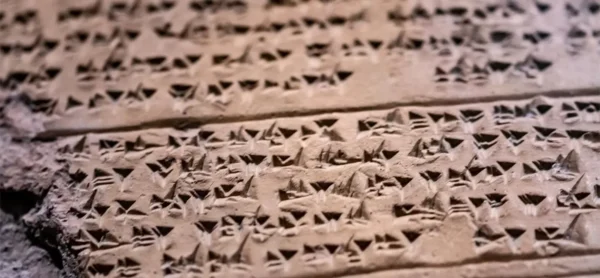
The serpent itself is reconstructible as PIE h₂n̥gʷʰis, “serpent,” which yields Vedic áhi (as in áhi Vṛtrá), Avestan aži (as in Aži Dahāka), and possibly Hittite Illuyanka, the serpent slain by the storm god Tarḫunna. The hero who slays the serpent is reconstructible as Trito, “the third,” reflected in Vedic Trita Āptya, Avestan Thraētaona, and the Norse name Þriði, one of Odin’s epithets. The storm god himself is reconstructible as Perkʷūnos, “the Striker” or “Lord of Oaks,” from the root per-, “to strike,” or pérkʷus, “oak.” This theonym is preserved in Baltic Perkūnas, Slavic Perun, and, in the Germanic branch, in the name of Thor’s mother, Fjörgyn, from Proto-Germanic fergunjō, “mountain,” ultimately from perkʷun-. The Hittite evidence is particularly valuable here because Hittite is the earliest attested Indo-European language. The myth of Tarḫunna slaying Illuyanka, preserved on tablets from Hattusa, provides an Anatolian reflex of the same serpent-slaying complex, confirming that the motif predates the separation of the Anatolian branch from the rest of the family.
7. Case Study IV: The Æsir–Asura Lexical Correspondence
The Old Norse word æsir, the plural of áss, “god,” descends from Proto-Germanic ansuz, which is cognate with Vedic Sanskrit ásura, Avestan ahura, and Hittite ḫaššu-, “king.” All of these derive from PIE h₂énsus (or h₂n̥suros in the extended form), a term meaning “life force” or “lord,” ultimately from the root h₂ens-, “to engender, beget.” The Hittite cognate ḫaššu- is particularly significant because it demonstrates that the word was already present in the Anatolian branch, which separated from the rest of the family before 2000 BCE. In the Indo-Iranian tradition, ásura and ahura originally designated a class of powerful divine beings; in the Ṛgveda, Varuna is called ásura par excellence, and in the Avesta, Ahura Mazdā is the supreme deity. In the Germanic tradition, ansuz retained a positive connotation as the nameof the principal gods. The semantic shift in later Sanskrit, where ásura came to mean “demon,” is a secondary development within the Indo-Aryan branch and does not affect the etymological correspondence.
8. Methodological Limits and Counterarguments
The comparative method is not without its critics. The most serious objection is that structural parallels in myth may reflect universal patterns of human thought rather than genetic inheritance. Ferenc Ruzsa has argued that the Ymir–Puruṣa parallel may be explained by the natural tendency of human imagination to map the body onto the cosmos, and he has conducted experiments in which children and university students, asked to imagine a world created from a giant’s body, produced mappings closely resembling the Indo-European pattern. This is a legitimate caution, but it does not account for the lexical evidence. The cognate theonyms and formulaic phrases cannot be explained by universal cognitive tendencies; they require a shared linguistic ancestor.
A second objection concerns the problem of late attestation. The Norse sources are medieval, and Snorri’s Christian framing may have distorted the material. However, the linguistic evidence is independent of narrative framing. A cognate theonym is a cognate theonym whether or not the thirteenth-century author understood its etymology. The Hittite evidence, being the earliest attested, provides an independent check on the reconstructions.
A third objection is that some of the etymologies are contested. The derivation of Ymir from yemos is not universally accepted, and the precise relationship between Perkʷūnos and the Germanic thunder god is debated. These uncertainties are real, but they do not undermine the broader pattern. Even if individual etymologies are revised, the cumulative weight of multiple cognate theonyms, shared lexical fields, and formulaic phrases across several branches of the family remains substantial.
9. Conclusion
The Norse mythological tradition, despite its late attestation, preserves a demonstrable Indo-European heritage. The linguistic evidence — cognate theonyms such as Týr from deywós, the Æsir from h₂énsus, and Fjörgyn from perkʷun-, as well as the formulaic serpent-slaying phrase (h₁e) gʷʰent h₃égʷʰim — is robust and independently verifiable through regular sound correspondences. The structural parallels, such as the Ymir–Puruṣa cosmogony, are consistent with this linguistic evidence and are reinforced by the Anatolian data from Hittite. While the comparative method has limits, and while individual etymologies may be revised, the cumulative evidence points to a shared Proto-Indo-European religious and mythological substrate that the Norse tradition inherited and reshaped over millennia.
Selected References
• Watkins, Calvert. How to Kill a Dragon: Aspects of Indo-European Poetics. Oxford University
Press, 1995.
• Dumézil, Georges. Gods of the Ancient Northmen. University of California Press, 1973.
• Witzel, Michael. “Ymir in India, China—and Beyond.” In Old Norse Mythology, edited by
Pernille Hermann et al. Harvard University Press, 2017.
• Güntert, Hermann. Der arische Weltkönig und Heiland. Halle, 1923.
• Kloekhorst, Alwin. Etymological Dictionary of the Hittite Inherited Lexicon. Brill, 2008.
• Kroonen, Guus. Etymological Dictionary of Proto-Germanic. Brill, 2013.• Lincoln, Bruce. Priests, Warriors, and Cattle: A Study in the Ecology of Religions. University of
California Press, 1981.
• Mallory, J. P., and D. Q. Adams. The Oxford Introduction to Proto-Indo-European and the
Proto-Indo-European World. Oxford University Press, 2006.