Let’s bring in the thousand-year reign to show how it actually strengthens the post-tribulation view and further exposes the incoherence of pre-trib dispensationalism.
The word for “thousand” in Revelation 20 is χίλια (chilia) — not chilioi in the singular, but the plural form used six times in that chapter alone. That plural usage fits perfectly with the idea of an extended period rather than a literal 365,000-day countdown.
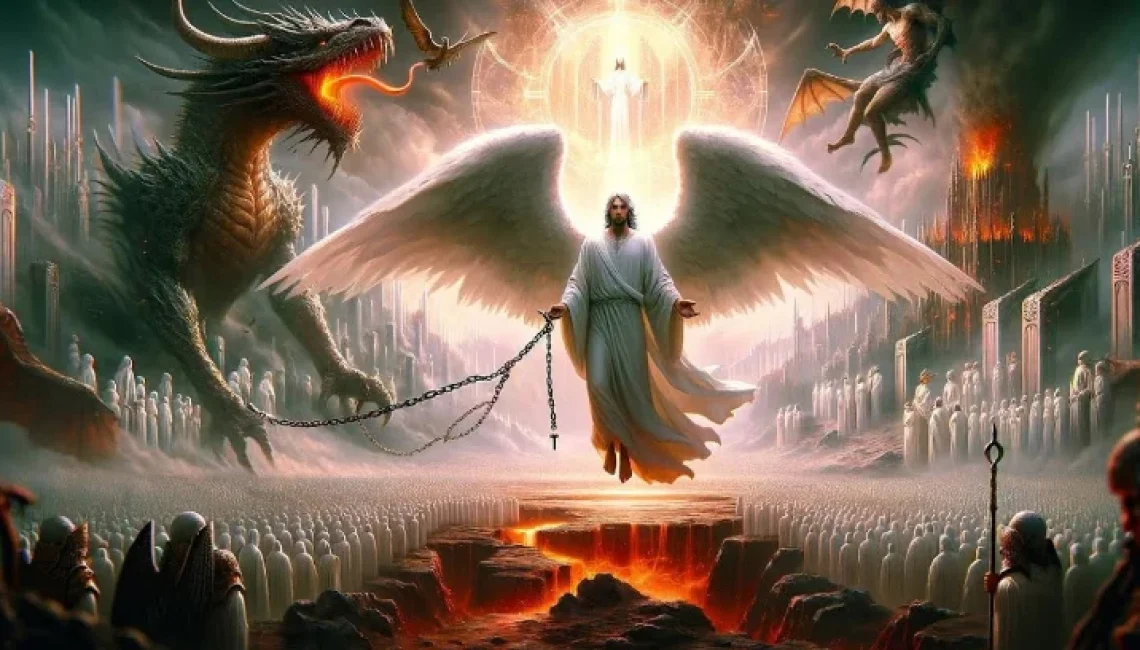
From Christ’s earthly ministry, death, and resurrection until the final tribulation, we are already living in those “thousands of years” — the church age as the millennial reign in its inaugurated form. Satan was bound at the cross so that he could no longer deceive the nations in the same way. That binding is exactly what Revelation 20:2–3 describes: “He seized the dragon… and bound him for a thousand years.”
This means the “thousand years” are not a future literal kingdom sandwiched between a pre-trib rapture and a final battle. They are the present age in which Christ rules from heaven through His church while Satan’s deception of the Gentiles is restrained. When that restraint is lifted for a short season at the very end, then the final thlipsis comes, immediately followed by the visible parousia, the gathering of the elect, and the final judgment.
This fits Daniel’s 70 weeks without any artificial gap. The 70th week finds its fulfillment in the consummation at Christ’s return, not in a seven-year future tribulation that requires a secret rapture first. One continuous prophetic timeline, one people of God — Israel and the engrafted church together — enduring to the end, and one glorious return where the dead in Christ rise and we who are alive are caught up to meet the Lord.
As the author of Does Grace Have a Ceiling? The Anatomy of the Will, I see this as preserving the true sovereignty of grace: it doesn’t whisk us away from trial; it carries us through it to the final victory at the single, visible parousia.
Everything — Daniel’s shavu’im, the eschate salpingi, the thlipsis of Jacob and the church, the plural chilia, and the gathering of the elect — converges at one majestic endpoint. That is the coherent, Christ-centered telos of all Scripture.