Prophecy, Methodology, Fulfillment, Proof
“The world was not created but only for the Messiah” – Sanhedrin 98 b
“All the prophets prophesied not but of the days of the Messiah” -Sanhedrin 99[1]
Before we commence, there are two important terms to know:
- Stacking: I interchange this term with “sandwiching”. Stacking means to place one or more of the 5 Noble Truths[2]on top of each other.
- Layering: to place one or more examples of just one of the 5NTs on top of itself. I used layering (in contrast to stacking) since it was for only one of the 5NTs.
This particular example of the prophetic view[3] consists of only layering three prophets. One of the prophets is considered ‘pagan’, which I refer to in the ‘a-moral’ sense. The other two prophets are ‘Messianic Jews’ in the truest sense of that title. All three prophets share a portion of Jesus’ character sketch[4]. As I see it, the two Messianic prophets[5] that lived before Jesus the
Edersheim, Alfred, The Life and Times of Jesus the Messiah pg.1 (Edersheim 1910)
The Five Noble Truths or 5NTs: The Prophetic, Predeterminate, Apocalyptic, Universal Salvific, and Teleological views.
I.e., 4 of the 5 noble truths. The other 4 are: the teleological view, pre-determinative view, apocalyptic view, and universal restorative view (i.e.apokatastasis/ apokatakaleo).
It is claimed by the Oxford Doyen, Dr. Alfred Edersheim, that there are at least 456 prophecies from the Old Testament that were fulfilled in Christ Jesus alone. If this is true then the collage’ sketch of Christ’s life would be more than ample evidence to claim Jesus as the Messiah: Book II: chapter 5, page 163: ‘’Their (the ancient synagogue) number amounts to upwards of 456 (75 from the Pentateuch, 243 from the Prophets, and 138 from the Hagiographa), and their Messianic application is supported by more than 558 references to the most ancient Rabbinic writings”. Edersheim; “The Life And Times Of Jesus The Messiah (Edersheim 1910)”.
There are, of course, so many prophetic visions that I did not pick. So many of these prophecies bear precision with calendrical accuracy: Dr. Alva J. McClain’s “Daniel’s Prophecy of the 70 Weeks or Shavua (McClain 1969), esp. graph on pages 68 and 69; Dr. J. Gresham Machen, “The Virgin Birth Of Christ” (Machen 1930); Dr. David Hughes’ “The Star Of Bethlehem” —an astronomer’s confirmation, pgs 50 – 84 (Hughes 1979); Dr. Michael R. Molnar’s “The Star of Bethlehem” —the legacy of the Magi (Molnar 1999); Dr. Harold W. Hoehner’s “Chronological Aspects Of The Life Of Christ” (Hoehner 1977); Dr. George Eldon Ladd’s “The Blessed Hope” (Ladd 1956); Kyle Jones’s audio Lectures on “The Fullness Of Meaning Christian Ministries (https://fomcm.com./christ-of-the-zodiac)” audio category, “The Vanderbilt Lectures”, Lectures 5-10.
Messiah had a specific role. Unlike the Sybil of Cumae (Virgil 70 B.C.), the Messianic prophets were to thread prophecy with the law using prophetic-poetics[6] as the suture.
Example of layering the prophetic view:
First Prophecy
King David was not just a warrior king but a prophetic voice/ medium through which Jesus spoke ca.1,100 years before Jesus walked the earth. Let’s take a look at this poetic prophecy in the book of Psalms.
Psalm 22: 13-21 (ca. 1,100 B.C.)
“They gaped upon me with their mouths, as a ravening and roaring lion. (14) I am poured out like water, and all my bones are out of joint; my heart is like wax; it is melted in the midst of my bowels. (15) My strength is dried up like a potsherd; and my tongue cleaveth to my jaws; and thou hast brought me into the dust of death. (16) For dogs have compassed me; the assembly of the wicked have enclosed me; they pierced my hands and my feet. (17) I may tell (Hebrew: “a-sap-per” – “I can count”) all my bones; they look and stare upon me. (18) They part my garments among them, and cast lots upon my vesture. (19) But be not thou far from me, O LORD; O my strength haste thee to help me. (20) Deliver my soul from the sword; my darling from the power of the dog. (21) Save me from the lion’s mouth; for thou hast heard me from the horns of the unicorns (Hebrew: “qeren”; sharp tooth/ teeth within the jaws of a strong beast or horn(s) of a wild beast).
Second Prophecy
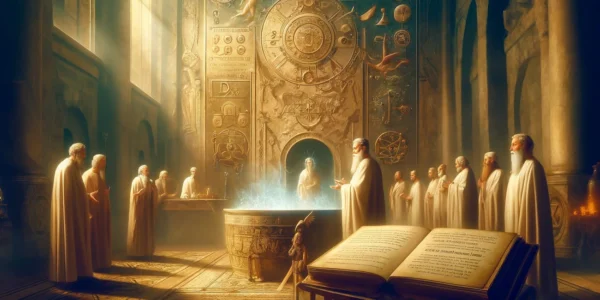
The Book of Revelation is a “Gospel culmination” of law, prophecy, allusion, allegory, poetics, etc. (Koester 2014); “Revelation”, esp. pg. 73: “the glass sea” as the motif within the Canaanite sea god & its religion – “Yam” – “sea” which plays an important role in Ugaritic Epic poetry (Ford 1975). The possible sharing of symbolism might come into play without insult to the validity of Jewish to Christian symbolism. Such is the case as the Bronze Sea in Solomon’s temple: 1 Kings 7: 23-26. Dr. Albright, in his “Archaeology And The Religion Of Israel, pgs. 148-50 (Albright 1946) shows the Brazen Sea as a cosmic significance. The word yam is similar to the Mesopotamian word “”apsu” in meaning which refers to both the fresh water and/ or ocean from which all life and all fertility were derived: and to a basin of holy water in the temple. The author of this part of Revelation, because of his interest in liturgy, may have been thinking not only of Solomon’s temple but also of the significance of blue in the priestly vestments (Thavapalan 2019); The fresh blue ocean waters are relatable to the Sumerian word GIN, the Akkadian ZAGINNU, Hittite KU(wa)NNASH, Ugaritic ‘IQNU, Greek KUANEOS —which all relate to the *color* of Lapis Lazuli — as we see ‘the pavement’ as Lapis Lazuli under God’s feet in Heaven – cf. Exodus 24: 9-11
The second ‘prophet[7]’ or ‘prophetess’ was amongst the oracles of the Roman Sibyls of Cumae ( Virgil 1999) in the early sixth century B.C. She has been mentioned as the particular crone[8] of notoriety amidst a Greek colonial assembly near Naples, Italy. It was to her that most give credit to 9 initial oracles. There was a particular oracle amongst the remaining three (6 having been burnt by king Tarqin until his belief in her as a true ‘seer’) that Virgil recounts in his work, Georgics (Virgil [original date ca. 70 – 60 B.C.] 1999). This heathen prophecy (I use in the a-moral sense) shares with Deutero-Isaiah within a similar time frame in which the Jew’s had their three deportations into Babylon (ca. 586 B.C.). It seems that there were other Messianic allusions already in existence at this time but the Sibylline accuracy of the oracle that was loaned into Virgil’s hope mentioned in his Georgics supported the prophetic foresight of Deutero Isaiah’s prophecy in Isaiah 53:1-12. Such pagan and believing voices rang in exaltation, a harmony which arrested my attention, intellect, and heart. With high precision from three very distinct personages, religions, and locations, one can see that Jesus the Messiah’s life, crucifixion, and resurrection were on prophetic point as the Gospels exhibited their fulfillments.
Virgil, the pagan poet (ca. 70 – 60 B.C.)
”Now is come the last age of Cumaean song; the great line of the centuries begins anew. Now the VIRGIN returns, the reign of Saturn (Saturn meaning: renewal, dissolution, abundance, liberation) returns; now a new generation descends from heaven on high. Only do you, pure Lucina (the moon and her gestation period to birth) , smile on the BIRTH OF THE CHILD under Whom the Iron Brood (Rome’s use of iron smithing for weapons) shall at last cease and a golden race spring up throughout the world! Your own Apollo (Son of Zeus) now is King!” (cf. footnote [9])
Third Prophecy
Deutero Isaiah 53 (ca 538 B.C.)[10]
The root of Nabi (Ne’evi) is Naba, meaning, “to bubble forth” like a fountain; Strong’s Concordance #1301 – NB “flourish, fruit, prophecy, seed inside”; NBB = “hollow” as a container to hold something; NBA = “prophecy [ as inside a man not being known of the 5 senses ]; N-BYA = “one who brings forth the inner fruit “ —-cf. to Strong’s Concordance # 5029 and #5030 (Strongs 1980) and The Brown-Driver-Briggs Hebrew and English Lexicon“, pages 611 and 612 – #5030 (Brown, Driver, Briggs 1906). The emphasis of this word and its variants starts with the earliest forms of pictographic Hebrew which phonemes were represented by pictures. Such evidenced inscriptions can be found at Wadi El-Hhol and Serabit El-Khadim in the Sinai Peninsula, dating back to around 2,000 B.C. Confer to Marc-Alain Quaknin’s “Mysteries Of The Alphabet (Quaknin 1999)”.
Crone: Anglo-French: carogne – ‘an insult’; French: charogne – ‘a disagreeable woman’
Virgil. “Eclogue 4.” In Virgil: Eclogues, Georgics, Aeneid I-VI, translated by H. Rushton Fairclough, revised by G. P. Goold, page 49. Cambridge, MA: Harvard University Press, 1999. Also confer to Isodore, Etymologiae viii.8.5’; Servius, In Aeneida vi.72, 321;Lactantius, Divinae Institutiones i.6.10-11; Solinus, Collectanea rerum memorabilium ii.16, 17, 18
Still debated in certain circles, many scholars suggest a later date than what they would consider the “second prophet and evangelist known as “Deutero-Isaiah ( secundus propheta et evangelista Esaias)”. This beloved prophet, distinguished from the first Isaiah, was to be set in the Babylonian exile, ca. 538 B.C. These ‘argued’ dates still give us at least ca. 560 years before Jesus fulfilled Deutero-Isaiah’s “Christ-Character” sketch. My argument stands that the proto Isaiah was a different prophet than the second Isaiah and not a historical blunder of Scripture but a validation of two different authoritative prophets who bore the same *shem* or ‘authoritative title-name’. I conclude that two distinct prophets under one Salvific God bearing the *shem* “Isaiah (Hebrew)”:‘Yeshayahu’ → ‘Salvation of the Lord’. A treasure trove for this topic can be found in Keil & Delitzsch’ “Commentary On The Old Testament”, pages 38-42, volume 7, first printing: T.T. Clark, Edinburgh, 1866-91, U.S.A. first printing 1996
מִ֥י הֶאֱמִ֖ין לִשְׁמֻעָתֵ֑נוּ וּזְר֥וֹעַ יְהֹוָ֖ה עַל־מִ֥י נִגְלָֽתָה׃
“Who can believe what we have heard?
Upon whom has the arm of GOD been revealed?
וַיַּ֨עַל כַּיּוֹנֵ֜ק לְפָנָ֗יו וְכַשֹּׁ֙רֶשׁ֙ מֵאֶ֣רֶץ צִיָּ֔ה לֹא־תֹ֥אַר ל֖וֹ וְלֹ֣א הָדָ֑ר וְנִרְאֵ֥הוּ וְלֹֽא־מַרְאֶ֖ה וְנֶחְמְדֵֽהוּ׃
For He has grown, by God’s favor, like a tree crown,
Like a tree trunk out of arid ground.
He had no form or beauty, that we should look at Him:
No charm, that we should find Him pleasing.
נִבְזֶה֙ וַחֲדַ֣ל אִישִׁ֔ים אִ֥ישׁ מַכְאֹב֖וֹת וִיד֣וּעַ חֹ֑לִי וּכְמַסְתֵּ֤ר פָּנִים֙ מִמֶּ֔נּוּ נִבְזֶ֖ה וְלֹ֥א חֲשַׁבְנֻֽהוּ׃
He was despised, shunned by others,
A man of suffering, familiar with disease.
As one who hid His face from us,
He was despised, we held Him of no account.
אָכֵ֤ן חֳלָיֵ֙נוּ֙ ה֣וּא נָשָׂ֔א וּמַכְאֹבֵ֖ינוּ סְבָלָ֑ם וַאֲנַ֣חְנוּ חֲשַׁבְנֻ֔הוּ נָג֛וּעַ מֻכֵּ֥ה אֱלֹהִ֖ים וּמְעֻנֶּֽה׃
Yet it was our sickness that He was bearing,
Our suffering that He endured.
We accounted Him plagued,
Smitten and afflicted by God;
וְהוּא֙ מְחֹלָ֣ל מִפְּשָׁעֵ֔נוּ מְדֻכָּ֖א מֵעֲוֺנֹתֵ֑ינוּ מוּסַ֤ר שְׁלוֹמֵ֙נוּ֙ עָלָ֔יו וּבַחֲבֻרָת֖וֹ נִרְפָּא־לָֽנוּ׃
But He was wounded because of our sins,
Crushed because of our iniquities.
Isaiah, was to be set in the Babylonian exile, ca. 538 B.C. These ‘argued’ dates still give us at least ca. 560 years before Jesus fulfilled Deutero-Isaiah’s “Christ-Character” sketch. My argument stands that the proto Isaiah was a different prophet than the second Isaiah and not a historical blunder of Scripture but a validation of two different authoritative prophets who bore the same *shem* or ‘authoritative title-name’. I conclude that two distinct prophets under one Salvific God bearing the *shem* “Isaiah (Hebrew)”:‘Yeshayahu’ → ‘Salvation of the Lord’. A treasure trove for this topic can be found in Keil & Delitzsch’ “Commentary On The Old Testament”, pages 38-42, volume 7, first printing: T.T. Clark, Edinburgh, 1866-91, U.S.A. first printing 1996
He bore the chastisement that made us whole,
And by His bruises we were healed.
כֻּלָּ֙נוּ֙ כַּצֹּ֣אן תָּעִ֔ינוּ אִ֥ישׁ לְדַרְכּ֖וֹ פָּנִ֑ינוּ וַיהֹוָה֙ הִפְגִּ֣יעַ בּ֔וֹ אֵ֖ת עֲוֺ֥ן כֻּלָּֽנוּ׃
We all went astray like sheep,
Each of us going our own way;
And GOD put upon Him
The guilt of all of us.”
נִגַּ֨שׂ וְה֣וּא נַעֲנֶה֮ וְלֹ֣א יִפְתַּח־פִּיו֒ כַּשֶּׂה֙ לַטֶּ֣בַח יוּבָ֔ל וּכְרָחֵ֕ל לִפְנֵ֥י גֹזְזֶ֖יהָ נֶאֱלָ֑מָה וְלֹ֥א יִפְתַּ֖ח פִּֽיו׃
He was maltreated, yet He was submissive,
He did not open His mouth;
Like a sheep being led to slaughter,
Like a ewe, dumb before those who shear her,
He did not open His mouth.
מֵעֹ֤צֶר וּמִמִּשְׁפָּט֙ לֻקָּ֔ח וְאֶת־דּוֹר֖וֹ מִ֣י יְשׂוֹחֵ֑חַ כִּ֤י נִגְזַר֙ מֵאֶ֣רֶץ חַיִּ֔ים מִפֶּ֥שַׁע עַמִּ֖י נֶ֥גַע לָֽמוֹ׃
By oppressive judgment He was taken away,
Who could describe His abode?
For He was cut off from the land of the living
Through the sin of my people, who deserved the punishment.
וַיִּתֵּ֤ן אֶת־רְשָׁעִים֙ קִבְר֔וֹ וְאֶת־עָשִׁ֖יר בְּמֹתָ֑יו עַ֚ל לֹא־חָמָ֣ס עָשָׂ֔ה וְלֹ֥א מִרְמָ֖ה בְּפִֽיו׃
And His grave was set among the wicked,
And with the rich, in His death—
Though He had done no injustice
And had spoken no falsehood.