
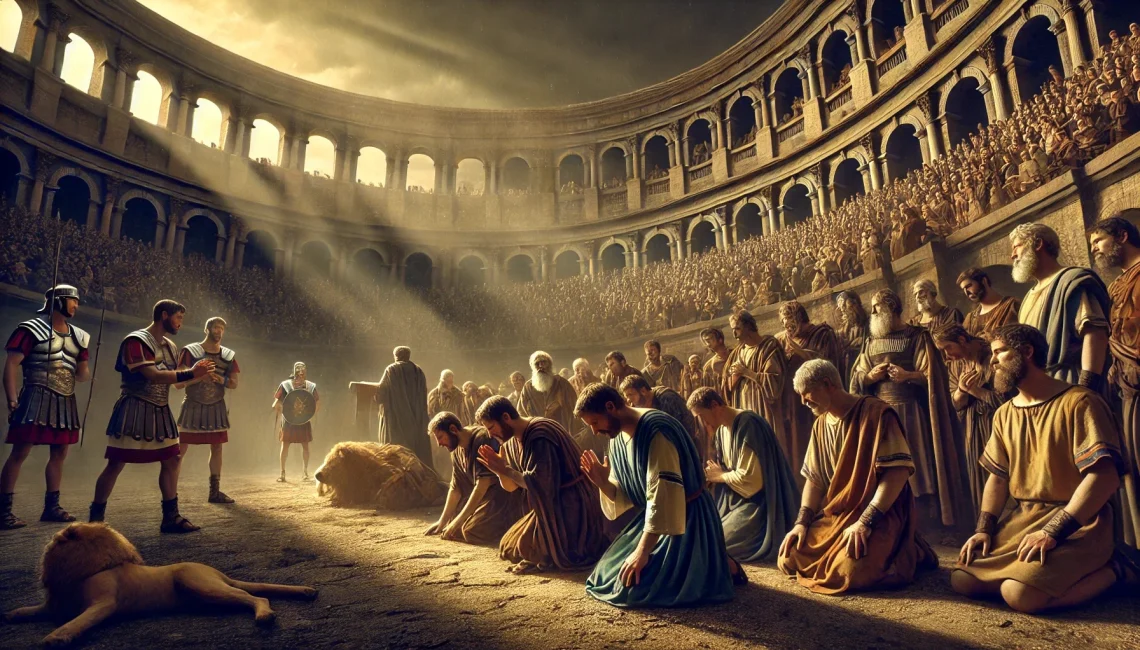
The most widely cited estimates of Christian martyrdom come from the Center for the Study of Global Christianity at Gordon-Conwell Theological Seminary. They calculate a cumulative total of approximately seventy million Christian martyrs from the first century to the present day. Strikingly, more than half of that total — over thirty-five million — occurred in the twentieth century alone (we have not finished per capita the 21st century), largely driven by state-sponsored violence under communist and fascist regimes.
In the earliest centuries, documented cases were relatively few. Persecution remained sporadic and localized until the massive scale of twentieth-century totalitarian regimes produced an unprecedented spike. For the twenty-first century, the Center’s estimates average between ninety thousand and one hundred thousand martyrs per year, although they have walked back some of the higher figures after recognizing that many deaths in active conflict zones, such as the Democratic Republic of Congo, were not primarily motivated by religious identity.
A more conservative approach is taken by Open Doors, which restricts its count to clearly faith-motivated killings. In their most recent reporting period, they documented 4,849 Christians murdered specifically for their faith, with over ninety percent of those cases concentrated in sub-Saharan Africa, the vast majority in Nigeria. This illustrates a critical statistical distinction: while absolute numbers have risen dramatically with the global Christian population, the stricter, faith-specific counts remain in the low thousands annually rather than tens of thousands.
When we narrow our focus to the first century, the picture changes markedly. The earliest recorded martyrdom is that of Stephen, stoned around 34 to 36 CE. The apostle James, son of Zebedee, was executed by Herod Agrippa the First around 44 CE. Both Peter and Paul are traditionally held to have been martyred in Rome under Nero between 64 and 67 CE, following the Great Fire of Rome in 64 CE that triggered the first imperial persecution. All told, the total number of Christian martyrs in the first century is estimated at fewer than one thousand.
At that time the entire Christian population numbered perhaps only seven thousand to ten thousand believers by the year 100. Persecution was episodic, driven first by local Jewish authorities and later by Roman imperial policy. Surviving records suggest a rate of roughly ten to twenty documented martyrdoms per decade. In absolute terms today’s annual figures are five thousand to ten thousand times higher, yet the per-capita martyrdom rate in the first century was arguably higher given the minuscule base population.
That’s the statistical overview — broad trends, source methodologies, and the sharp contrast between the first century and the modern era.